Lili Fan, Shuanglin Chen, Ziwu Guo, Ruicai Hu, Liangjin Yao
{"title":"Soil pH enhancement and alterations in nutrient and Bacterial Community profiles following Pleioblastus amarus expansion in tea plantations.","authors":"Lili Fan, Shuanglin Chen, Ziwu Guo, Ruicai Hu, Liangjin Yao","doi":"10.1186/s12870-024-05374-0","DOIUrl":null,"url":null,"abstract":"<p><strong>Background: </strong>The expansion of bamboo forests increases environmental heterogeneity in tea plantation ecosystems, affecting soil properties and microbial communities. Understanding these impacts is essential for developing sustainable bamboo management and maintaining ecological balance in tea plantations.</p><p><strong>Methods: </strong>We studied the effect of the continuous expansion of Pleioblastus amarus into tea plantations, by establishing five plot types: pure P. amarus forest area (BF), P. amarus forest interface area (BA), mixed forest interface area (MA), mixed forest center area (TB), and pure tea plantation area (TF). We conducted a comprehensive analysis of soil chemical properties and utilized Illumina sequencing to profile microbial community composition and diversity, emphasizing their responses to bamboo expansion.</p><p><strong>Results: </strong>(1) Bamboo expansion significantly raised soil pH and enhanced levels of organic matter, nitrogen, and phosphorus, particularly noticeable in BA and MA sites. In the TB sites, improvements in soil nutrients were statistically indistinguishable from those in pure tea plantation areas. (2) Continuous bamboo expansion led to significant changes in soil bacterial diversity, especially noticeable between BA and TF sites, while fungal diversity was unaffected. (3) Bamboo expansion substantially altered the composition of less abundant bacterial and fungal communities, which proved more sensitive to changes in soil chemical properties.</p><p><strong>Conclusion: </strong>The expansion of bamboo forests causes significant alterations in soil pH and nutrient characteristics, impacting the diversity and composition of soil bacteria in tea plantations. However, as expansion progresses, its long-term beneficial impact on soil quality in tea plantations appears limited.</p>","PeriodicalId":9198,"journal":{"name":"BMC Plant Biology","volume":"24 1","pages":"837"},"PeriodicalIF":4.8000,"publicationDate":"2024-09-06","publicationTypes":"Journal Article","fieldsOfStudy":null,"isOpenAccess":false,"openAccessPdf":"https://www.ncbi.nlm.nih.gov/pmc/articles/PMC11378374/pdf/","citationCount":"0","resultStr":null,"platform":"Semanticscholar","paperid":null,"PeriodicalName":"BMC Plant Biology","FirstCategoryId":"99","ListUrlMain":"https://doi.org/10.1186/s12870-024-05374-0","RegionNum":2,"RegionCategory":"生物学","ArticlePicture":[],"TitleCN":null,"AbstractTextCN":null,"PMCID":null,"EPubDate":"","PubModel":"","JCR":"Q1","JCRName":"PLANT SCIENCES","Score":null,"Total":0}
引用次数: 0
Abstract
Background: The expansion of bamboo forests increases environmental heterogeneity in tea plantation ecosystems, affecting soil properties and microbial communities. Understanding these impacts is essential for developing sustainable bamboo management and maintaining ecological balance in tea plantations.
Methods: We studied the effect of the continuous expansion of Pleioblastus amarus into tea plantations, by establishing five plot types: pure P. amarus forest area (BF), P. amarus forest interface area (BA), mixed forest interface area (MA), mixed forest center area (TB), and pure tea plantation area (TF). We conducted a comprehensive analysis of soil chemical properties and utilized Illumina sequencing to profile microbial community composition and diversity, emphasizing their responses to bamboo expansion.
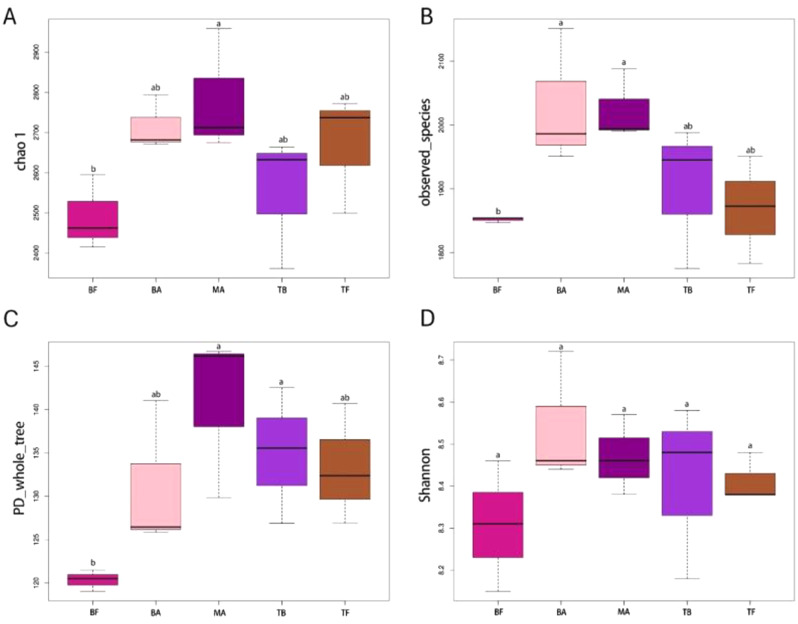
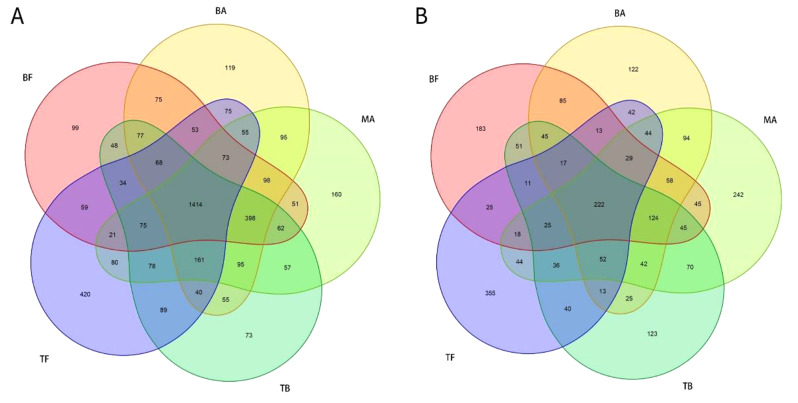
Results: (1) Bamboo expansion significantly raised soil pH and enhanced levels of organic matter, nitrogen, and phosphorus, particularly noticeable in BA and MA sites. In the TB sites, improvements in soil nutrients were statistically indistinguishable from those in pure tea plantation areas. (2) Continuous bamboo expansion led to significant changes in soil bacterial diversity, especially noticeable between BA and TF sites, while fungal diversity was unaffected. (3) Bamboo expansion substantially altered the composition of less abundant bacterial and fungal communities, which proved more sensitive to changes in soil chemical properties.
Conclusion: The expansion of bamboo forests causes significant alterations in soil pH and nutrient characteristics, impacting the diversity and composition of soil bacteria in tea plantations. However, as expansion progresses, its long-term beneficial impact on soil quality in tea plantations appears limited.
期刊介绍:
BMC Plant Biology is an open access, peer-reviewed journal that considers articles on all aspects of plant biology, including molecular, cellular, tissue, organ and whole organism research.




 京公网安备 11010802042870号
京ICP备2023020795号-1
京公网安备 11010802042870号
京ICP备2023020795号-1

 分享
分享
 求助内容:
求助内容: 应助结果提醒方式:
 扫码关注我们
