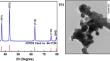
The conversion of ambient mechanical vibrations into electricity using piezoelectric nanogenerators (PENGs) has garnered significant attention from researchers over the past few years, in light of its potential in wearable applications. The high flexibility and significant ferroelectricity of poly(vinylidene fluoride) (PVDF) make them the most promising candidates for PENG applications among polymer piezoelectric materials. In the present work, NiO nanoparticles were incorporated in different ratios into a PVDF matrix, and their potential for use in piezoelectric nanogenerators was investigated. The PVDF/NiO (5 wt.%) nanocomposite PENG exhibited the highest electrical output, with a 2.8-fold increase in open-circuit voltage and short-circuit current observed as compared to a bare PVDF-based PENG. However, a further increase in the compositional ratio of NiO led to a decrease in PENG output. The improved piezoelectricity in the PVDF/NiO (5 wt.%) nanocomposite is attributed to the enhanced polar phases and improved ferroelectricity of PVDF. Further confirmation of the improved piezoresponse was explored by measurement of the piezoelectric coefficient (d33) and dielectric study of the nanocomposites. The PENG electrical output was further simulated using the finite elemental method in COMSOL Multiphysics 5.5. The simulated results matched well with the experimental output, which confirmed the improved electrical performance of the PVDF/NiO nanocomposite-based PENGs. The enhanced performance of the nanocomposite PVDF film is attributed to the higher β phase in the PVDF. The efficiency of the PENG devices in motion-sensing applications was also explored. Different output voltage signals corresponding to different movements of the nanocomposite-based PENGs make the device compatible with sensor applications.



 京公网安备 11010802042870号
京ICP备2023020795号-1
京公网安备 11010802042870号
京ICP备2023020795号-1

 分享
分享
 求助内容:
求助内容: 应助结果提醒方式:
 扫码关注我们
