{"title":"A Multigrid Solver for PDE-Constrained Optimization with Uncertain Inputs","authors":"Gabriele Ciaramella, Fabio Nobile, Tommaso Vanzan","doi":"10.1007/s10915-024-02646-7","DOIUrl":null,"url":null,"abstract":"<p>In this manuscript, we present a collective multigrid algorithm to solve efficiently the large saddle-point systems of equations that typically arise in PDE-constrained optimization under uncertainty, and develop a novel convergence analysis of collective smoothers and collective two-level methods. The multigrid algorithm is based on a collective smoother that at each iteration sweeps over the nodes of the computational mesh, and solves a reduced saddle-point system whose size is proportional to the number <i>N</i> of samples used to discretized the probability space. We show that this reduced system can be solved with optimal <i>O</i>(<i>N</i>) complexity. The multigrid method is tested both as a stationary method and as a preconditioner for GMRES on three problems: a linear-quadratic problem, possibly with a local or a boundary control, for which the multigrid method is used to solve directly the linear optimality system; a nonsmooth problem with box constraints and <span>\\(L^1\\)</span>-norm penalization on the control, in which the multigrid scheme is used as an inner solver within a semismooth Newton iteration; a risk-averse problem with the smoothed CVaR risk measure where the multigrid method is called within a preconditioned Newton iteration. In all cases, the multigrid algorithm exhibits excellent performances and robustness with respect to the parameters of interest.\n</p>","PeriodicalId":50055,"journal":{"name":"Journal of Scientific Computing","volume":"66 1","pages":""},"PeriodicalIF":3.3000,"publicationDate":"2024-08-24","publicationTypes":"Journal Article","fieldsOfStudy":null,"isOpenAccess":false,"openAccessPdf":"","citationCount":"0","resultStr":null,"platform":"Semanticscholar","paperid":null,"PeriodicalName":"Journal of Scientific Computing","FirstCategoryId":"100","ListUrlMain":"https://doi.org/10.1007/s10915-024-02646-7","RegionNum":2,"RegionCategory":"数学","ArticlePicture":[],"TitleCN":null,"AbstractTextCN":null,"PMCID":null,"EPubDate":"","PubModel":"","JCR":"Q1","JCRName":"MATHEMATICS, APPLIED","Score":null,"Total":0}
引用次数: 0
Abstract
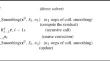
In this manuscript, we present a collective multigrid algorithm to solve efficiently the large saddle-point systems of equations that typically arise in PDE-constrained optimization under uncertainty, and develop a novel convergence analysis of collective smoothers and collective two-level methods. The multigrid algorithm is based on a collective smoother that at each iteration sweeps over the nodes of the computational mesh, and solves a reduced saddle-point system whose size is proportional to the number N of samples used to discretized the probability space. We show that this reduced system can be solved with optimal O(N) complexity. The multigrid method is tested both as a stationary method and as a preconditioner for GMRES on three problems: a linear-quadratic problem, possibly with a local or a boundary control, for which the multigrid method is used to solve directly the linear optimality system; a nonsmooth problem with box constraints and \(L^1\)-norm penalization on the control, in which the multigrid scheme is used as an inner solver within a semismooth Newton iteration; a risk-averse problem with the smoothed CVaR risk measure where the multigrid method is called within a preconditioned Newton iteration. In all cases, the multigrid algorithm exhibits excellent performances and robustness with respect to the parameters of interest.
期刊介绍:
Journal of Scientific Computing is an international interdisciplinary forum for the publication of papers on state-of-the-art developments in scientific computing and its applications in science and engineering.
The journal publishes high-quality, peer-reviewed original papers, review papers and short communications on scientific computing.



 京公网安备 11010802042870号
京ICP备2023020795号-1
京公网安备 11010802042870号
京ICP备2023020795号-1

 分享
分享
 求助内容:
求助内容: 应助结果提醒方式:
 扫码关注我们
