Edoardo Lecce, Ruggero Romagnoli, Giorgio Frinolli, Francesco Felici, Maria Francesca Piacentini, Ilenia Bazzucchi
{"title":"Exerting force at the maximal speed drives the increase in power output in elite athletes after 4 weeks of resistance training","authors":"Edoardo Lecce, Ruggero Romagnoli, Giorgio Frinolli, Francesco Felici, Maria Francesca Piacentini, Ilenia Bazzucchi","doi":"10.1007/s00421-024-05604-1","DOIUrl":null,"url":null,"abstract":"<h3 data-test=\"abstract-sub-heading\">Purpose</h3><p>In the present study, we examined how a 4-week intervention of maximal intended velocity (MIVRT) and controlled velocity resistance training (CRT)-induced task-specific responses in expert individuals.</p><h3 data-test=\"abstract-sub-heading\">Methods</h3><p>Twenty elite athletes were randomly assigned to either a MIVRT (<i>n</i> = 10) or CRT (<i>n</i> = 10) group, both following the same volume–load training based on the back-squat three times a week but with different intentions in moving load (force–exertion speed). We assessed one-repetition maximum (1RM), mean propulsive velocity (MPV), and mean propulsive power (MPP) using a progressive-loading test before and after the intervention. A linear position transducer was used to monitor propulsive velocity in training and testing sessions.</p><h3 data-test=\"abstract-sub-heading\">Results</h3><p>Both groups significantly increased their 1RM (CRT: + 12.3%, <i>p</i> < 0.001, <i>d</i> = 0.39; MIVRT: + 12.5%, <i>p</i> < 0.001, <i>d</i> = 0.45). Only the MIVRT group showed a significant improvement in MPV (<i>p</i> < 0.01) across different stepping loads, while both groups improved in MPP (MIVRT: + 22.4%, <i>p</i> < 0.001, <i>d</i> = 0.54; CRT: + 8.1%, <i>p</i> = 0.04, <i>d</i> = 0.17).</p><h3 data-test=\"abstract-sub-heading\">Conclusions</h3><p>MIVRT induced significant adaptations in MPV and MPP at various loads (%1RM), underlining its specificity in targeting these parameters. Despite similar enhancements in 1RM, the distinct training protocols suggest that strength gains may stem from either maximal intent in moving loads or longer times under tension. This study highlights the role of execution speed in optimizing power outcomes, emphasizing task specificity as paramount to elicit physiological adaptations in chronically strength-trained individuals.</p>","PeriodicalId":12005,"journal":{"name":"European Journal of Applied Physiology","volume":"54 1","pages":""},"PeriodicalIF":2.7000,"publicationDate":"2024-09-12","publicationTypes":"Journal Article","fieldsOfStudy":null,"isOpenAccess":false,"openAccessPdf":"","citationCount":"0","resultStr":null,"platform":"Semanticscholar","paperid":null,"PeriodicalName":"European Journal of Applied Physiology","FirstCategoryId":"3","ListUrlMain":"https://doi.org/10.1007/s00421-024-05604-1","RegionNum":3,"RegionCategory":"医学","ArticlePicture":[],"TitleCN":null,"AbstractTextCN":null,"PMCID":null,"EPubDate":"","PubModel":"","JCR":"Q2","JCRName":"PHYSIOLOGY","Score":null,"Total":0}
引用次数: 0
Abstract
Purpose
In the present study, we examined how a 4-week intervention of maximal intended velocity (MIVRT) and controlled velocity resistance training (CRT)-induced task-specific responses in expert individuals.
Methods
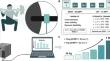
Twenty elite athletes were randomly assigned to either a MIVRT (n = 10) or CRT (n = 10) group, both following the same volume–load training based on the back-squat three times a week but with different intentions in moving load (force–exertion speed). We assessed one-repetition maximum (1RM), mean propulsive velocity (MPV), and mean propulsive power (MPP) using a progressive-loading test before and after the intervention. A linear position transducer was used to monitor propulsive velocity in training and testing sessions.
Results
Both groups significantly increased their 1RM (CRT: + 12.3%, p < 0.001, d = 0.39; MIVRT: + 12.5%, p < 0.001, d = 0.45). Only the MIVRT group showed a significant improvement in MPV (p < 0.01) across different stepping loads, while both groups improved in MPP (MIVRT: + 22.4%, p < 0.001, d = 0.54; CRT: + 8.1%, p = 0.04, d = 0.17).
Conclusions
MIVRT induced significant adaptations in MPV and MPP at various loads (%1RM), underlining its specificity in targeting these parameters. Despite similar enhancements in 1RM, the distinct training protocols suggest that strength gains may stem from either maximal intent in moving loads or longer times under tension. This study highlights the role of execution speed in optimizing power outcomes, emphasizing task specificity as paramount to elicit physiological adaptations in chronically strength-trained individuals.
期刊介绍:
The European Journal of Applied Physiology (EJAP) aims to promote mechanistic advances in human integrative and translational physiology. Physiology is viewed broadly, having overlapping context with related disciplines such as biomechanics, biochemistry, endocrinology, ergonomics, immunology, motor control, and nutrition. EJAP welcomes studies dealing with physical exercise, training and performance. Studies addressing physiological mechanisms are preferred over descriptive studies. Papers dealing with animal models or pathophysiological conditions are not excluded from consideration, but must be clearly relevant to human physiology.




 京公网安备 11010802042870号
京ICP备2023020795号-1
京公网安备 11010802042870号
京ICP备2023020795号-1

 分享
分享
 求助内容:
求助内容: 应助结果提醒方式:
 扫码关注我们
