{"title":"Pi-based biochemical mechanism of endurance-training-induced improvement of running performance in humans","authors":"Bernard Korzeniewski","doi":"10.1007/s00421-024-05560-w","DOIUrl":null,"url":null,"abstract":"<h3 data-test=\"abstract-sub-heading\">Purpose</h3><p>Endurance training improves running performance in distances where oxidative phosphorylation (OXPHOS) is the main ATP source. Here, a dynamic computer model is used to assess possible biochemical mechanisms underlying this improvement.</p><h3 data-test=\"abstract-sub-heading\">Methods</h3><p>The dynamic computer model is based on the “P<sub>i</sub> double-threshold” mechanism of muscle fatigue, according to which the additional ATP usage appears when (1) inorganic phosphate (P<sub>i</sub>) exceeds a critical value (Pi<sub>crit</sub>); (2) exercise is terminated because of fatigue, when P<sub>i</sub> reaches a peak value (Pi<sub>peak</sub>); (3) the P<sub>i</sub> increase and additional ATP usage increase mutually stimulate each other.</p><h3 data-test=\"abstract-sub-heading\">Results</h3><p>The endurance-training-induced increase in oxidative phosphorylation (OXPHOS) activity attenuates the reaching of Pi<sub>peak</sub> by P<sub>i</sub> (and thus of <span>\\(\\dot{V}\\)</span>O<sub>2max</sub> by <span>\\(\\dot{V}\\)</span>O<sub>2</sub>) at increased power output. This in turn allows a greater work intensity, and thus higher speed, to be achieved before exercise is terminated because of fatigue at the end of the 1500 m run. Thus, identical total work is performed in a shorter time. Probably, endurance training also lowers Pi<sub>peak</sub>, which improves the homeostasis of “bioenergetic” muscle metabolites: ADP, PCr, P<sub>i</sub> and H<sup>+</sup> ions.</p><h3 data-test=\"abstract-sub-heading\">Conclusions</h3><p>The present dynamic computer model generates clear predictions of metabolic changes that limit performance during 1500 m running. It contributes to our mechanistic understanding of training-induced improvement in running performance and stimulates further physiological experimental studies.</p>","PeriodicalId":12005,"journal":{"name":"European Journal of Applied Physiology","volume":"49 1","pages":""},"PeriodicalIF":2.7000,"publicationDate":"2024-09-17","publicationTypes":"Journal Article","fieldsOfStudy":null,"isOpenAccess":false,"openAccessPdf":"","citationCount":"0","resultStr":null,"platform":"Semanticscholar","paperid":null,"PeriodicalName":"European Journal of Applied Physiology","FirstCategoryId":"3","ListUrlMain":"https://doi.org/10.1007/s00421-024-05560-w","RegionNum":3,"RegionCategory":"医学","ArticlePicture":[],"TitleCN":null,"AbstractTextCN":null,"PMCID":null,"EPubDate":"","PubModel":"","JCR":"Q2","JCRName":"PHYSIOLOGY","Score":null,"Total":0}
引用次数: 0
Abstract
Purpose
Endurance training improves running performance in distances where oxidative phosphorylation (OXPHOS) is the main ATP source. Here, a dynamic computer model is used to assess possible biochemical mechanisms underlying this improvement.
Methods
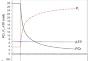
The dynamic computer model is based on the “Pi double-threshold” mechanism of muscle fatigue, according to which the additional ATP usage appears when (1) inorganic phosphate (Pi) exceeds a critical value (Picrit); (2) exercise is terminated because of fatigue, when Pi reaches a peak value (Pipeak); (3) the Pi increase and additional ATP usage increase mutually stimulate each other.
Results
The endurance-training-induced increase in oxidative phosphorylation (OXPHOS) activity attenuates the reaching of Pipeak by Pi (and thus of \(\dot{V}\)O2max by \(\dot{V}\)O2) at increased power output. This in turn allows a greater work intensity, and thus higher speed, to be achieved before exercise is terminated because of fatigue at the end of the 1500 m run. Thus, identical total work is performed in a shorter time. Probably, endurance training also lowers Pipeak, which improves the homeostasis of “bioenergetic” muscle metabolites: ADP, PCr, Pi and H+ ions.
Conclusions
The present dynamic computer model generates clear predictions of metabolic changes that limit performance during 1500 m running. It contributes to our mechanistic understanding of training-induced improvement in running performance and stimulates further physiological experimental studies.
期刊介绍:
The European Journal of Applied Physiology (EJAP) aims to promote mechanistic advances in human integrative and translational physiology. Physiology is viewed broadly, having overlapping context with related disciplines such as biomechanics, biochemistry, endocrinology, ergonomics, immunology, motor control, and nutrition. EJAP welcomes studies dealing with physical exercise, training and performance. Studies addressing physiological mechanisms are preferred over descriptive studies. Papers dealing with animal models or pathophysiological conditions are not excluded from consideration, but must be clearly relevant to human physiology.



 京公网安备 11010802042870号
京ICP备2023020795号-1
京公网安备 11010802042870号
京ICP备2023020795号-1

 分享
分享
 求助内容:
求助内容: 应助结果提醒方式:
 扫码关注我们
