{"title":"Patterns of caffeine consumption among medical undergraduates in Secunderabad, Telangana, India.","authors":"Anupama Pulla, Asma Syed, Venu Bolisetti","doi":"10.4103/jehp.jehp_50_24","DOIUrl":null,"url":null,"abstract":"<p><strong>Background: </strong>Caffeine products are increasingly found in a wide range of products that abuse of the substance may be unnoticed. Introduction of new energy drinks has led to an increase in consumption of caffeine in the last few decades. Caffeine is a cognitive booster and has physically enhancing effects, leading to its higher consumption across various age groups. The objective of this study was to determine patterns of caffeine consumption and to determine the knowledge and awareness of side effects and safety limits of caffeine consumption among medical undergraduate students.</p><p><strong>Material and methods: </strong>A cross-sectional study was conducted from December 2021 to February 2022 in the Department of Community Medicine at a tertiary care institute, Secunderabad, Telangana, India, among 560 medical undergraduate students of all academic years. A predesigned, pretested, semistructured questionnaire was administered.</p><p><strong>Results: </strong>The mean age of the study population was 19.09 years, and female preponderance (61.2%) was noted. The average self-reported caffeine consumption was 151.3 mg/day. The average caffeine consumption was found to be higher among males (174 mg/day) as compared to females (137 mg/day). The average consumption of caffeine during exam time was higher than the daily ceiling limit, >300 mg/day, in 38.1% of students, which was statistically significant (<i>P</i> = 0.015).</p><p><strong>Conclusions: </strong>Caffeine consumption during times of stress increased among medical students, which is an unfavorable sign as the majority of the times, medical students in future have to deal with physically and emotionally stressful situations during work hours.</p>","PeriodicalId":15581,"journal":{"name":"Journal of Education and Health Promotion","volume":"13 ","pages":"280"},"PeriodicalIF":1.3000,"publicationDate":"2024-07-29","publicationTypes":"Journal Article","fieldsOfStudy":null,"isOpenAccess":false,"openAccessPdf":"https://www.ncbi.nlm.nih.gov/pmc/articles/PMC11414877/pdf/","citationCount":"0","resultStr":null,"platform":"Semanticscholar","paperid":null,"PeriodicalName":"Journal of Education and Health Promotion","FirstCategoryId":"1085","ListUrlMain":"https://doi.org/10.4103/jehp.jehp_50_24","RegionNum":0,"RegionCategory":null,"ArticlePicture":[],"TitleCN":null,"AbstractTextCN":null,"PMCID":null,"EPubDate":"2024/1/1 0:00:00","PubModel":"eCollection","JCR":"Q3","JCRName":"EDUCATION, SCIENTIFIC DISCIPLINES","Score":null,"Total":0}
引用次数: 0
Abstract
Background: Caffeine products are increasingly found in a wide range of products that abuse of the substance may be unnoticed. Introduction of new energy drinks has led to an increase in consumption of caffeine in the last few decades. Caffeine is a cognitive booster and has physically enhancing effects, leading to its higher consumption across various age groups. The objective of this study was to determine patterns of caffeine consumption and to determine the knowledge and awareness of side effects and safety limits of caffeine consumption among medical undergraduate students.
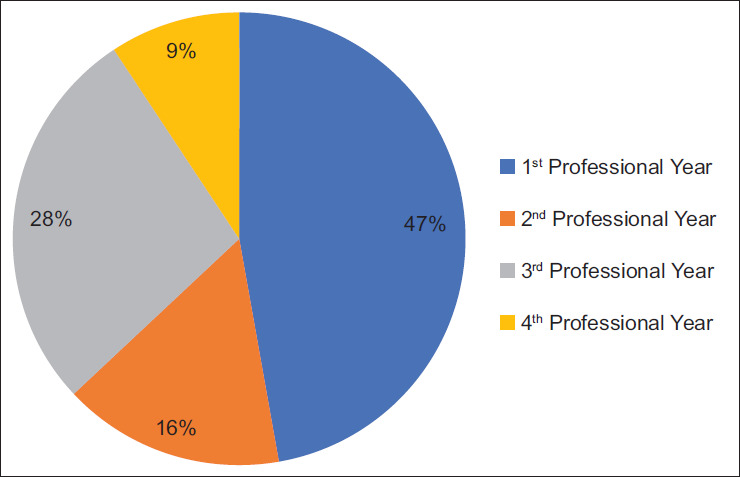
Material and methods: A cross-sectional study was conducted from December 2021 to February 2022 in the Department of Community Medicine at a tertiary care institute, Secunderabad, Telangana, India, among 560 medical undergraduate students of all academic years. A predesigned, pretested, semistructured questionnaire was administered.
Results: The mean age of the study population was 19.09 years, and female preponderance (61.2%) was noted. The average self-reported caffeine consumption was 151.3 mg/day. The average caffeine consumption was found to be higher among males (174 mg/day) as compared to females (137 mg/day). The average consumption of caffeine during exam time was higher than the daily ceiling limit, >300 mg/day, in 38.1% of students, which was statistically significant (P = 0.015).
Conclusions: Caffeine consumption during times of stress increased among medical students, which is an unfavorable sign as the majority of the times, medical students in future have to deal with physically and emotionally stressful situations during work hours.






 京公网安备 11010802042870号
京ICP备2023020795号-1
京公网安备 11010802042870号
京ICP备2023020795号-1

 分享
分享

 求助内容:
求助内容: 应助结果提醒方式:
 扫码关注我们
