Detection of Bartonella henselae in feline erythrocytes in Egypt by using Giemsa staining, transmission electron microscopy, and polymerase chain reaction
Reem M. Alsaadawy, Amal S. M. Sayed, Magda M. Ali, Sary Kh. Abd-Elghaffar
{"title":"Detection of Bartonella henselae in feline erythrocytes in Egypt by using Giemsa staining, transmission electron microscopy, and polymerase chain reaction","authors":"Reem M. Alsaadawy, Amal S. M. Sayed, Magda M. Ali, Sary Kh. Abd-Elghaffar","doi":"10.1002/jemt.24685","DOIUrl":null,"url":null,"abstract":"<div>\n \n \n <section>\n \n <p><i>Bartonella</i> species (<i>Bartonella</i> spp.) have gained recognition as a significant human pathogen, implicated in a wide range of diseases. Among these, <i>Bartonella henselae</i> infection has been extensively studied for its primary occurrence in cats and its role in the development of cat-scratch disease in humans. While light microscopy and transmission electron microscopy (TEM) have traditionally played crucial roles in identifying causative agents of infectious diseases, including <i>Bartonella</i> spp., the accuracy of these methods in identifying <i>Bartonella</i> spp. remains undefined. Therefore, this study aims to bridge this gap by employing both light microscopy and TEM to detect <i>Bartonella</i> in feline blood samples and to confirm <i>B. henselae</i> with polymerase chain reaction (PCR). Examination of blood smears stained with Giemsa and toluidine blue semithin sections by using light microscopy revealed the presence of intraerythrocytic corpuscles, suggesting <i>Bartonella</i> infection in six out of 33 examined cat blood samples. TEM findings corroborated these observations, showcasing the engulfment of bacteria by the erythrocyte membrane, along with the presence of some <i>Bartonella</i> spp., adhering to the erythrocyte wall. PCR-based molecular detection confirmed the presence of <i>B. henselae</i> in these six samples. It is concluded that light microscopy and TEM are considered valuable in the screening of cats' blood for the potential presence of <i>Bartonella</i>. However, further molecular techniques are essential for precise identification and confirmation of specific <i>Bartonella</i> spp.</p>\n </section>\n \n <section>\n \n <h3> Research Highlights</h3>\n \n <div>\n <ul>\n \n <li>Giemsa-stained blood smear and semithin section showed potential intraerythrocytic <i>Bartonella</i> spp. corpuscles.</li>\n \n <li>TEM demonstrated the engulfment of <i>Bartonella</i> spp. by the erythrocyte membrane, along with the presence of some <i>Bartonella</i> spp. adhering to the erythrocyte wall.</li>\n \n <li>Molecular analysis of blood samples from cats by PCR unveiled that six out of 33 (18.18%) samples tested positive for <i>B. henselae</i> infection.</li>\n </ul>\n </div>\n </section>\n </div>","PeriodicalId":18684,"journal":{"name":"Microscopy Research and Technique","volume":"88 1","pages":"279-285"},"PeriodicalIF":2.1000,"publicationDate":"2024-09-25","publicationTypes":"Journal Article","fieldsOfStudy":null,"isOpenAccess":false,"openAccessPdf":"","citationCount":"0","resultStr":null,"platform":"Semanticscholar","paperid":null,"PeriodicalName":"Microscopy Research and Technique","FirstCategoryId":"5","ListUrlMain":"https://analyticalsciencejournals.onlinelibrary.wiley.com/doi/10.1002/jemt.24685","RegionNum":3,"RegionCategory":"工程技术","ArticlePicture":[],"TitleCN":null,"AbstractTextCN":null,"PMCID":null,"EPubDate":"","PubModel":"","JCR":"Q2","JCRName":"ANATOMY & MORPHOLOGY","Score":null,"Total":0}
引用次数: 0
Abstract
Bartonella species (Bartonella spp.) have gained recognition as a significant human pathogen, implicated in a wide range of diseases. Among these, Bartonella henselae infection has been extensively studied for its primary occurrence in cats and its role in the development of cat-scratch disease in humans. While light microscopy and transmission electron microscopy (TEM) have traditionally played crucial roles in identifying causative agents of infectious diseases, including Bartonella spp., the accuracy of these methods in identifying Bartonella spp. remains undefined. Therefore, this study aims to bridge this gap by employing both light microscopy and TEM to detect Bartonella in feline blood samples and to confirm B. henselae with polymerase chain reaction (PCR). Examination of blood smears stained with Giemsa and toluidine blue semithin sections by using light microscopy revealed the presence of intraerythrocytic corpuscles, suggesting Bartonella infection in six out of 33 examined cat blood samples. TEM findings corroborated these observations, showcasing the engulfment of bacteria by the erythrocyte membrane, along with the presence of some Bartonella spp., adhering to the erythrocyte wall. PCR-based molecular detection confirmed the presence of B. henselae in these six samples. It is concluded that light microscopy and TEM are considered valuable in the screening of cats' blood for the potential presence of Bartonella. However, further molecular techniques are essential for precise identification and confirmation of specific Bartonella spp.
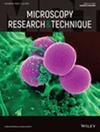
TEM demonstrated the engulfment of Bartonella spp. by the erythrocyte membrane, along with the presence of some Bartonella spp. adhering to the erythrocyte wall.
Molecular analysis of blood samples from cats by PCR unveiled that six out of 33 (18.18%) samples tested positive for B. henselae infection.
期刊介绍:
Microscopy Research and Technique (MRT) publishes articles on all aspects of advanced microscopy original architecture and methodologies with applications in the biological, clinical, chemical, and materials sciences. Original basic and applied research as well as technical papers dealing with the various subsets of microscopy are encouraged. MRT is the right form for those developing new microscopy methods or using the microscope to answer key questions in basic and applied research.



 京公网安备 11010802042870号
京ICP备2023020795号-1
京公网安备 11010802042870号
京ICP备2023020795号-1

 分享
分享
 求助内容:
求助内容: 应助结果提醒方式:
 扫码关注我们
