Caitlin Leachman, Emily S Nichols, Sarah Al-Saoud, Emma G Duerden
{"title":"Anxiety in children and adolescents with autism spectrum disorder: behavioural phenotypes and environmental factors.","authors":"Caitlin Leachman, Emily S Nichols, Sarah Al-Saoud, Emma G Duerden","doi":"10.1186/s40359-024-02044-6","DOIUrl":null,"url":null,"abstract":"<p><strong>Background: </strong>Anxiety is the most prevalent comorbidity among children and adolescents with autism spectrum disorder (ASD), yet little is known about the associated risk factors.</p><p><strong>Methods: </strong>In a heterogenous cohort of children aged 5-18 years old (n = 262, 42% ASD), participants and their parents completed standardized questionnaires to assess anxiety, ASD symptom severity, inattention/hyperactivity, emotional problems, depressive symptoms, parental styles and stress, and demographic factors.</p><p><strong>Results: </strong>An artificial neural network analysis using a self-organizing map, a statistical technique used to cluster large datasets, revealed 3 distinct anxiety profiles: low (n = 114, 5% ASD), moderate (n = 70, 64% ASD) and high (n = 78, 96% ASD) anxiety. A recursive feature elimination analysis revealed that depression and peer problems contributed the most to differences between the anxiety profiles. Difficulties with peers in individuals with ASD who experience anxiety may be related to challenges with social competence and this may heighten depressive symptoms.</p><p><strong>Conclusion: </strong>Findings highlight the importance of assessing depressive symptoms in children and adolescents with ASD who experience anxiety. Identifying anxiety profiles among children and adolescents with ASD may prove beneficial in clinical practice by facilitating the development of tailored interventions that aid in managing anxiety and depressive symptoms. Furthermore, strengthening social communication skills may improve peer relationships and could aid in managing depressive symptoms among children and adolescents with ASD who experience anxiety.</p>","PeriodicalId":37867,"journal":{"name":"BMC Psychology","volume":"12 1","pages":"534"},"PeriodicalIF":3.0000,"publicationDate":"2024-10-05","publicationTypes":"Journal Article","fieldsOfStudy":null,"isOpenAccess":false,"openAccessPdf":"https://www.ncbi.nlm.nih.gov/pmc/articles/PMC11452981/pdf/","citationCount":"0","resultStr":null,"platform":"Semanticscholar","paperid":null,"PeriodicalName":"BMC Psychology","FirstCategoryId":"102","ListUrlMain":"https://doi.org/10.1186/s40359-024-02044-6","RegionNum":3,"RegionCategory":"心理学","ArticlePicture":[],"TitleCN":null,"AbstractTextCN":null,"PMCID":null,"EPubDate":"","PubModel":"","JCR":"Q1","JCRName":"PSYCHOLOGY, MULTIDISCIPLINARY","Score":null,"Total":0}
引用次数: 0
Abstract
Background: Anxiety is the most prevalent comorbidity among children and adolescents with autism spectrum disorder (ASD), yet little is known about the associated risk factors.
Methods: In a heterogenous cohort of children aged 5-18 years old (n = 262, 42% ASD), participants and their parents completed standardized questionnaires to assess anxiety, ASD symptom severity, inattention/hyperactivity, emotional problems, depressive symptoms, parental styles and stress, and demographic factors.
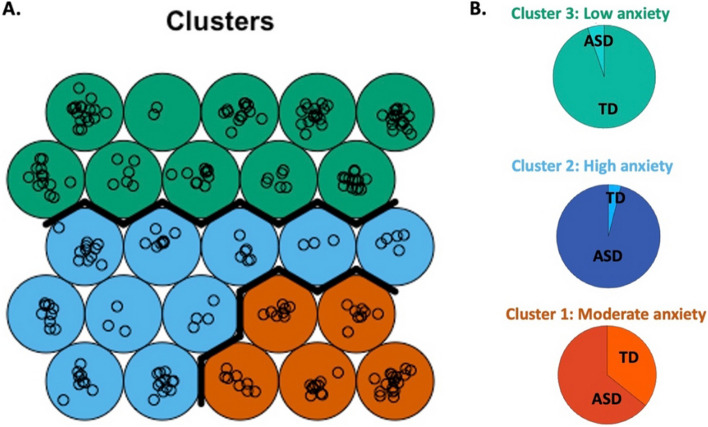
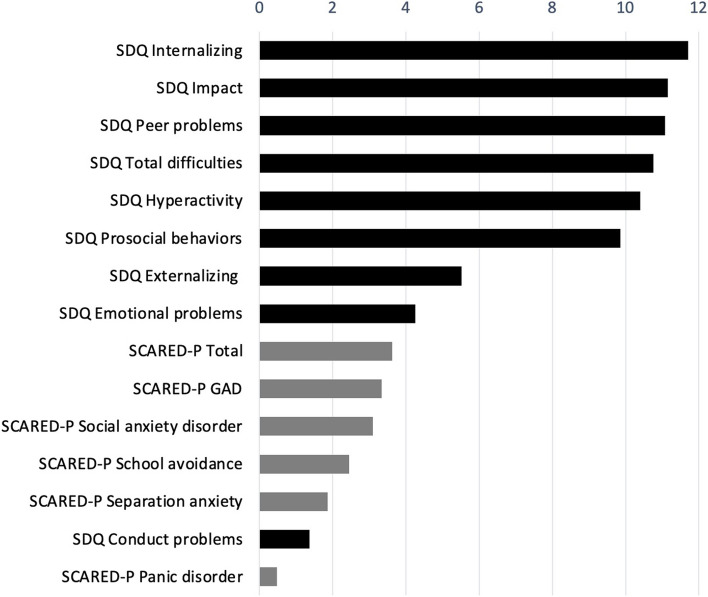
Results: An artificial neural network analysis using a self-organizing map, a statistical technique used to cluster large datasets, revealed 3 distinct anxiety profiles: low (n = 114, 5% ASD), moderate (n = 70, 64% ASD) and high (n = 78, 96% ASD) anxiety. A recursive feature elimination analysis revealed that depression and peer problems contributed the most to differences between the anxiety profiles. Difficulties with peers in individuals with ASD who experience anxiety may be related to challenges with social competence and this may heighten depressive symptoms.
Conclusion: Findings highlight the importance of assessing depressive symptoms in children and adolescents with ASD who experience anxiety. Identifying anxiety profiles among children and adolescents with ASD may prove beneficial in clinical practice by facilitating the development of tailored interventions that aid in managing anxiety and depressive symptoms. Furthermore, strengthening social communication skills may improve peer relationships and could aid in managing depressive symptoms among children and adolescents with ASD who experience anxiety.
期刊介绍:
BMC Psychology is an open access, peer-reviewed journal that considers manuscripts on all aspects of psychology, human behavior and the mind, including developmental, clinical, cognitive, experimental, health and social psychology, as well as personality and individual differences. The journal welcomes quantitative and qualitative research methods, including animal studies.



 京公网安备 11010802042870号
京ICP备2023020795号-1
京公网安备 11010802042870号
京ICP备2023020795号-1

 分享
分享
 求助内容:
求助内容: 应助结果提醒方式:
 扫码关注我们
