Insights Into Perioperative Hypertension Management in Europe: Results From a Survey Endorsed by the European Association of Cardiothoracic Anaesthesiology and Intensive Care (EACTAIC)
{"title":"Insights Into Perioperative Hypertension Management in Europe: Results From a Survey Endorsed by the European Association of Cardiothoracic Anaesthesiology and Intensive Care (EACTAIC)","authors":"Gianluca Paternoster MD, PhD Prof , Fabio Sangalli MD , Blanca Martinez Lopez de Arroyabe MD, PhD , Pietro Bertini MD, PhD , Giulia Brizzi MD , Mauro D'Amora MD , Martina Locatelli MD , Alberto Marabotti MD , Fabio Guarracino MD","doi":"10.1053/j.jvca.2024.09.017","DOIUrl":null,"url":null,"abstract":"<div><h3>Objectives</h3><div>Perioperative blood pressure control is crucial to ensure organ perfusion and avoid adverse events. However, no consensus on blood pressure targets is available. This study was designed to gain insights into current European perioperative hypertension management practices.</div></div><div><h3>Design</h3><div>Survey research.</div></div><div><h3>Setting</h3><div>Online survey.</div></div><div><h3>Participants</h3><div>The survey was administered to members of the European Association of Cardiothoracic Anaesthesiology and Intensive Care and distributed through the organization's social media.</div></div><div><h3>Interventions</h3><div>A 22-item questionnaire on the approach to perioperative hypertension control and its pharmacological management.</div></div><div><h3>Measurements and Main Results</h3><div>The study included surveys completed between July 1 and October 30, 2023. In total, 339 participants completed the questionnaire; 70% were anesthesiologists, 17% were intensive care physicians, and 12% were cardiac surgeons.</div></div><div><h3>Major findings</h3><div>More than 50% of respondents declared dealing with perioperative hypertension in 20% to 50% of their surgeries, and most target the 120 to 140 mmHg systolic blood pressure (SBP) range during surgery. Respondents mostly rely on α-adrenoreceptor antagonists (29%), nitrates (23%), and calcium channel blockers (15%) to manage perioperative hypertension. Titratable control was the most appreciated attribute of intravenous antihypertensives. Antihypertensive treatment failure occurred in less than 20% of surgeries, and the highest risk of hypotensive episodes was perceived by participants to be when using nitroglycerin and nitroprusside.</div></div><div><h3>Conclusions</h3><div>Perioperative SBP targets above 140 mmHg are uncommon among respondents, who predominantly target SBP values between 120 and 140 mmHg. The choice of intravenous antihypertensives is based on their manageability and user experience, and titratable control is the most appreciated characteristic.</div></div>","PeriodicalId":15176,"journal":{"name":"Journal of cardiothoracic and vascular anesthesia","volume":"38 12","pages":"Pages 2959-2964"},"PeriodicalIF":2.1000,"publicationDate":"2024-12-01","publicationTypes":"Journal Article","fieldsOfStudy":null,"isOpenAccess":false,"openAccessPdf":"","citationCount":"0","resultStr":null,"platform":"Semanticscholar","paperid":null,"PeriodicalName":"Journal of cardiothoracic and vascular anesthesia","FirstCategoryId":"3","ListUrlMain":"https://www.sciencedirect.com/science/article/pii/S1053077024006128","RegionNum":4,"RegionCategory":"医学","ArticlePicture":[],"TitleCN":null,"AbstractTextCN":null,"PMCID":null,"EPubDate":"2024/9/19 0:00:00","PubModel":"Epub","JCR":"Q2","JCRName":"ANESTHESIOLOGY","Score":null,"Total":0}
引用次数: 0
Abstract
Objectives
Perioperative blood pressure control is crucial to ensure organ perfusion and avoid adverse events. However, no consensus on blood pressure targets is available. This study was designed to gain insights into current European perioperative hypertension management practices.
Design
Survey research.
Setting
Online survey.
Participants
The survey was administered to members of the European Association of Cardiothoracic Anaesthesiology and Intensive Care and distributed through the organization's social media.
Interventions
A 22-item questionnaire on the approach to perioperative hypertension control and its pharmacological management.
Measurements and Main Results
The study included surveys completed between July 1 and October 30, 2023. In total, 339 participants completed the questionnaire; 70% were anesthesiologists, 17% were intensive care physicians, and 12% were cardiac surgeons.
Major findings
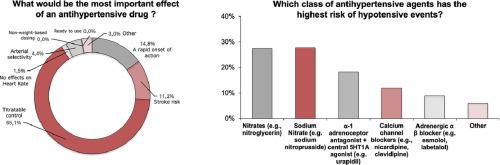
More than 50% of respondents declared dealing with perioperative hypertension in 20% to 50% of their surgeries, and most target the 120 to 140 mmHg systolic blood pressure (SBP) range during surgery. Respondents mostly rely on α-adrenoreceptor antagonists (29%), nitrates (23%), and calcium channel blockers (15%) to manage perioperative hypertension. Titratable control was the most appreciated attribute of intravenous antihypertensives. Antihypertensive treatment failure occurred in less than 20% of surgeries, and the highest risk of hypotensive episodes was perceived by participants to be when using nitroglycerin and nitroprusside.
Conclusions
Perioperative SBP targets above 140 mmHg are uncommon among respondents, who predominantly target SBP values between 120 and 140 mmHg. The choice of intravenous antihypertensives is based on their manageability and user experience, and titratable control is the most appreciated characteristic.
期刊介绍:
The Journal of Cardiothoracic and Vascular Anesthesia is primarily aimed at anesthesiologists who deal with patients undergoing cardiac, thoracic or vascular surgical procedures. JCVA features a multidisciplinary approach, with contributions from cardiac, vascular and thoracic surgeons, cardiologists, and other related specialists. Emphasis is placed on rapid publication of clinically relevant material.



 京公网安备 11010802042870号
京ICP备2023020795号-1
京公网安备 11010802042870号
京ICP备2023020795号-1

 分享
分享
 求助内容:
求助内容: 应助结果提醒方式:
 扫码关注我们
