{"title":"Preoperative Serum Cystatin C as an Independent Prognostic Factor for Survival in Patients with Renal Cell Carcinoma.","authors":"Hui Ma, Peipei Wang, Zhao Hou, Huiyu Zhou, Dingyang Lv, Fan Cui, Weibing Shuang","doi":"10.7150/jca.97711","DOIUrl":null,"url":null,"abstract":"<p><p><b>Purpose:</b> This study aims to evaluate the prognostic significance of preoperative serum cystatin C (Cys-C) in patients with renal cell carcinoma (RCC). <b>Methods:</b> We analyzed clinicopathological data and follow-up information of 624 RCC patients who underwent partial or radical nephrectomy at our institution. The optimal cutoff value of Cys-C was determined using X-tile software. Survival outcomes, including overall survival (OS) and cancer-specific survival (CSS), were evaluated using the Kaplan-Meier method and log-rank test. To avoid overfitting and collinearity, we used LASSO-based multivariable Cox regression analysis to identify independent predictors of OS and CSS. The predictive accuracy of the established model, including preoperative serum Cys-C, was evaluated using the time-dependent receiver operating characteristic (ROC) curves and the area under the curve (AUC). <b>Results:</b> The median follow-up period was 40 months. The optimal cutoff value of preoperative serum Cys-C levels was 0.95 mg/L. Compared with the low Cys-C group, patients in the high Cys-C group had significantly shorter OS and CSS. Multivariable Cox regression analysis indicated that elevated preoperative serum Cys-C level was an independent adverse predictor for RCC patients post-nephrectomy. After adjusting for all covariates, high preoperative serum Cys-C level was associated with worse OS (hazard ratio [HR]: 2.254; 95% confidence interval [CI]: 1.144, 4.439; <i>P</i> = 0.019) and CSS (HR: 3.621; 95% CI: 1.386, 9.456; <i>P</i> = 0.009). Time-dependent ROC analysis demonstrated that our model, including preoperative serum Cys-C, performed well in predicting accuracy of survival. <b>Conclusions:</b> Preoperative serum Cys-C level is an effective prognostic indicator for OS and CSS in RCC patients undergoing nephrectomy.</p>","PeriodicalId":15183,"journal":{"name":"Journal of Cancer","volume":"15 18","pages":"5978-5985"},"PeriodicalIF":3.2000,"publicationDate":"2024-09-23","publicationTypes":"Journal Article","fieldsOfStudy":null,"isOpenAccess":false,"openAccessPdf":"https://www.ncbi.nlm.nih.gov/pmc/articles/PMC11493004/pdf/","citationCount":"0","resultStr":null,"platform":"Semanticscholar","paperid":null,"PeriodicalName":"Journal of Cancer","FirstCategoryId":"3","ListUrlMain":"https://doi.org/10.7150/jca.97711","RegionNum":3,"RegionCategory":"医学","ArticlePicture":[],"TitleCN":null,"AbstractTextCN":null,"PMCID":null,"EPubDate":"2024/1/1 0:00:00","PubModel":"eCollection","JCR":"Q2","JCRName":"ONCOLOGY","Score":null,"Total":0}
引用次数: 0
Abstract
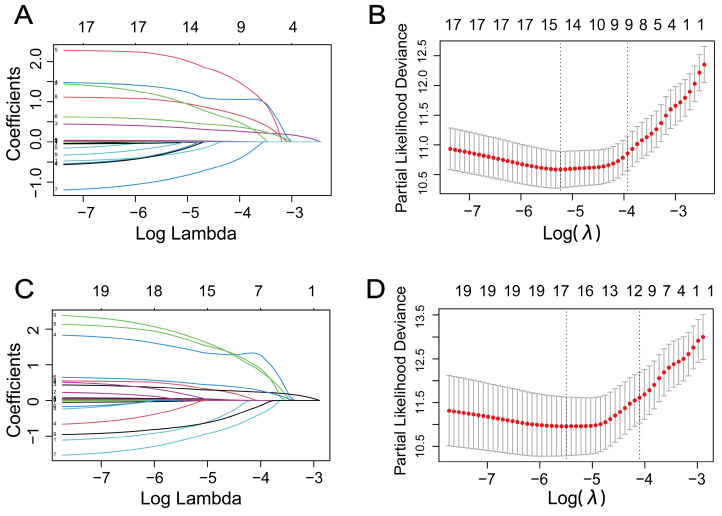
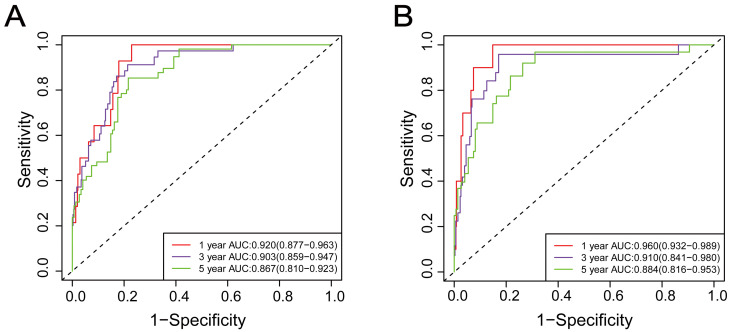
Purpose: This study aims to evaluate the prognostic significance of preoperative serum cystatin C (Cys-C) in patients with renal cell carcinoma (RCC). Methods: We analyzed clinicopathological data and follow-up information of 624 RCC patients who underwent partial or radical nephrectomy at our institution. The optimal cutoff value of Cys-C was determined using X-tile software. Survival outcomes, including overall survival (OS) and cancer-specific survival (CSS), were evaluated using the Kaplan-Meier method and log-rank test. To avoid overfitting and collinearity, we used LASSO-based multivariable Cox regression analysis to identify independent predictors of OS and CSS. The predictive accuracy of the established model, including preoperative serum Cys-C, was evaluated using the time-dependent receiver operating characteristic (ROC) curves and the area under the curve (AUC). Results: The median follow-up period was 40 months. The optimal cutoff value of preoperative serum Cys-C levels was 0.95 mg/L. Compared with the low Cys-C group, patients in the high Cys-C group had significantly shorter OS and CSS. Multivariable Cox regression analysis indicated that elevated preoperative serum Cys-C level was an independent adverse predictor for RCC patients post-nephrectomy. After adjusting for all covariates, high preoperative serum Cys-C level was associated with worse OS (hazard ratio [HR]: 2.254; 95% confidence interval [CI]: 1.144, 4.439; P = 0.019) and CSS (HR: 3.621; 95% CI: 1.386, 9.456; P = 0.009). Time-dependent ROC analysis demonstrated that our model, including preoperative serum Cys-C, performed well in predicting accuracy of survival. Conclusions: Preoperative serum Cys-C level is an effective prognostic indicator for OS and CSS in RCC patients undergoing nephrectomy.
期刊介绍:
Journal of Cancer is an open access, peer-reviewed journal with broad scope covering all areas of cancer research, especially novel concepts, new methods, new regimens, new therapeutic agents, and alternative approaches for early detection and intervention of cancer. The Journal is supported by an international editorial board consisting of a distinguished team of cancer researchers. Journal of Cancer aims at rapid publication of high quality results in cancer research while maintaining rigorous peer-review process.




 京公网安备 11010802042870号
京ICP备2023020795号-1
京公网安备 11010802042870号
京ICP备2023020795号-1

 分享
分享
 求助内容:
求助内容: 应助结果提醒方式:
 扫码关注我们
