Quantifying the allergenic potency of mammalian meat sources, an important step in providing a framework for improved management of mammalian meat allergy after tick bite (alpha-gal syndrome/AGS)
{"title":"Quantifying the allergenic potency of mammalian meat sources, an important step in providing a framework for improved management of mammalian meat allergy after tick bite (alpha-gal syndrome/AGS)","authors":"Sheryl van Nunen","doi":"10.1111/all.16381","DOIUrl":null,"url":null,"abstract":"<p>The association of mammalian meat allergy with tick bites has now been reported on all six continents where humans are tick bitten, in over 33 countries, after bites from several tick species. Intriguingly, this 20th century pandemic of allergy appears to have originated in a pandemic of infectious disease occurring 28 million years or so ago, when our ancestors likely survived because they had inactivated the gene for alpha-galactosyltransferase. When alpha-gal is injected by the tick into a human host, it bypasses dendritic cell processing, thereby committing our immune system to making antibody responses, including specific IgE.</p><p>Mammalian meat allergy after tick bite has been well characterised clinically. The spectrum includes all grades of systemic reactions (typically 3–6 h after ingestion), gut symptoms (IgE-mediated and non-IgE-mediated), and, very rarely, non-IgE-mediated cutaneous manifestations alone. Mabelane et al. have determined levels of alpha-gal specific IgE for both confirming the diagnosis and indicating a high likelihood of a reaction occurring. In addition, Fischer et al. have documented that only a minority of alpha-gal sensitised individuals will react after eating mammalian meat, and emphasised the modulating effect of amplifying factors (“co-factors”).</p><p>Convincing evidence for the pivotal role of tick bites in developing mammalian meat allergy includes the study detecting alpha-gal in the gut of <i>Ixodes ricinus</i> by Hamsten et al., followed by alpha-gal being found in several other tick species<i>;</i> along with the demonstration that ticks have the ability to manufacture alpha-gal in response to infectious agents (Cabezas-Cruz et al.); and, finally, the development of mouse models of sensitisation (initially by Araujo et al.). The question remaining is why is this pandemic occurring now? What has changed for the ticks? Until we have these answers, the number of individuals with mammalian meat allergy after tick bite is likely to continue to increase. A full list of research milestones in alpha-gal syndrome and their respective research papers can be found in Table 1.</p><p>Major management challenges will therefore remain, foremost of which is advising patients regarding the risk presented by ingesting mammalian meat in its different forms. Perusko et al.,<span><sup>1</sup></span> have quantified the allergenic potency of various mammalian meat sources. They conclude that the allergenic potency of mammalian meat depends on the origin of the meat, the different cuts and type of processing, with innards and game lean meat posing the greatest risk, and note that the risk exists even from processed mammalian meat. They found cow's milk products to have the lowest risk. This information has now moved from being an anecdotal repository held by clinicians experienced in managing such patients to being published evidence. It is thus available as a guide for primary care and other physicians, well-informed patients and patient support groups world-wide to improve the management and quality of life of patients with mammalian meat allergy after a tick bite. Moreover, this work provides factual information which complements discussion of the role of amplifying factors (“co-factors”) in modulating reaction severity, factors which are particularly influential in this allergy.<span><sup>2</sup></span></p><p>The pervasiveness of ramifications of sensitisation to the allergen, alpha-gal, has led to the term “alpha-gal syndrome/AGS” being employed. Mullins et al.<span><sup>3</sup></span> initiated this work with the finding of alpha- gal in mammalian gelatine. A plethora of publications has since reported reactions or examined the safety of several medications and devices containing mammalian product: vaccines, monoclonal antibodies, prosthetic cardiac valves, snake anti-venom, amongst others. The pace of development of medical advances and surgical improvements provides increasing potential for our patients sensitised to alpha-gal to react to the unsuspected presence of their allergen (e.g., nerve wrapping containing mammalian products). Most alpha-gal sensitised individuals do not react to the trace amounts in many of these sources. Fortunately, no COVID vaccine has contained an alpha-gal source. Unfortunately, for the exquisitely sensitive, manufacturers do not necessarily test for the presence of alpha-gal in their end product. Regulatory authorities should be encouraged to request that such information is made available (Figure 1).</p><p>Valuable insights into allergy and inflammation have been revealed, commencing with the view that it represents a paradigm for the development of an allergy, including environmental influences. It is an allergy which has occurred for living memory, albeit rarely, until differing environmental changes (e.g., tick host change, host/tick infectious agents) have seemingly catalysed a pandemic. The ability to produce antibodies with alpha-gal reactivity in a defined fashion may enable development of therapeutic anti-alpha-gal antibodies, for instance, for protection against malaria or for inhibition of pathogenic anti-alpha-gal antibodies in AGS and xenotransplant rejection. Towards this goal, was the work describing the structural and genetic basis of the human alpha-galactosyl response, revealing that the presence of an IGHV3-7 germline-encoded tryptophan residue (W33) characterises the human anti-alpha-gal antibody response.<span><sup>4</sup></span></p><p>Arguably, the most important public health consequence of tick bites, might well be the increased burden of atherosclerosis in alpha-gal sensitised individuals, first described by Wilson et al.<span><sup>5</sup></span> and confirmed in a large cohort by Vernon et al.<span><sup>6</sup></span> Confounding factors (tobacco use, BMI, alcohol habit, diet, sIgE/Total IgE ratio), however, will need to be examined before a cause-effect relationship can be established. Of concern, is that given only a minority of those sensitised will clinically express mammalian meat allergy, around 25% of those in tick endemic regions might possess a risk factor for atherosclerosis of which they are unaware. Moreover, as Keet et al.<span><sup>7</sup></span> have shown excess cardiovascular mortality for a number of food sensitisations where consumption of the allergen has continued in the absence of significant symptoms, the role of allergen-induced inflammation, particularly alpha-gal, is now under closer scrutiny in atherosclerosis and other inflammatory diseases. Expanded investigation of the allergenic potency of various foods, as envisaged by Perusko et al.,<span><sup>1</sup></span> could conceivably help limit the inflammation if mammalian meat continues to be ingested, if a threshold is established.</p><p>The absence of subsequent tick bites has been shown to significantly reduce the level of sensitisation to alpha-gal (e.g., Baumgart et al.<span><sup>8</sup></span>). Crucially, then, both primary and secondary prevention of mammalian meat allergy after tick bite and sensitisation to alpha-gal is possible, as the trigger is known and avoidable www.tiara.org.au.<span><sup>9</sup></span></p><p>N/A.</p><p>The author declares no conflict of interest related to this manuscript.</p>","PeriodicalId":122,"journal":{"name":"Allergy","volume":"80 1","pages":"9-11"},"PeriodicalIF":12.0000,"publicationDate":"2024-11-04","publicationTypes":"Journal Article","fieldsOfStudy":null,"isOpenAccess":false,"openAccessPdf":"https://onlinelibrary.wiley.com/doi/epdf/10.1111/all.16381","citationCount":"0","resultStr":null,"platform":"Semanticscholar","paperid":null,"PeriodicalName":"Allergy","FirstCategoryId":"3","ListUrlMain":"https://onlinelibrary.wiley.com/doi/10.1111/all.16381","RegionNum":1,"RegionCategory":"医学","ArticlePicture":[],"TitleCN":null,"AbstractTextCN":null,"PMCID":null,"EPubDate":"","PubModel":"","JCR":"Q1","JCRName":"ALLERGY","Score":null,"Total":0}
引用次数: 0
Abstract
The association of mammalian meat allergy with tick bites has now been reported on all six continents where humans are tick bitten, in over 33 countries, after bites from several tick species. Intriguingly, this 20th century pandemic of allergy appears to have originated in a pandemic of infectious disease occurring 28 million years or so ago, when our ancestors likely survived because they had inactivated the gene for alpha-galactosyltransferase. When alpha-gal is injected by the tick into a human host, it bypasses dendritic cell processing, thereby committing our immune system to making antibody responses, including specific IgE.
Mammalian meat allergy after tick bite has been well characterised clinically. The spectrum includes all grades of systemic reactions (typically 3–6 h after ingestion), gut symptoms (IgE-mediated and non-IgE-mediated), and, very rarely, non-IgE-mediated cutaneous manifestations alone. Mabelane et al. have determined levels of alpha-gal specific IgE for both confirming the diagnosis and indicating a high likelihood of a reaction occurring. In addition, Fischer et al. have documented that only a minority of alpha-gal sensitised individuals will react after eating mammalian meat, and emphasised the modulating effect of amplifying factors (“co-factors”).
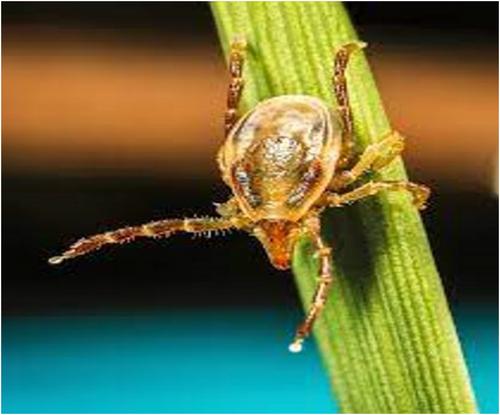
Convincing evidence for the pivotal role of tick bites in developing mammalian meat allergy includes the study detecting alpha-gal in the gut of Ixodes ricinus by Hamsten et al., followed by alpha-gal being found in several other tick species; along with the demonstration that ticks have the ability to manufacture alpha-gal in response to infectious agents (Cabezas-Cruz et al.); and, finally, the development of mouse models of sensitisation (initially by Araujo et al.). The question remaining is why is this pandemic occurring now? What has changed for the ticks? Until we have these answers, the number of individuals with mammalian meat allergy after tick bite is likely to continue to increase. A full list of research milestones in alpha-gal syndrome and their respective research papers can be found in Table 1.
Major management challenges will therefore remain, foremost of which is advising patients regarding the risk presented by ingesting mammalian meat in its different forms. Perusko et al.,1 have quantified the allergenic potency of various mammalian meat sources. They conclude that the allergenic potency of mammalian meat depends on the origin of the meat, the different cuts and type of processing, with innards and game lean meat posing the greatest risk, and note that the risk exists even from processed mammalian meat. They found cow's milk products to have the lowest risk. This information has now moved from being an anecdotal repository held by clinicians experienced in managing such patients to being published evidence. It is thus available as a guide for primary care and other physicians, well-informed patients and patient support groups world-wide to improve the management and quality of life of patients with mammalian meat allergy after a tick bite. Moreover, this work provides factual information which complements discussion of the role of amplifying factors (“co-factors”) in modulating reaction severity, factors which are particularly influential in this allergy.2
The pervasiveness of ramifications of sensitisation to the allergen, alpha-gal, has led to the term “alpha-gal syndrome/AGS” being employed. Mullins et al.3 initiated this work with the finding of alpha- gal in mammalian gelatine. A plethora of publications has since reported reactions or examined the safety of several medications and devices containing mammalian product: vaccines, monoclonal antibodies, prosthetic cardiac valves, snake anti-venom, amongst others. The pace of development of medical advances and surgical improvements provides increasing potential for our patients sensitised to alpha-gal to react to the unsuspected presence of their allergen (e.g., nerve wrapping containing mammalian products). Most alpha-gal sensitised individuals do not react to the trace amounts in many of these sources. Fortunately, no COVID vaccine has contained an alpha-gal source. Unfortunately, for the exquisitely sensitive, manufacturers do not necessarily test for the presence of alpha-gal in their end product. Regulatory authorities should be encouraged to request that such information is made available (Figure 1).
Valuable insights into allergy and inflammation have been revealed, commencing with the view that it represents a paradigm for the development of an allergy, including environmental influences. It is an allergy which has occurred for living memory, albeit rarely, until differing environmental changes (e.g., tick host change, host/tick infectious agents) have seemingly catalysed a pandemic. The ability to produce antibodies with alpha-gal reactivity in a defined fashion may enable development of therapeutic anti-alpha-gal antibodies, for instance, for protection against malaria or for inhibition of pathogenic anti-alpha-gal antibodies in AGS and xenotransplant rejection. Towards this goal, was the work describing the structural and genetic basis of the human alpha-galactosyl response, revealing that the presence of an IGHV3-7 germline-encoded tryptophan residue (W33) characterises the human anti-alpha-gal antibody response.4
Arguably, the most important public health consequence of tick bites, might well be the increased burden of atherosclerosis in alpha-gal sensitised individuals, first described by Wilson et al.5 and confirmed in a large cohort by Vernon et al.6 Confounding factors (tobacco use, BMI, alcohol habit, diet, sIgE/Total IgE ratio), however, will need to be examined before a cause-effect relationship can be established. Of concern, is that given only a minority of those sensitised will clinically express mammalian meat allergy, around 25% of those in tick endemic regions might possess a risk factor for atherosclerosis of which they are unaware. Moreover, as Keet et al.7 have shown excess cardiovascular mortality for a number of food sensitisations where consumption of the allergen has continued in the absence of significant symptoms, the role of allergen-induced inflammation, particularly alpha-gal, is now under closer scrutiny in atherosclerosis and other inflammatory diseases. Expanded investigation of the allergenic potency of various foods, as envisaged by Perusko et al.,1 could conceivably help limit the inflammation if mammalian meat continues to be ingested, if a threshold is established.
The absence of subsequent tick bites has been shown to significantly reduce the level of sensitisation to alpha-gal (e.g., Baumgart et al.8). Crucially, then, both primary and secondary prevention of mammalian meat allergy after tick bite and sensitisation to alpha-gal is possible, as the trigger is known and avoidable www.tiara.org.au.9
N/A.
The author declares no conflict of interest related to this manuscript.
期刊介绍:
Allergy is an international and multidisciplinary journal that aims to advance, impact, and communicate all aspects of the discipline of Allergy/Immunology. It publishes original articles, reviews, position papers, guidelines, editorials, news and commentaries, letters to the editors, and correspondences. The journal accepts articles based on their scientific merit and quality.
Allergy seeks to maintain contact between basic and clinical Allergy/Immunology and encourages contributions from contributors and readers from all countries. In addition to its publication, Allergy also provides abstracting and indexing information. Some of the databases that include Allergy abstracts are Abstracts on Hygiene & Communicable Disease, Academic Search Alumni Edition, AgBiotech News & Information, AGRICOLA Database, Biological Abstracts, PubMed Dietary Supplement Subset, and Global Health, among others.



 京公网安备 11010802042870号
京ICP备2023020795号-1
京公网安备 11010802042870号
京ICP备2023020795号-1

 分享
分享
 求助内容:
求助内容: 应助结果提醒方式:
 扫码关注我们
