Clocks at a snail pace: biological rhythms in terrestrial gastropods.
IF 2.4 3区 生物学Q2 MULTIDISCIPLINARY SCIENCESPeerJPub Date : 2024-10-29eCollection Date: 2024-01-01DOI:10.7717/peerj.18318
Rodrigo Brincalepe Salvador, Barbara Mizumo Tomotani
{"title":"Clocks at a snail pace: biological rhythms in terrestrial gastropods.","authors":"Rodrigo Brincalepe Salvador, Barbara Mizumo Tomotani","doi":"10.7717/peerj.18318","DOIUrl":null,"url":null,"abstract":"<p><p>Biological rhythms are ubiquitous across the tree of life. Organisms must allocate their activities into moments of the day and of the season that will increase their probability of surviving and reproducing, which is done in the form of daily and annual rhythms. So far, the vast majority of studies on biological rhythms have focused on classical laboratory model species. Still, the use of non-model species is gaining traction, as part of an effort to achieve a more holistic understanding of clock/calendar mechanisms in the \"real world\" but this requires species that can be studied in both the lab and in nature. Terrestrial gastropods, <i>i.e</i>., land snails and slugs, have the potential to be exciting models for the study of biological rhythms in nature. Therefore, we provide a review of the research on biological rhythms in terrestrial gastropods, with a focus on ecology and evolution. We present the state of the art in the field while giving a historical perspective of the studies, exploring each of the main lineages of terrestrial gastropods. We also point out some interesting directions that future studies could take to fill some of the more urgent gaps in current knowledge. We hope that our contribution will renew interest in this area and spark novel projects.</p>","PeriodicalId":19799,"journal":{"name":"PeerJ","volume":"12 ","pages":"e18318"},"PeriodicalIF":2.4000,"publicationDate":"2024-10-29","publicationTypes":"Journal Article","fieldsOfStudy":null,"isOpenAccess":false,"openAccessPdf":"https://www.ncbi.nlm.nih.gov/pmc/articles/PMC11529600/pdf/","citationCount":"0","resultStr":null,"platform":"Semanticscholar","paperid":null,"PeriodicalName":"PeerJ","FirstCategoryId":"99","ListUrlMain":"https://doi.org/10.7717/peerj.18318","RegionNum":3,"RegionCategory":"生物学","ArticlePicture":[],"TitleCN":null,"AbstractTextCN":null,"PMCID":null,"EPubDate":"2024/1/1 0:00:00","PubModel":"eCollection","JCR":"Q2","JCRName":"MULTIDISCIPLINARY SCIENCES","Score":null,"Total":0}
引用次数: 0
Abstract
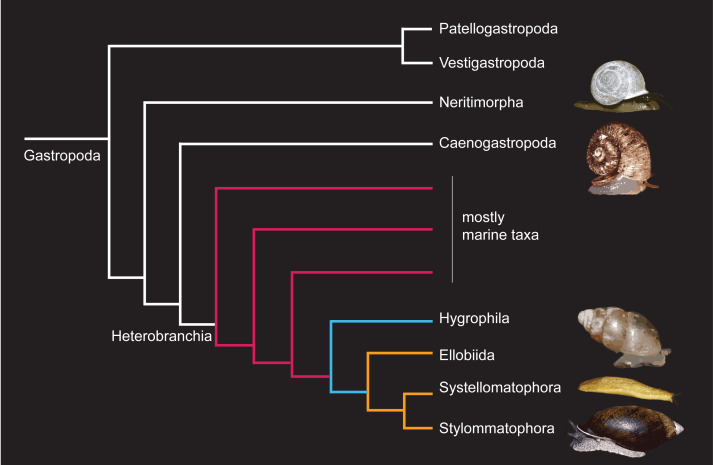
Biological rhythms are ubiquitous across the tree of life. Organisms must allocate their activities into moments of the day and of the season that will increase their probability of surviving and reproducing, which is done in the form of daily and annual rhythms. So far, the vast majority of studies on biological rhythms have focused on classical laboratory model species. Still, the use of non-model species is gaining traction, as part of an effort to achieve a more holistic understanding of clock/calendar mechanisms in the "real world" but this requires species that can be studied in both the lab and in nature. Terrestrial gastropods, i.e., land snails and slugs, have the potential to be exciting models for the study of biological rhythms in nature. Therefore, we provide a review of the research on biological rhythms in terrestrial gastropods, with a focus on ecology and evolution. We present the state of the art in the field while giving a historical perspective of the studies, exploring each of the main lineages of terrestrial gastropods. We also point out some interesting directions that future studies could take to fill some of the more urgent gaps in current knowledge. We hope that our contribution will renew interest in this area and spark novel projects.
期刊介绍:
PeerJ is an open access peer-reviewed scientific journal covering research in the biological and medical sciences. At PeerJ, authors take out a lifetime publication plan (for as little as $99) which allows them to publish articles in the journal for free, forever. PeerJ has 5 Nobel Prize Winners on the Board; they have won several industry and media awards; and they are widely recognized as being one of the most interesting recent developments in academic publishing.




 京公网安备 11010802042870号
京ICP备2023020795号-1
京公网安备 11010802042870号
京ICP备2023020795号-1

 分享
分享
 求助内容:
求助内容: 应助结果提醒方式:
 扫码关注我们
