King L. Hung, Matthew G. Jones, Ivy Tsz-Lo Wong, Ellis J. Curtis, Joshua T. Lange, Britney Jiayu He, Jens Luebeck, Rachel Schmargon, Elisa Scanu, Lotte Brückner, Xiaowei Yan, Rui Li, Aditi Gnanasekar, Rocío Chamorro González, Julia A. Belk, Zhonglin Liu, Bruno Melillo, Vineet Bafna, Jan R. Dörr, Benjamin Werner, Weini Huang, Benjamin F. Cravatt, Anton G. Henssen, Paul S. Mischel, Howard Y. Chang
{"title":"Coordinated inheritance of extrachromosomal DNAs in cancer cells","authors":"King L. Hung, Matthew G. Jones, Ivy Tsz-Lo Wong, Ellis J. Curtis, Joshua T. Lange, Britney Jiayu He, Jens Luebeck, Rachel Schmargon, Elisa Scanu, Lotte Brückner, Xiaowei Yan, Rui Li, Aditi Gnanasekar, Rocío Chamorro González, Julia A. Belk, Zhonglin Liu, Bruno Melillo, Vineet Bafna, Jan R. Dörr, Benjamin Werner, Weini Huang, Benjamin F. Cravatt, Anton G. Henssen, Paul S. Mischel, Howard Y. Chang","doi":"10.1038/s41586-024-07861-8","DOIUrl":null,"url":null,"abstract":"The chromosomal theory of inheritance dictates that genes on the same chromosome segregate together while genes on different chromosomes assort independently1. Extrachromosomal DNAs (ecDNAs) are common in cancer and drive oncogene amplification, dysregulated gene expression and intratumoural heterogeneity through random segregation during cell division2,3. Distinct ecDNA sequences, termed ecDNA species, can co-exist to facilitate intermolecular cooperation in cancer cells4. How multiple ecDNA species within a tumour cell are assorted and maintained across somatic cell generations is unclear. Here we show that cooperative ecDNA species are coordinately inherited through mitotic co-segregation. Imaging and single-cell analyses show that multiple ecDNAs encoding distinct oncogenes co-occur and are correlated in copy number in human cancer cells. ecDNA species are coordinately segregated asymmetrically during mitosis, resulting in daughter cells with simultaneous copy-number gains in multiple ecDNA species before any selection. Intermolecular proximity and active transcription at the start of mitosis facilitate the coordinated segregation of ecDNA species, and transcription inhibition reduces co-segregation. Computational modelling reveals the quantitative principles of ecDNA co-segregation and co-selection, predicting their observed distributions in cancer cells. Coordinated inheritance of ecDNAs enables co-amplification of specialized ecDNAs containing only enhancer elements and guides therapeutic strategies to jointly deplete cooperating ecDNA oncogenes. Coordinated inheritance of ecDNAs confers stability to oncogene cooperation and novel gene regulatory circuits, allowing winning combinations of epigenetic states to be transmitted across cell generations. Cooperative species of extrachromosomal DNAs are coordinately inherited through mitotic co-segregation.","PeriodicalId":18787,"journal":{"name":"Nature","volume":"635 8037","pages":"201-209"},"PeriodicalIF":48.5000,"publicationDate":"2024-11-06","publicationTypes":"Journal Article","fieldsOfStudy":null,"isOpenAccess":false,"openAccessPdf":"https://www.nature.com/articles/s41586-024-07861-8.pdf","citationCount":"0","resultStr":null,"platform":"Semanticscholar","paperid":null,"PeriodicalName":"Nature","FirstCategoryId":"103","ListUrlMain":"https://www.nature.com/articles/s41586-024-07861-8","RegionNum":1,"RegionCategory":"综合性期刊","ArticlePicture":[],"TitleCN":null,"AbstractTextCN":null,"PMCID":null,"EPubDate":"","PubModel":"","JCR":"Q1","JCRName":"MULTIDISCIPLINARY SCIENCES","Score":null,"Total":0}
引用次数: 0
Abstract
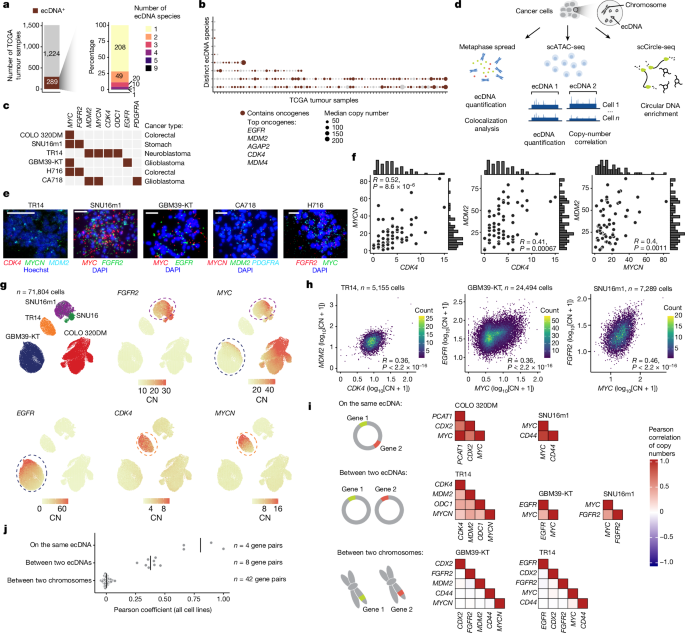
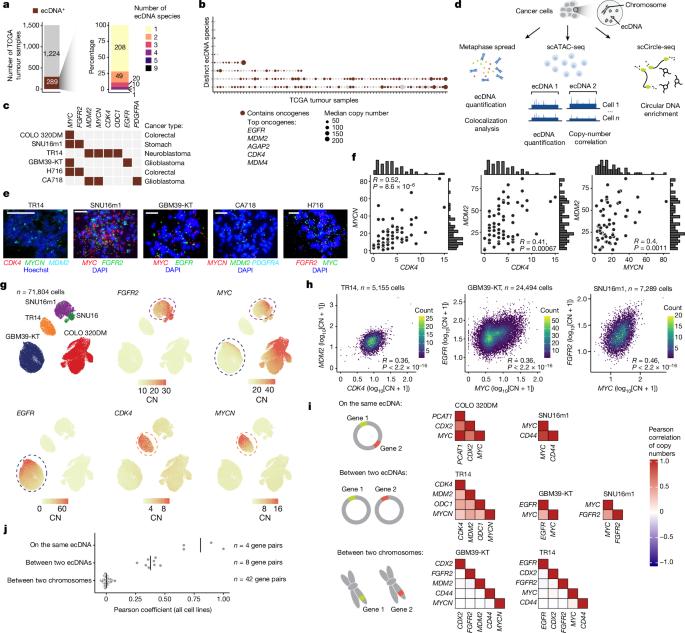
The chromosomal theory of inheritance dictates that genes on the same chromosome segregate together while genes on different chromosomes assort independently1. Extrachromosomal DNAs (ecDNAs) are common in cancer and drive oncogene amplification, dysregulated gene expression and intratumoural heterogeneity through random segregation during cell division2,3. Distinct ecDNA sequences, termed ecDNA species, can co-exist to facilitate intermolecular cooperation in cancer cells4. How multiple ecDNA species within a tumour cell are assorted and maintained across somatic cell generations is unclear. Here we show that cooperative ecDNA species are coordinately inherited through mitotic co-segregation. Imaging and single-cell analyses show that multiple ecDNAs encoding distinct oncogenes co-occur and are correlated in copy number in human cancer cells. ecDNA species are coordinately segregated asymmetrically during mitosis, resulting in daughter cells with simultaneous copy-number gains in multiple ecDNA species before any selection. Intermolecular proximity and active transcription at the start of mitosis facilitate the coordinated segregation of ecDNA species, and transcription inhibition reduces co-segregation. Computational modelling reveals the quantitative principles of ecDNA co-segregation and co-selection, predicting their observed distributions in cancer cells. Coordinated inheritance of ecDNAs enables co-amplification of specialized ecDNAs containing only enhancer elements and guides therapeutic strategies to jointly deplete cooperating ecDNA oncogenes. Coordinated inheritance of ecDNAs confers stability to oncogene cooperation and novel gene regulatory circuits, allowing winning combinations of epigenetic states to be transmitted across cell generations. Cooperative species of extrachromosomal DNAs are coordinately inherited through mitotic co-segregation.
期刊介绍:
Nature is a prestigious international journal that publishes peer-reviewed research in various scientific and technological fields. The selection of articles is based on criteria such as originality, importance, interdisciplinary relevance, timeliness, accessibility, elegance, and surprising conclusions. In addition to showcasing significant scientific advances, Nature delivers rapid, authoritative, insightful news, and interpretation of current and upcoming trends impacting science, scientists, and the broader public. The journal serves a dual purpose: firstly, to promptly share noteworthy scientific advances and foster discussions among scientists, and secondly, to ensure the swift dissemination of scientific results globally, emphasizing their significance for knowledge, culture, and daily life.



 京公网安备 11010802042870号
京ICP备2023020795号-1
京公网安备 11010802042870号
京ICP备2023020795号-1

 分享
分享
 求助内容:
求助内容: 应助结果提醒方式:
 扫码关注我们
