Caroline Dos Santos Costa, Andrea Wendt, Adriana Kramer Fiala Machado, Luiza Isnardi Cardoso Ricardo, André de Oliveira Werneck, Maria Laura da Costa Louzada
{"title":"Ultra-processed food consumption is related to screen time among Brazilian adolescents, adults and older adults.","authors":"Caroline Dos Santos Costa, Andrea Wendt, Adriana Kramer Fiala Machado, Luiza Isnardi Cardoso Ricardo, André de Oliveira Werneck, Maria Laura da Costa Louzada","doi":"10.1017/S0007114524002848","DOIUrl":null,"url":null,"abstract":"<p><p>This study investigated the association between screen time and ultra-processed food (UPF) consumption across the lifespan, using data from the 2019 Brazilian National Health Survey, a cross-sectional and population-based study. A score was used to evaluate UPF consumption, calculated by summing the positive answers to questions about the consumption of ten UPF subgroups on the previous day. Scores ≥5 represented high UPF consumption. Daily time spent engaging with television or other screens was self-reported. Crude and adjusted models were obtained through Poisson regression and results were expressed in prevalence ratios by age group. The sample included 2315 adolescents, 65 803 adults and 22 728 older adults. The prevalence of UPF scores ≥5 was higher according to increased screen time, with dose-response across all age groups and types of screen time. Adolescents, adults and older adults watching television for ≥6 h/d presented prevalence of UPF scores ≥5 1·8 (95 % CI 1·2, 2·9), 1·9 (95 % CI 1·6, 2·3) and 2·2 (95 % CI 1·4, 3·6) times higher, respectively, compared with those who did not watch television. For other screens, the prevalence of UPF scores ≥5 was 2·4 (95 % CI 1·3, 4·1) and 1·6 (95 % CI 1·4, 1·9) times higher for adolescents and adults using screens for ≥ 6 h/d, respectively, while for older adults, only screen times of 2 to < 3 and 3 to < 6 h were significantly associated with UPF scores ≥5. Screen time was associated with high consumption of UPF in all age groups. Considering these associations when planning and implementing interventions would be beneficial for public health across the lifespan.</p>","PeriodicalId":9257,"journal":{"name":"British Journal of Nutrition","volume":" ","pages":"118-125"},"PeriodicalIF":3.0000,"publicationDate":"2025-01-14","publicationTypes":"Journal Article","fieldsOfStudy":null,"isOpenAccess":false,"openAccessPdf":"https://www.ncbi.nlm.nih.gov/pmc/articles/PMC11793949/pdf/","citationCount":"0","resultStr":null,"platform":"Semanticscholar","paperid":null,"PeriodicalName":"British Journal of Nutrition","FirstCategoryId":"3","ListUrlMain":"https://doi.org/10.1017/S0007114524002848","RegionNum":3,"RegionCategory":"医学","ArticlePicture":[],"TitleCN":null,"AbstractTextCN":null,"PMCID":null,"EPubDate":"2024/11/11 0:00:00","PubModel":"Epub","JCR":"Q2","JCRName":"NUTRITION & DIETETICS","Score":null,"Total":0}
引用次数: 0
Abstract
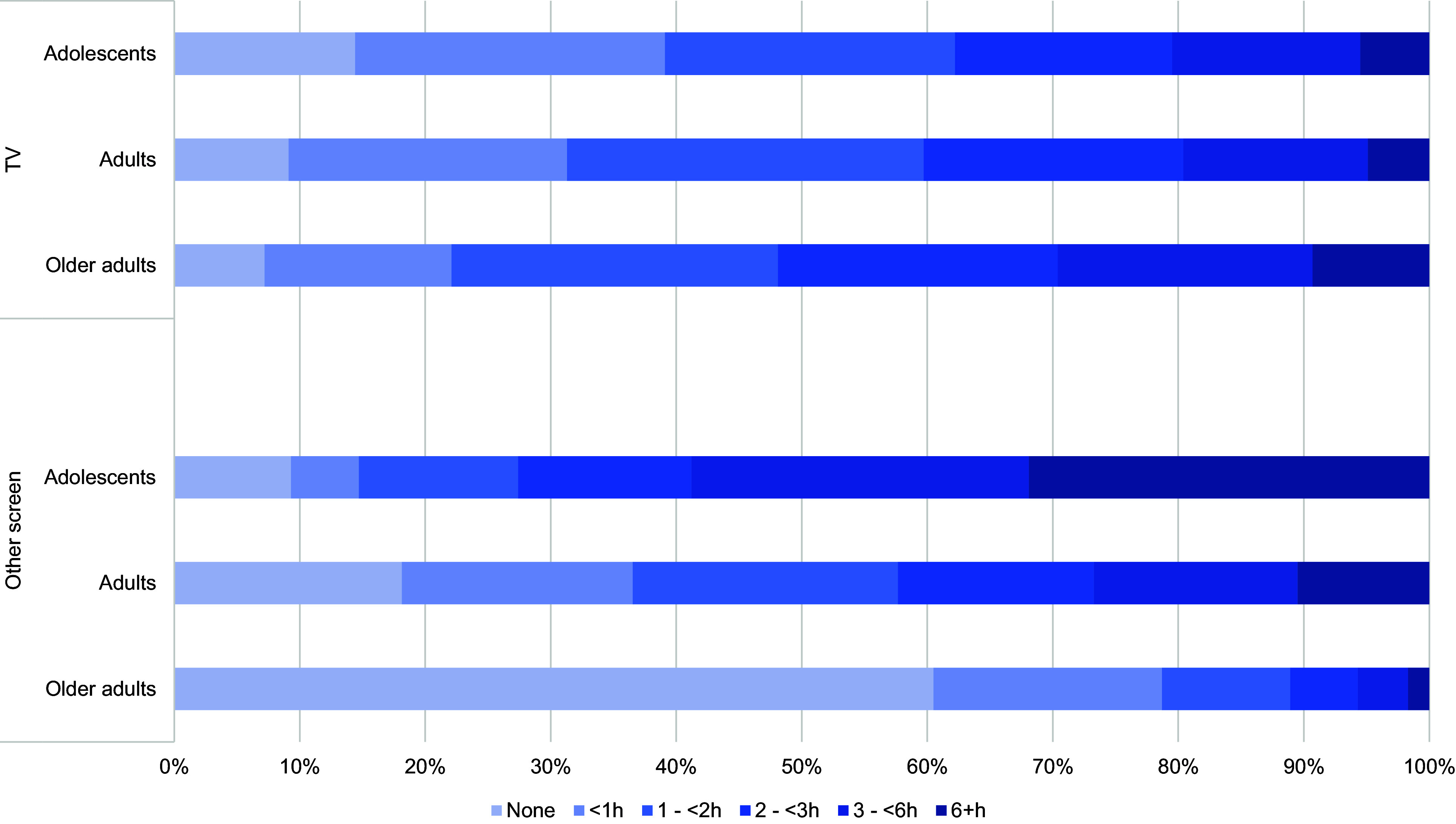
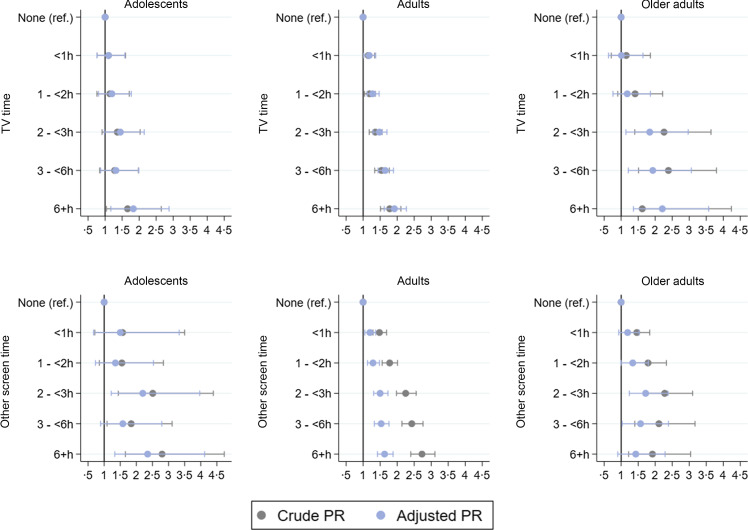
This study investigated the association between screen time and ultra-processed food (UPF) consumption across the lifespan, using data from the 2019 Brazilian National Health Survey, a cross-sectional and population-based study. A score was used to evaluate UPF consumption, calculated by summing the positive answers to questions about the consumption of ten UPF subgroups on the previous day. Scores ≥5 represented high UPF consumption. Daily time spent engaging with television or other screens was self-reported. Crude and adjusted models were obtained through Poisson regression and results were expressed in prevalence ratios by age group. The sample included 2315 adolescents, 65 803 adults and 22 728 older adults. The prevalence of UPF scores ≥5 was higher according to increased screen time, with dose-response across all age groups and types of screen time. Adolescents, adults and older adults watching television for ≥6 h/d presented prevalence of UPF scores ≥5 1·8 (95 % CI 1·2, 2·9), 1·9 (95 % CI 1·6, 2·3) and 2·2 (95 % CI 1·4, 3·6) times higher, respectively, compared with those who did not watch television. For other screens, the prevalence of UPF scores ≥5 was 2·4 (95 % CI 1·3, 4·1) and 1·6 (95 % CI 1·4, 1·9) times higher for adolescents and adults using screens for ≥ 6 h/d, respectively, while for older adults, only screen times of 2 to < 3 and 3 to < 6 h were significantly associated with UPF scores ≥5. Screen time was associated with high consumption of UPF in all age groups. Considering these associations when planning and implementing interventions would be beneficial for public health across the lifespan.
期刊介绍:
British Journal of Nutrition is a leading international peer-reviewed journal covering research on human and clinical nutrition, animal nutrition and basic science as applied to nutrition. The Journal recognises the multidisciplinary nature of nutritional science and includes material from all of the specialities involved in nutrition research, including molecular and cell biology and nutritional genomics.




 京公网安备 11010802042870号
京ICP备2023020795号-1
京公网安备 11010802042870号
京ICP备2023020795号-1

 分享
分享
 求助内容:
求助内容: 应助结果提醒方式:
 扫码关注我们
