William Neves de Carvalho, Tainá Teixeira Viana, Clara Salles Figueiredo, Fernanda Martins, Luiz Carlos Santana Passos
{"title":"Potentially Inappropriate Cardioverter Defibrillator Implants in Secondary Prevention of Death.","authors":"William Neves de Carvalho, Tainá Teixeira Viana, Clara Salles Figueiredo, Fernanda Martins, Luiz Carlos Santana Passos","doi":"10.36660/abc.20220899","DOIUrl":null,"url":null,"abstract":"<p><strong>Background: </strong>Implantable cardioverter defibrillators (ICDs) are recommended for patients experiencing malignant tachyarrhythmias due to irreversible causes, who are clinically stable, and have a life expectancy exceeding one year. However, adverse socioeconomic and psychosocial conditions can adversely affect short-term survival and may render implantation inappropriate.</p><p><strong>Objective: </strong>To assess whether economic and psychosocial markers (EPSM) are associated with higher mortality in the first year (indicating potentially inappropriate implants) following ICD implantation.</p><p><strong>Methods: </strong>A prospective cohort study conducted between 2017 and 2021 included patients with heart failure and left ventricular ejection fraction (LVEF) < 50% who underwent ICD implantation for secondary prophylaxis. Prior to the procedure, patients were evaluated by an MDT, which examined four EPSM variables, namely socioeconomic vulnerability, self-care capacity, pharmacological adherence, and mood disorders. The participants were monitored for at least 12 months. Statistical significance was considered to be p-values < 0.05.</p><p><strong>Results: </strong>A total of 208 individuals were included, with 144 (68.9%) being male. The mean LVEF was 32% ±9 and 107 (51%) had Chagas disease etiology. The mortality rate in the first year was 54/208 (25.8%). All patients who died had at least one of the EPSM and there no deaths were reported among the 73 (35.4%) who did not have EPSM. In multivariate analysis, having EPSM and LVEF were the only independent predictors of mortality under 1 year: RR 20.48 (2.75 - 52.29); p=0.003 and RR 0.97 (0.93 - 0.99); p=0.047, respectively.</p><p><strong>Conclusion: </strong>Socioeconomic and psychosocial conditions should be identified and, where possible, resolved before implantation, as they may make device implantation a potentially inappropriate procedure.</p>","PeriodicalId":93887,"journal":{"name":"Arquivos brasileiros de cardiologia","volume":"121 10","pages":"e20220899"},"PeriodicalIF":1.9000,"publicationDate":"2024-11-11","publicationTypes":"Journal Article","fieldsOfStudy":null,"isOpenAccess":false,"openAccessPdf":"https://www.ncbi.nlm.nih.gov/pmc/articles/PMC11634201/pdf/","citationCount":"0","resultStr":null,"platform":"Semanticscholar","paperid":null,"PeriodicalName":"Arquivos brasileiros de cardiologia","FirstCategoryId":"1085","ListUrlMain":"https://doi.org/10.36660/abc.20220899","RegionNum":0,"RegionCategory":null,"ArticlePicture":[],"TitleCN":null,"AbstractTextCN":null,"PMCID":null,"EPubDate":"2024/1/1 0:00:00","PubModel":"eCollection","JCR":"","JCRName":"","Score":null,"Total":0}
引用次数: 0
Abstract
Background: Implantable cardioverter defibrillators (ICDs) are recommended for patients experiencing malignant tachyarrhythmias due to irreversible causes, who are clinically stable, and have a life expectancy exceeding one year. However, adverse socioeconomic and psychosocial conditions can adversely affect short-term survival and may render implantation inappropriate.
Objective: To assess whether economic and psychosocial markers (EPSM) are associated with higher mortality in the first year (indicating potentially inappropriate implants) following ICD implantation.
Methods: A prospective cohort study conducted between 2017 and 2021 included patients with heart failure and left ventricular ejection fraction (LVEF) < 50% who underwent ICD implantation for secondary prophylaxis. Prior to the procedure, patients were evaluated by an MDT, which examined four EPSM variables, namely socioeconomic vulnerability, self-care capacity, pharmacological adherence, and mood disorders. The participants were monitored for at least 12 months. Statistical significance was considered to be p-values < 0.05.
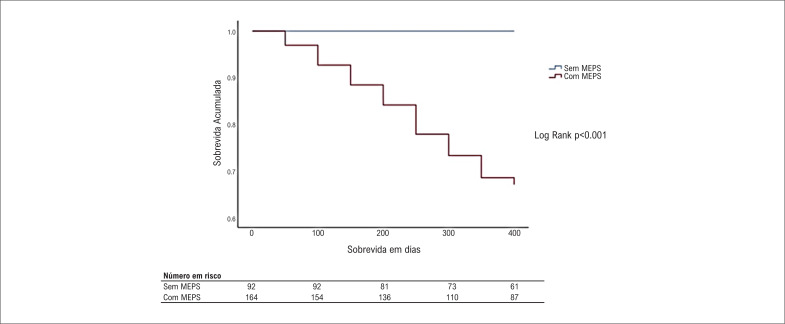
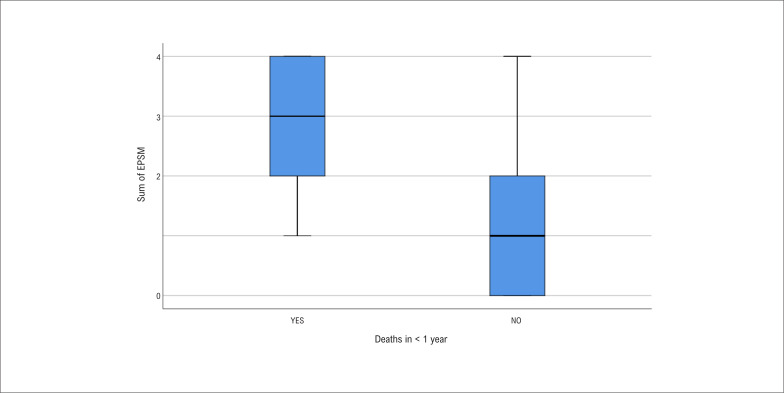
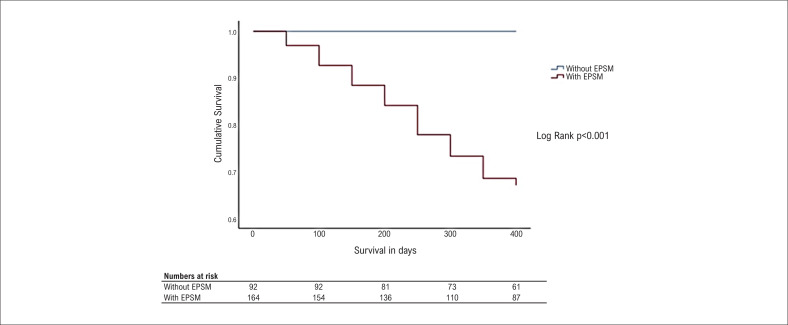
Results: A total of 208 individuals were included, with 144 (68.9%) being male. The mean LVEF was 32% ±9 and 107 (51%) had Chagas disease etiology. The mortality rate in the first year was 54/208 (25.8%). All patients who died had at least one of the EPSM and there no deaths were reported among the 73 (35.4%) who did not have EPSM. In multivariate analysis, having EPSM and LVEF were the only independent predictors of mortality under 1 year: RR 20.48 (2.75 - 52.29); p=0.003 and RR 0.97 (0.93 - 0.99); p=0.047, respectively.
Conclusion: Socioeconomic and psychosocial conditions should be identified and, where possible, resolved before implantation, as they may make device implantation a potentially inappropriate procedure.




 京公网安备 11010802042870号
京ICP备2023020795号-1
京公网安备 11010802042870号
京ICP备2023020795号-1

 分享
分享

 求助内容:
求助内容: 应助结果提醒方式:
 扫码关注我们
