Viresh Thamke, Yared H. Bezabhe, Jana Jass, Per-Erik Olsson
{"title":"Preservation of Aquatic Environmental DNA Using Cationic Detergents","authors":"Viresh Thamke, Yared H. Bezabhe, Jana Jass, Per-Erik Olsson","doi":"10.1002/edn3.70038","DOIUrl":null,"url":null,"abstract":"<p>Environmental DNA (eDNA) analysis is a powerful tool for quantifying and assessing the diversity of organisms in the environment. Unfortunately, isolating eDNA from aquatic environments is challenging due to the difficulties associated with water collection, preservation of samples during transportation, and onsite filtration. These processes are expensive and time-consuming and can lead to eDNA degradation. These difficulties can be addressed by preserving eDNA in the collected water. In this study, we assessed the effect of short- and long-term water storage using three different cationic surfactants on the half-life of zebrafish (<i>Danio rerio</i>) mitochondrial DNA (mtDNA) in mesocosm water. The surfactants used were benzalkonium chloride (BAC), cetylpyridinium chloride (CPC), and cetyltrimethylammonium bromide (CTAB). We observed that CPC and CTAB treatment extended the half-life of mtDNA by 3–5 times. Analysis by quantitative polymerase chain reaction (qPCR) demonstrated a mtDNA retention rate of 17.6%, 26.3%, and 2.2% for CPC, CTAB, and BAC, respectively, compared to 0.1% in untreated water after 30 days. The preservation of mtDNA by cationic surfactants was attributed to their bactericidal and cytotoxic properties as well as their electrostatic interaction with DNA molecules, as observed by spectrofluorometric analysis and subsequent precipitation. Our results demonstrated an inexpensive and convenient method to protect eDNA in water and improve its extraction.</p>","PeriodicalId":52828,"journal":{"name":"Environmental DNA","volume":"6 6","pages":""},"PeriodicalIF":6.2000,"publicationDate":"2024-11-23","publicationTypes":"Journal Article","fieldsOfStudy":null,"isOpenAccess":false,"openAccessPdf":"https://onlinelibrary.wiley.com/doi/epdf/10.1002/edn3.70038","citationCount":"0","resultStr":null,"platform":"Semanticscholar","paperid":null,"PeriodicalName":"Environmental DNA","FirstCategoryId":"1085","ListUrlMain":"https://onlinelibrary.wiley.com/doi/10.1002/edn3.70038","RegionNum":0,"RegionCategory":null,"ArticlePicture":[],"TitleCN":null,"AbstractTextCN":null,"PMCID":null,"EPubDate":"","PubModel":"","JCR":"Q1","JCRName":"Agricultural and Biological Sciences","Score":null,"Total":0}
引用次数: 0
Abstract
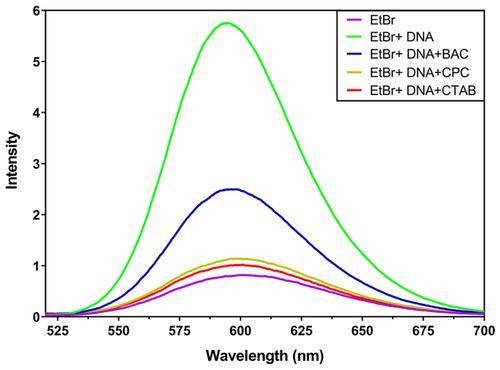
Environmental DNA (eDNA) analysis is a powerful tool for quantifying and assessing the diversity of organisms in the environment. Unfortunately, isolating eDNA from aquatic environments is challenging due to the difficulties associated with water collection, preservation of samples during transportation, and onsite filtration. These processes are expensive and time-consuming and can lead to eDNA degradation. These difficulties can be addressed by preserving eDNA in the collected water. In this study, we assessed the effect of short- and long-term water storage using three different cationic surfactants on the half-life of zebrafish (Danio rerio) mitochondrial DNA (mtDNA) in mesocosm water. The surfactants used were benzalkonium chloride (BAC), cetylpyridinium chloride (CPC), and cetyltrimethylammonium bromide (CTAB). We observed that CPC and CTAB treatment extended the half-life of mtDNA by 3–5 times. Analysis by quantitative polymerase chain reaction (qPCR) demonstrated a mtDNA retention rate of 17.6%, 26.3%, and 2.2% for CPC, CTAB, and BAC, respectively, compared to 0.1% in untreated water after 30 days. The preservation of mtDNA by cationic surfactants was attributed to their bactericidal and cytotoxic properties as well as their electrostatic interaction with DNA molecules, as observed by spectrofluorometric analysis and subsequent precipitation. Our results demonstrated an inexpensive and convenient method to protect eDNA in water and improve its extraction.




 京公网安备 11010802042870号
京ICP备2023020795号-1
京公网安备 11010802042870号
京ICP备2023020795号-1

 分享
分享
 求助内容:
求助内容: 应助结果提醒方式:
 扫码关注我们
