Fernando Carrasco, Maria Jose Arias-Tellez, Ignacio Solar-Altamirano, Jorge Inostroza, Gabriela Carrasco
{"title":"Regional Body Composition and Strength, Not Total Body Composition, Are Determinants of Performance in Climbers.","authors":"Fernando Carrasco, Maria Jose Arias-Tellez, Ignacio Solar-Altamirano, Jorge Inostroza, Gabriela Carrasco","doi":"10.3390/jfmk9040228","DOIUrl":null,"url":null,"abstract":"<p><p><b>Objective:</b> To compare the body composition of Chilean climbers of different performance levels and to determine the relation between the forearm and upper-trunk lean mass and the handgrip and upper-body traction strength, respectively. <b>Methods:</b> A cross-sectional study was carried out on thirty Chilean male adult climbers (26.1 ± 4.9 y.): nine of intermediate level (L1), eleven advanced (L2), and ten elite (L3). Through dual-energy X-Ray absorptiometry (DXA; Lunar Prodigy<sup>®</sup>), fat mass percentage (FM%), total lean mass (LM), forearm lean mass (FLM), and upper-trunk lean mass (UTLM) were measured. Total muscle mass (TMM) was also estimated. Handgrip strength (HGS) was measured with a Jamar<sup>®</sup> dynamometer. Maximum upper-body traction strength (UBTS) was evaluated with a standardized movement. The level of climbing was assessed according to IRCRA rules. <b>Results:</b> No differences in FM%, total LM, UTLM, or TMM between the groups were found. Left and assistant FLM were significantly higher in L3 (<i>p</i> = 0.047 and 0.041, respectively). HGS absolute, relative, and adjusted by FLM were not different between groups. FLM was associated with HGS in all segments (<i>p</i> ≤ 0.001). UBTS absolute values, and as adjusted by TMM, were significantly higher in L3 (<i>p</i> = 0.047 and <i>p</i> = 0.049, respectively). <b>Conclusions:</b> Left and non-dominant forearm lean mass were significantly higher in elite climbers. Handgrip strength was not significantly higher in elite climbers; however, the upper-body traction strength was significantly higher in elite climbers, independent of total or regional muscle mass.</p>","PeriodicalId":16052,"journal":{"name":"Journal of Functional Morphology and Kinesiology","volume":"9 4","pages":""},"PeriodicalIF":2.5000,"publicationDate":"2024-11-12","publicationTypes":"Journal Article","fieldsOfStudy":null,"isOpenAccess":false,"openAccessPdf":"https://www.ncbi.nlm.nih.gov/pmc/articles/PMC11587076/pdf/","citationCount":"0","resultStr":null,"platform":"Semanticscholar","paperid":null,"PeriodicalName":"Journal of Functional Morphology and Kinesiology","FirstCategoryId":"1085","ListUrlMain":"https://doi.org/10.3390/jfmk9040228","RegionNum":0,"RegionCategory":null,"ArticlePicture":[],"TitleCN":null,"AbstractTextCN":null,"PMCID":null,"EPubDate":"","PubModel":"","JCR":"Q1","JCRName":"SPORT SCIENCES","Score":null,"Total":0}
引用次数: 0
Abstract
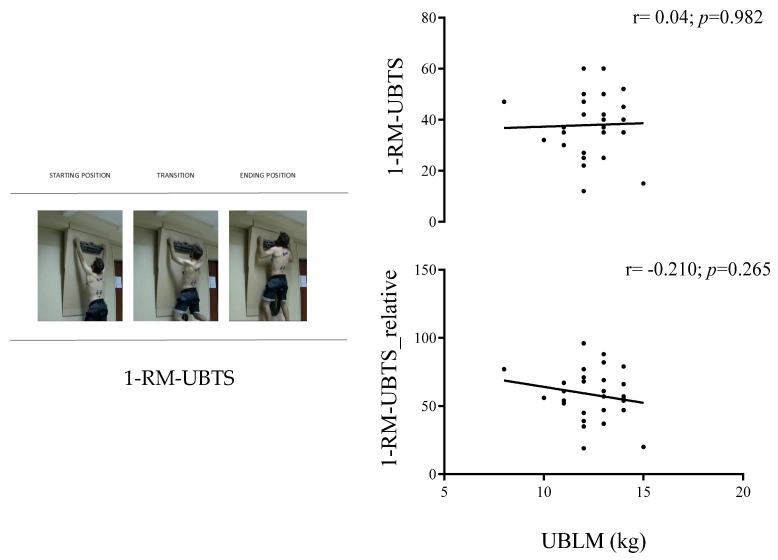
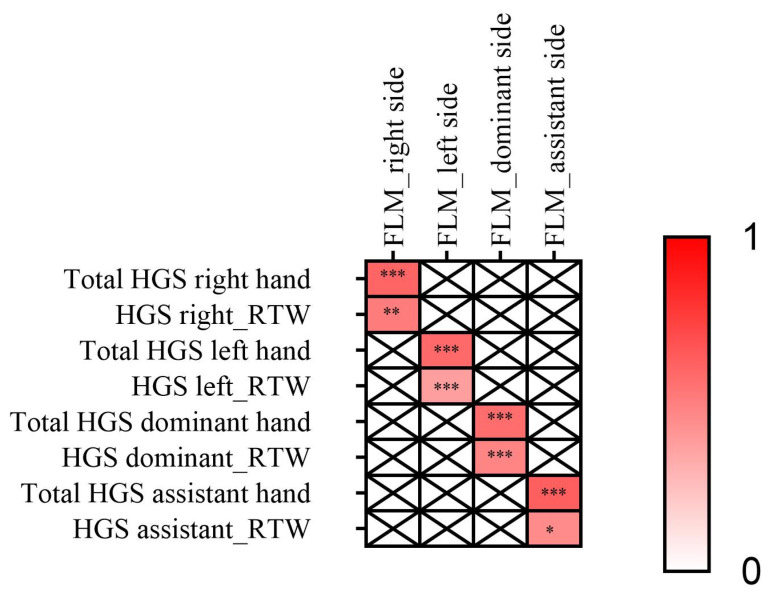
Objective: To compare the body composition of Chilean climbers of different performance levels and to determine the relation between the forearm and upper-trunk lean mass and the handgrip and upper-body traction strength, respectively. Methods: A cross-sectional study was carried out on thirty Chilean male adult climbers (26.1 ± 4.9 y.): nine of intermediate level (L1), eleven advanced (L2), and ten elite (L3). Through dual-energy X-Ray absorptiometry (DXA; Lunar Prodigy®), fat mass percentage (FM%), total lean mass (LM), forearm lean mass (FLM), and upper-trunk lean mass (UTLM) were measured. Total muscle mass (TMM) was also estimated. Handgrip strength (HGS) was measured with a Jamar® dynamometer. Maximum upper-body traction strength (UBTS) was evaluated with a standardized movement. The level of climbing was assessed according to IRCRA rules. Results: No differences in FM%, total LM, UTLM, or TMM between the groups were found. Left and assistant FLM were significantly higher in L3 (p = 0.047 and 0.041, respectively). HGS absolute, relative, and adjusted by FLM were not different between groups. FLM was associated with HGS in all segments (p ≤ 0.001). UBTS absolute values, and as adjusted by TMM, were significantly higher in L3 (p = 0.047 and p = 0.049, respectively). Conclusions: Left and non-dominant forearm lean mass were significantly higher in elite climbers. Handgrip strength was not significantly higher in elite climbers; however, the upper-body traction strength was significantly higher in elite climbers, independent of total or regional muscle mass.




 京公网安备 11010802042870号
京ICP备2023020795号-1
京公网安备 11010802042870号
京ICP备2023020795号-1

 分享
分享
 求助内容:
求助内容: 应助结果提醒方式:
 扫码关注我们
