{"title":"Exploring Factors Affecting Millennial Tourists' eWOM Behavior: A Lens of BRT Theory.","authors":"Zibin Song, Yingying Ren, Jie Li","doi":"10.3390/bs14111056","DOIUrl":null,"url":null,"abstract":"<p><p>This study employs behavioral reasoning theory (BRT) to investigate factors (i.e., personal values, reasons, and attitudes) affecting existing and future behaviors of Millennial tourists' electronic word-of-mouth (eWOM). It uses a mixed-methods approach that includes qualitative interviews with 25 tourists to elicit specific reasons for and against eWOM and a survey of 572 Millennial-Chinese tourists to quantitatively validate our BRT structural model. The statistical results from SmartPLS 3.0 show that all hypotheses on direct effects have gained empirical support except for the relationships between the existing behavior and its respective reasons for and against eWOM. These two insignificant direct effects are, however, shown to be fully mediated by global attitudes, respectively. Moreover, gender moderates the relationships between reasons against eWOM and the existing behavior and reasons for eWOM and future behavior, respectively. Most findings regarding the foregoing direct, mediation, and moderation effects are exploratory. In addition, this study contributes significantly to the literature by successfully developing and validating the scale of reasons for and against Millennial tourists' eWOM within the BRT framework. Destination managers can use this scale of reasons as both a diagnostic tool and a blueprint for eWOM management.</p>","PeriodicalId":8742,"journal":{"name":"Behavioral Sciences","volume":"14 11","pages":""},"PeriodicalIF":2.5000,"publicationDate":"2024-11-06","publicationTypes":"Journal Article","fieldsOfStudy":null,"isOpenAccess":false,"openAccessPdf":"https://www.ncbi.nlm.nih.gov/pmc/articles/PMC11591171/pdf/","citationCount":"0","resultStr":null,"platform":"Semanticscholar","paperid":null,"PeriodicalName":"Behavioral Sciences","FirstCategoryId":"102","ListUrlMain":"https://doi.org/10.3390/bs14111056","RegionNum":3,"RegionCategory":"心理学","ArticlePicture":[],"TitleCN":null,"AbstractTextCN":null,"PMCID":null,"EPubDate":"","PubModel":"","JCR":"Q2","JCRName":"PSYCHOLOGY, MULTIDISCIPLINARY","Score":null,"Total":0}
引用次数: 0
Abstract
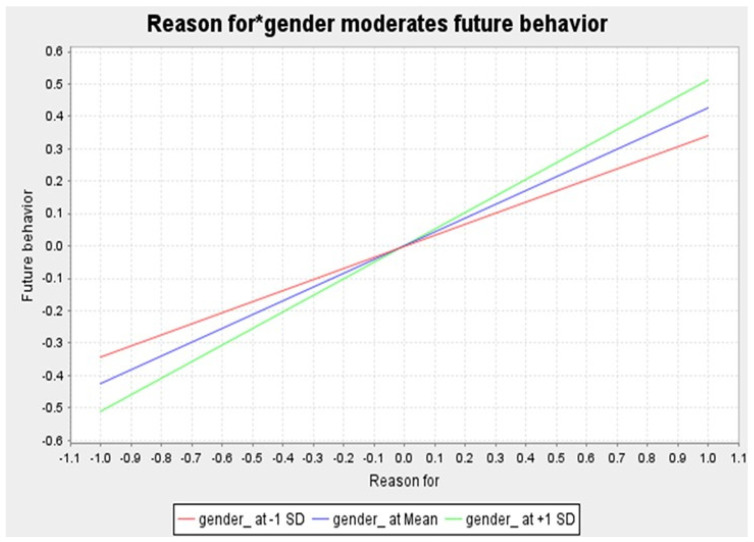
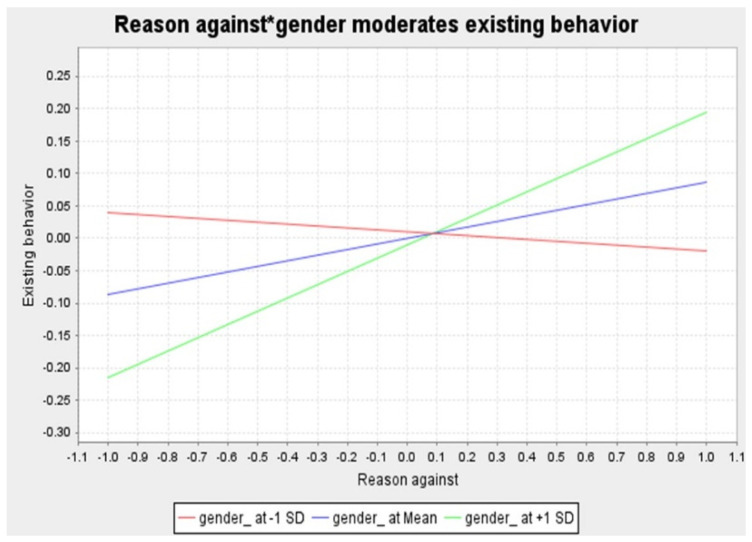
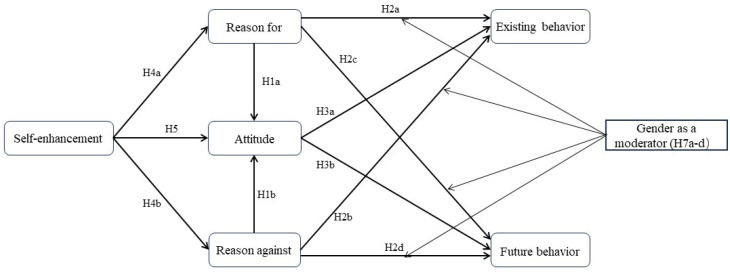
This study employs behavioral reasoning theory (BRT) to investigate factors (i.e., personal values, reasons, and attitudes) affecting existing and future behaviors of Millennial tourists' electronic word-of-mouth (eWOM). It uses a mixed-methods approach that includes qualitative interviews with 25 tourists to elicit specific reasons for and against eWOM and a survey of 572 Millennial-Chinese tourists to quantitatively validate our BRT structural model. The statistical results from SmartPLS 3.0 show that all hypotheses on direct effects have gained empirical support except for the relationships between the existing behavior and its respective reasons for and against eWOM. These two insignificant direct effects are, however, shown to be fully mediated by global attitudes, respectively. Moreover, gender moderates the relationships between reasons against eWOM and the existing behavior and reasons for eWOM and future behavior, respectively. Most findings regarding the foregoing direct, mediation, and moderation effects are exploratory. In addition, this study contributes significantly to the literature by successfully developing and validating the scale of reasons for and against Millennial tourists' eWOM within the BRT framework. Destination managers can use this scale of reasons as both a diagnostic tool and a blueprint for eWOM management.





 京公网安备 11010802042870号
京ICP备2023020795号-1
京公网安备 11010802042870号
京ICP备2023020795号-1

 分享
分享
 求助内容:
求助内容: 应助结果提醒方式:
 扫码关注我们
