Yun Tie , Ying Wang , Dalong Zhang , Zepeng Zhang , Fenghui Liu , Lin Qi
{"title":"Full dimensional dynamic 3D convolution and point cloud in pulmonary nodule detection","authors":"Yun Tie , Ying Wang , Dalong Zhang , Zepeng Zhang , Fenghui Liu , Lin Qi","doi":"10.1016/j.jare.2024.11.033","DOIUrl":null,"url":null,"abstract":"<div><div>Lung cancer is a leading cause of death worldwide, making early and accurate diagnosis essential for improving patient outcomes. Recently, deep learning (DL) has proven to be a powerful tool, significantly enhancing the accuracy of computer-aided pulmonary nodule detection (PND). In this study, we introduce a novel approach called the Omni-dimension Dynamic Residual 3D Net (ODR3DNet) for PND, which utilizes full-dimensional dynamic 3D convolution, along with a specialized machine learning algorithm for detecting lung nodules in 3D point clouds. The primary goal of ODR3DNet is to overcome the limitations of conventional 3D Convolutional Neural Networks (CNNs), which often struggle with adaptability and have limited feature extraction capabilities. Our ODR3DNet algorithm achieves a high CPM (Competition Performance Metric) score of 0.885, outperforming existing mainstream PND algorithms and demonstrating its effectiveness. Through detailed ablation experiments, we confirm that the OD3D module plays a crucial role in this performance boost and identify the optimal configuration for the algorithm. Moreover, we developed a dedicated machine learning detection algorithm tailored for lung 3D point cloud data. We outline the key steps for reconstructing the lungs in 3D and establish a comprehensive process for building a lung point cloud dataset, including data preprocessing, 3D point cloud conversion, and 3D volumetric box annotation. Experimental results validate the feasibility and effectiveness of our proposed approach.</div></div>","PeriodicalId":14952,"journal":{"name":"Journal of Advanced Research","volume":"75 ","pages":"Pages 421-433"},"PeriodicalIF":13.0000,"publicationDate":"2025-09-01","publicationTypes":"Journal Article","fieldsOfStudy":null,"isOpenAccess":false,"openAccessPdf":"","citationCount":"0","resultStr":null,"platform":"Semanticscholar","paperid":null,"PeriodicalName":"Journal of Advanced Research","FirstCategoryId":"103","ListUrlMain":"https://www.sciencedirect.com/science/article/pii/S2090123224005526","RegionNum":1,"RegionCategory":"综合性期刊","ArticlePicture":[],"TitleCN":null,"AbstractTextCN":null,"PMCID":null,"EPubDate":"2024/11/29 0:00:00","PubModel":"Epub","JCR":"Q1","JCRName":"MULTIDISCIPLINARY SCIENCES","Score":null,"Total":0}
引用次数: 0
Abstract
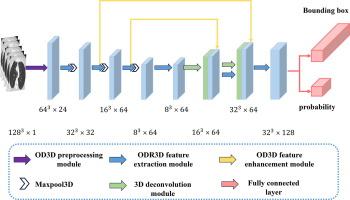
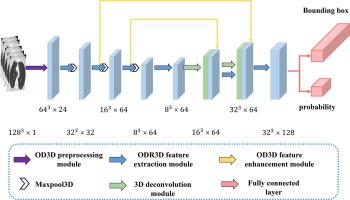
Lung cancer is a leading cause of death worldwide, making early and accurate diagnosis essential for improving patient outcomes. Recently, deep learning (DL) has proven to be a powerful tool, significantly enhancing the accuracy of computer-aided pulmonary nodule detection (PND). In this study, we introduce a novel approach called the Omni-dimension Dynamic Residual 3D Net (ODR3DNet) for PND, which utilizes full-dimensional dynamic 3D convolution, along with a specialized machine learning algorithm for detecting lung nodules in 3D point clouds. The primary goal of ODR3DNet is to overcome the limitations of conventional 3D Convolutional Neural Networks (CNNs), which often struggle with adaptability and have limited feature extraction capabilities. Our ODR3DNet algorithm achieves a high CPM (Competition Performance Metric) score of 0.885, outperforming existing mainstream PND algorithms and demonstrating its effectiveness. Through detailed ablation experiments, we confirm that the OD3D module plays a crucial role in this performance boost and identify the optimal configuration for the algorithm. Moreover, we developed a dedicated machine learning detection algorithm tailored for lung 3D point cloud data. We outline the key steps for reconstructing the lungs in 3D and establish a comprehensive process for building a lung point cloud dataset, including data preprocessing, 3D point cloud conversion, and 3D volumetric box annotation. Experimental results validate the feasibility and effectiveness of our proposed approach.
期刊介绍:
Journal of Advanced Research (J. Adv. Res.) is an applied/natural sciences, peer-reviewed journal that focuses on interdisciplinary research. The journal aims to contribute to applied research and knowledge worldwide through the publication of original and high-quality research articles in the fields of Medicine, Pharmaceutical Sciences, Dentistry, Physical Therapy, Veterinary Medicine, and Basic and Biological Sciences.
The following abstracting and indexing services cover the Journal of Advanced Research: PubMed/Medline, Essential Science Indicators, Web of Science, Scopus, PubMed Central, PubMed, Science Citation Index Expanded, Directory of Open Access Journals (DOAJ), and INSPEC.



 京公网安备 11010802042870号
京ICP备2023020795号-1
京公网安备 11010802042870号
京ICP备2023020795号-1

 分享
分享
 求助内容:
求助内容: 应助结果提醒方式:
 扫码关注我们
