Targeting proprotein convertase subtilisin/kexin type 7 in macrophages as a therapeutic strategy to mitigate myocardial infarction-induced inflammation.
IF 3.3 3区 生物学Q3 BIOCHEMISTRY & MOLECULAR BIOLOGYBMB ReportsPub Date : 2024-12-01
Shin Hye Moon, Inyoung Chung, Na Hyeon Yoon, Jing Jin, Hyae Yon Kweon, Won Kee Yoon, Nabil G Seidah, Goo Taeg Oh
{"title":"Targeting proprotein convertase subtilisin/kexin type 7 in macrophages as a therapeutic strategy to mitigate myocardial infarction-induced inflammation.","authors":"Shin Hye Moon, Inyoung Chung, Na Hyeon Yoon, Jing Jin, Hyae Yon Kweon, Won Kee Yoon, Nabil G Seidah, Goo Taeg Oh","doi":"","DOIUrl":null,"url":null,"abstract":"<p><p>Myocardial infarction (MI), a major form of coronary artery disease (CAD), triggers a severe inflammatory response in the heart, resulting in increased cell death and adverse ventricular remodeling. Despite treatment advancements, MI remains a significant risk factor for heart failure, underscoring the necessity for a more in-depth exploration of immune cell mechanisms. Proprotein convertase subtilisin/kexin type 7 (PCSK7), expressed in various tissues and immune cells, has been implicated in cardiovascular disease, yet its specific role in cardiac immune cells remains poorly understood. This study aimed to elucidate the role of PCSK7 in MI-related inflammation. Our findings indicate that PCSK7 deficiency reduces circulating cholesterol levels, potentially mitigating infarct injury and improving cardiac function by modulating immune cells. Additionally, PCSK7 promotes macrophage activation and lipid uptake at the ischemic site, intensifying the pathology. We also observed that PCSK7 activates the TNF-α/JNK signaling pathway in macrophages intracellularly, amplifying the inflammatory response. Therefore, targeting PCSK7 in macrophages could help mitigate post-MI inflammation, alleviate disease severity, and offer novel therapeutic strategies for patients with CAD. [BMB Reports 2024; 57(12): 553-558].</p>","PeriodicalId":9010,"journal":{"name":"BMB Reports","volume":" ","pages":"553-558"},"PeriodicalIF":3.3000,"publicationDate":"2024-12-01","publicationTypes":"Journal Article","fieldsOfStudy":null,"isOpenAccess":false,"openAccessPdf":"https://www.ncbi.nlm.nih.gov/pmc/articles/PMC11693601/pdf/","citationCount":"0","resultStr":null,"platform":"Semanticscholar","paperid":null,"PeriodicalName":"BMB Reports","FirstCategoryId":"99","ListUrlMain":"","RegionNum":3,"RegionCategory":"生物学","ArticlePicture":[],"TitleCN":null,"AbstractTextCN":null,"PMCID":null,"EPubDate":"","PubModel":"","JCR":"Q3","JCRName":"BIOCHEMISTRY & MOLECULAR BIOLOGY","Score":null,"Total":0}
引用次数: 0
Abstract
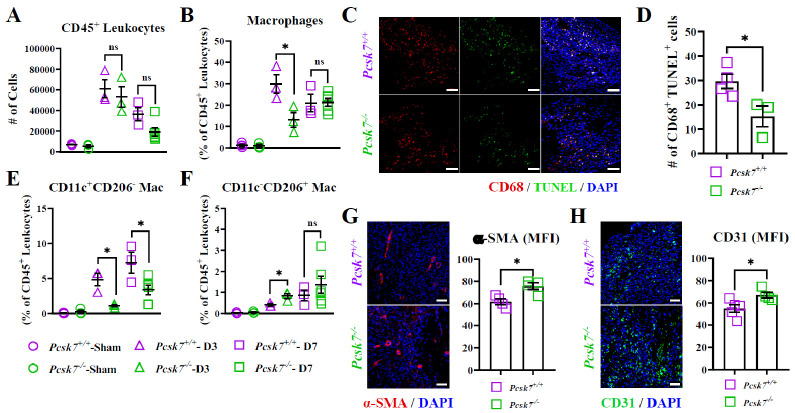
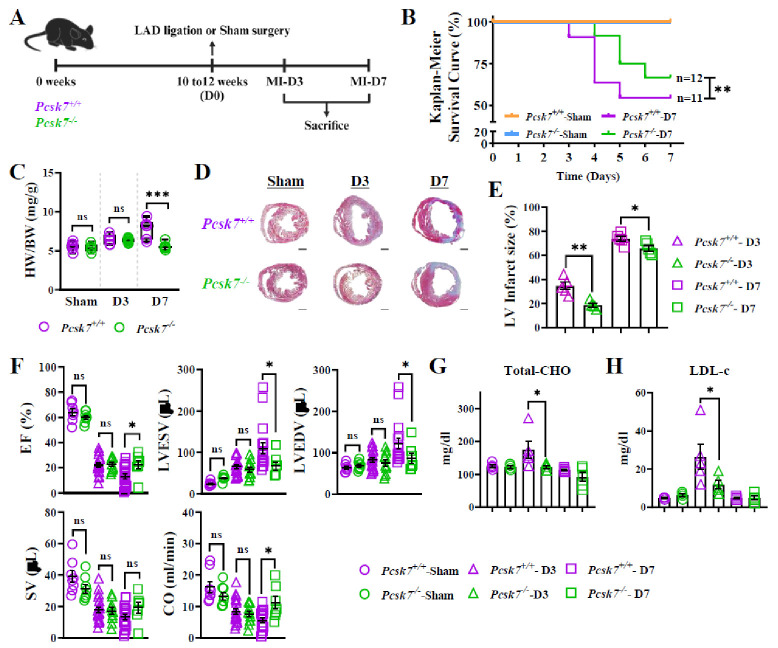
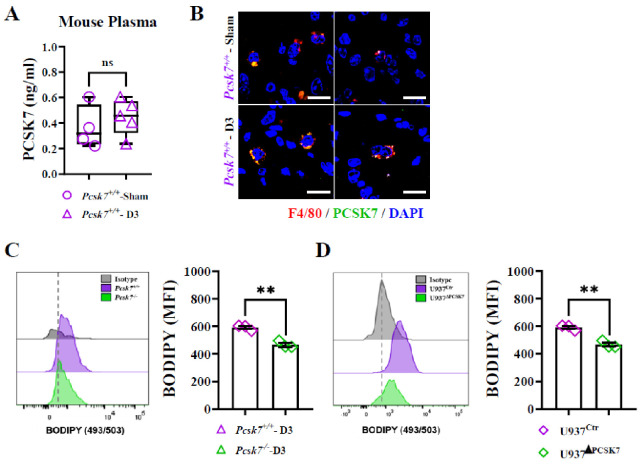
Myocardial infarction (MI), a major form of coronary artery disease (CAD), triggers a severe inflammatory response in the heart, resulting in increased cell death and adverse ventricular remodeling. Despite treatment advancements, MI remains a significant risk factor for heart failure, underscoring the necessity for a more in-depth exploration of immune cell mechanisms. Proprotein convertase subtilisin/kexin type 7 (PCSK7), expressed in various tissues and immune cells, has been implicated in cardiovascular disease, yet its specific role in cardiac immune cells remains poorly understood. This study aimed to elucidate the role of PCSK7 in MI-related inflammation. Our findings indicate that PCSK7 deficiency reduces circulating cholesterol levels, potentially mitigating infarct injury and improving cardiac function by modulating immune cells. Additionally, PCSK7 promotes macrophage activation and lipid uptake at the ischemic site, intensifying the pathology. We also observed that PCSK7 activates the TNF-α/JNK signaling pathway in macrophages intracellularly, amplifying the inflammatory response. Therefore, targeting PCSK7 in macrophages could help mitigate post-MI inflammation, alleviate disease severity, and offer novel therapeutic strategies for patients with CAD. [BMB Reports 2024; 57(12): 553-558].
期刊介绍:
The BMB Reports (BMB Rep, established in 1968) is published at the end of every month by Korean Society for Biochemistry and Molecular Biology. Copyright is reserved by the Society. The journal publishes short articles and mini reviews. We expect that the BMB Reports will deliver the new scientific findings and knowledge to our readers in fast and timely manner.
 分享
分享



 京公网安备 11010802042870号
京ICP备2023020795号-1
京公网安备 11010802042870号
京ICP备2023020795号-1

 求助内容:
求助内容: 应助结果提醒方式:
 扫码关注我们
