{"title":"New T-lymphocyte subpopulations and their characteristics: Challenges to the classical division of lymphocyte function.","authors":"Filip Lewandowski, Paulina Niedźwiedzka-Rystwej","doi":"10.5114/ceji.2024.144071","DOIUrl":null,"url":null,"abstract":"<p><p>Recent advances in immunology have challenged the conventional division of T-lymphocyte function by uncovering novel subpopulations with diverse roles and characteristics. This article reviews these discoveries and their implications for understanding immune regulation and disease pathogenesis. Innovative techniques have enabled the identification of previously unrecognized T-lymphocyte subsets, disrupting the classical classification system. Helper lymphocytes, including T<sub>fh1</sub>, T<sub>fh2</sub>, T<sub>fh17</sub>, GC-T<sub>fh</sub>, and circulating T<sub>fh</sub> cells, exhibit distinct functions in immune responses and disease states. Additionally, newly identified cytotoxic T-cell subsets, such as CD8<sup>+</sup>CD39<sup>+</sup> and CD8<sup>+</sup>CD28<sup>+</sup> cells, demonstrate unique effector properties with potential therapeutic applications in cancer immunothe- rapy. Furthermore, the discovery of CD20<sup>+</sup> T cells challenges traditional views, offering new avenues for immunotherapy in cancer, autoimmune disorders, and infectious diseases. These findings expand our understanding of T-lymphocyte biology and suggest targets for more effective therapeutic interventions. Further research is essential to fully elucidate the clinical relevance and therapeutic potential of these T-lymphocyte subpopulations, paving the way for personalized and targeted immune-based treatments.</p>","PeriodicalId":9694,"journal":{"name":"Central European Journal of Immunology","volume":"49 3","pages":"308-314"},"PeriodicalIF":1.6000,"publicationDate":"2024-01-01","publicationTypes":"Journal Article","fieldsOfStudy":null,"isOpenAccess":false,"openAccessPdf":"https://www.ncbi.nlm.nih.gov/pmc/articles/PMC11664807/pdf/","citationCount":"0","resultStr":null,"platform":"Semanticscholar","paperid":null,"PeriodicalName":"Central European Journal of Immunology","FirstCategoryId":"3","ListUrlMain":"https://doi.org/10.5114/ceji.2024.144071","RegionNum":4,"RegionCategory":"医学","ArticlePicture":[],"TitleCN":null,"AbstractTextCN":null,"PMCID":null,"EPubDate":"2024/11/9 0:00:00","PubModel":"Epub","JCR":"Q4","JCRName":"IMMUNOLOGY","Score":null,"Total":0}
引用次数: 0
Abstract
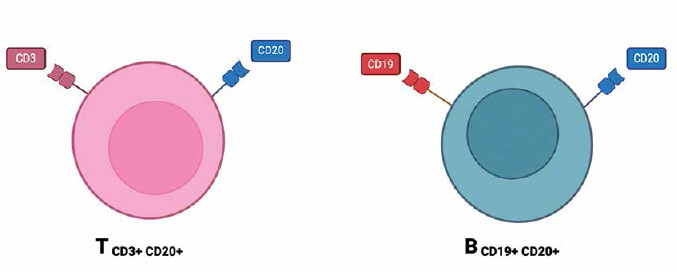
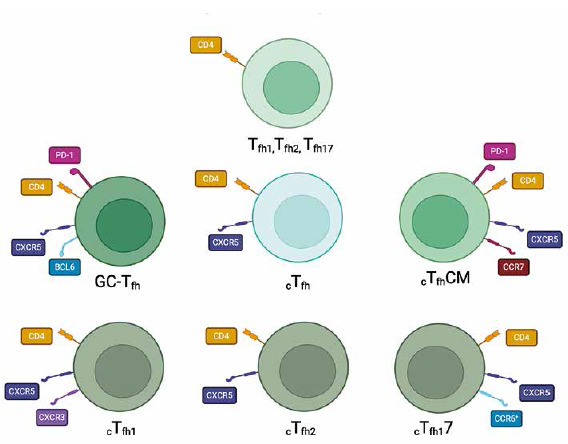
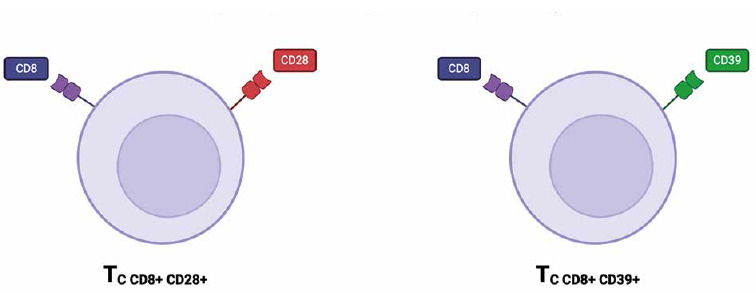
Recent advances in immunology have challenged the conventional division of T-lymphocyte function by uncovering novel subpopulations with diverse roles and characteristics. This article reviews these discoveries and their implications for understanding immune regulation and disease pathogenesis. Innovative techniques have enabled the identification of previously unrecognized T-lymphocyte subsets, disrupting the classical classification system. Helper lymphocytes, including Tfh1, Tfh2, Tfh17, GC-Tfh, and circulating Tfh cells, exhibit distinct functions in immune responses and disease states. Additionally, newly identified cytotoxic T-cell subsets, such as CD8+CD39+ and CD8+CD28+ cells, demonstrate unique effector properties with potential therapeutic applications in cancer immunothe- rapy. Furthermore, the discovery of CD20+ T cells challenges traditional views, offering new avenues for immunotherapy in cancer, autoimmune disorders, and infectious diseases. These findings expand our understanding of T-lymphocyte biology and suggest targets for more effective therapeutic interventions. Further research is essential to fully elucidate the clinical relevance and therapeutic potential of these T-lymphocyte subpopulations, paving the way for personalized and targeted immune-based treatments.



 京公网安备 11010802042870号
京ICP备2023020795号-1
京公网安备 11010802042870号
京ICP备2023020795号-1

 分享
分享
 求助内容:
求助内容: 应助结果提醒方式:
 扫码关注我们
