Elodie Bournique, Ambrocio Sanchez, Sunwoo Oh, Daniel Ghazarian, Alisa L. Mahieu, Lavanya Manjunath, Eirene Ednacot, Pedro Ortega, Selma Masri, Ivan Marazzi, Rémi Buisson
{"title":"ATM and IRAK1 orchestrate two distinct mechanisms of NF-κB activation in response to DNA damage","authors":"Elodie Bournique, Ambrocio Sanchez, Sunwoo Oh, Daniel Ghazarian, Alisa L. Mahieu, Lavanya Manjunath, Eirene Ednacot, Pedro Ortega, Selma Masri, Ivan Marazzi, Rémi Buisson","doi":"10.1038/s41594-024-01417-0","DOIUrl":null,"url":null,"abstract":"DNA damage in cells induces the expression of inflammatory genes. However, the mechanism by which cells initiate an innate immune response in the presence of DNA lesions blocking transcription remains unknown. Here we find that genotoxic stresses lead to an acute activation of the transcription factor NF-κB through two distinct pathways, each triggered by different types of DNA lesions and coordinated by either ataxia-telangiectasia mutated (ATM) or IRAK1 kinases. ATM stimulates NF-κB in cells with DNA double-strand breaks. By contrast, IRAK1-induced NF-κB signaling occurs in neighboring cells through IL-1α secretion from transcriptionally stressed cells caused by DNA lesions blocking RNA polymerases. Subsequently, both pathways stimulate TRAF6 and the IKK complex to promote NF-κB-mediated inflammatory gene expression. These findings provide an alternative mechanism for damaged cells with impaired transcription to initiate an inflammatory response without relying on their own gene expression, a necessary step that injured cells depend on during canonical innate immune responses. In this study, the authors show that DNA-damage-mediated transcriptional stress induces NF-κB through IRAK1, allowing damaged cells with impaired transcription to initiate an inflammatory response without relying on their gene expression.","PeriodicalId":49141,"journal":{"name":"Nature Structural & Molecular Biology","volume":"32 4","pages":"740-755"},"PeriodicalIF":10.1000,"publicationDate":"2025-01-03","publicationTypes":"Journal Article","fieldsOfStudy":null,"isOpenAccess":false,"openAccessPdf":"","citationCount":"0","resultStr":null,"platform":"Semanticscholar","paperid":null,"PeriodicalName":"Nature Structural & Molecular Biology","FirstCategoryId":"99","ListUrlMain":"https://www.nature.com/articles/s41594-024-01417-0","RegionNum":1,"RegionCategory":"生物学","ArticlePicture":[],"TitleCN":null,"AbstractTextCN":null,"PMCID":null,"EPubDate":"","PubModel":"","JCR":"Q1","JCRName":"BIOCHEMISTRY & MOLECULAR BIOLOGY","Score":null,"Total":0}
引用次数: 0
Abstract
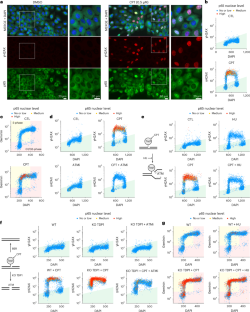
DNA damage in cells induces the expression of inflammatory genes. However, the mechanism by which cells initiate an innate immune response in the presence of DNA lesions blocking transcription remains unknown. Here we find that genotoxic stresses lead to an acute activation of the transcription factor NF-κB through two distinct pathways, each triggered by different types of DNA lesions and coordinated by either ataxia-telangiectasia mutated (ATM) or IRAK1 kinases. ATM stimulates NF-κB in cells with DNA double-strand breaks. By contrast, IRAK1-induced NF-κB signaling occurs in neighboring cells through IL-1α secretion from transcriptionally stressed cells caused by DNA lesions blocking RNA polymerases. Subsequently, both pathways stimulate TRAF6 and the IKK complex to promote NF-κB-mediated inflammatory gene expression. These findings provide an alternative mechanism for damaged cells with impaired transcription to initiate an inflammatory response without relying on their own gene expression, a necessary step that injured cells depend on during canonical innate immune responses. In this study, the authors show that DNA-damage-mediated transcriptional stress induces NF-κB through IRAK1, allowing damaged cells with impaired transcription to initiate an inflammatory response without relying on their gene expression.
期刊介绍:
Nature Structural & Molecular Biology is a comprehensive platform that combines structural and molecular research. Our journal focuses on exploring the functional and mechanistic aspects of biological processes, emphasizing how molecular components collaborate to achieve a particular function. While structural data can shed light on these insights, our publication does not require them as a prerequisite.




 京公网安备 11010802042870号
京ICP备2023020795号-1
京公网安备 11010802042870号
京ICP备2023020795号-1

 分享
分享
 求助内容:
求助内容: 应助结果提醒方式:
 扫码关注我们
