{"title":"A Death in the Hospital","authors":"Emmet Hirsch","doi":"10.1111/jgs.19364","DOIUrl":null,"url":null,"abstract":"<p>My father succumbed at age 95 after a life blessed by the love and admiration of friends and family, widespread acclaim for his good works, and retention of his cognitive vigor until the end. Along the way, he cheated death half a dozen times, reinforcing his conviction that the rules of probability didn't apply to him. When he passed away from side-effects of a hospital medication, it seemed more like his luck finally running out than an event someone needed to account for. Yet I have been troubled by the awareness that I am partially responsible for the manner of my father's death.</p><p>As a physician, I served as my parents' health navigator and advocate. The many medical crises my dad overcame over the years left him with an intestinal tract exquisitely sensitive to the inhibitory effects of narcotics on bowel motility. When he was 85, a single intravenous dose given during an admission for a fractured humerus caused a bowel obstruction that resolved only after 9 days of conservative management (3 days more, at my insistence, than the surgeon was inclined to allow before taking him to the OR). That episode, among others, informed an overriding principle in my approach to my aging parents' growing medical needs: keep them out of the hospital. As an “insider,” I am sensitized to the potential for patients to suffer unintended consequences of hospital admission, including blood clots, muscle-wasting, medical error, falls, hospital-acquired infection, bed sores, depression, and others. More than once I resisted the advice of well-intentioned physicians who recommended inpatient treatment for my father, and I usually felt validated afterward. At the same time, I was uneasy over my inability to simply trust the process. I have seen the negative effects this lack of trust can have on patients and families seeking to maintain some measure of control when caught up in a system that can be complex, monolithic, and terrifying. I feared that, like some of these families, in attempting to protect my father from perceived risks, I might in fact be sabotaging his care. It is a very unsettling feeling.</p><p>After my mother, with whom my father shared a 65-year romance, passed away at age 90, he grieved and moved on, engaging life, continuing his involvement in global initiatives, and serving as the “elder statesman” of his independent living facility in Florida. When he developed chronic back pain, narcotics were not an option, so he began using marijuana gummies to stay comfortable. He did well on that regimen.</p><p>One night I received a call to my home in Illinois. My father had fallen and was taken to the local emergency room. I spoke with the ER physician over the phone. My dad was fine, he said, though slightly confused. There was an area of redness on his shin, and the ER physician could not rule out cellulitis and sepsis as the cause of his fall and confusion. The doctor recommended admitting him for IV antibiotics. When I visited my father in the hospital 2 days later, I saw no trace of cellulitis. But by then the nursing staff had confiscated his gummies, and intravenous narcotics had been given to treat his pain. This time, his bowel obstruction did not resolve, and my father died 2 weeks later.</p><p>I have lived ever since with the guilt of knowing that this death did not have to happen as it did. Of course, I am aware that at the age of 95, any small disruption in the body's delicate balance might be fatal. Had my father not died from a medication side-effect, some other small thing might have proven lethal. But I failed to warn his care team of the danger posed by opioids. Had I acted differently, who can say how many months or years of quality life my dad might have enjoyed?</p><p>In the sadness that lingers after my father's death, I try to console myself with the notion that I share some of the responsibility with “the system.” Perhaps the ER physician was conditioned to reason defensively, magnifying the risks of deferring treatment for an improbable diagnosis over the risks of unnecessary admission to the hospital. A defensive orientation in medicine often results in unwarranted testing and treatment, which add little to no value but substantially increase the likelihood of adverse outcomes. And why shouldn't we allow patients to continue using medical cannabis in the hospital, particularly older persons, for whom even minor alterations in medication schedules can have major consequences? My father's admission also exposes a weakness in our records systems: had his sensitivity to opioids been flagged, similar to a medication allergy, his hospitalization might have taken a different course. It is a pity that the inpatient team could not access my father's outpatient chart, in which his susceptibility to narcotic side effects might have been highlighted.</p><p>Yet what stings the most is my failure to alert the medical team to a known risk. In caring for my own patients, I try to attend to small but crucial details, as I know all physicians do. But in today's increasingly complex medical environment, hundreds of potentially impactful data points coexist and interact for any given patient. These include concurrent diseases, test results, medication interactions, and others. It has become a superhuman task to keep track of all the relevant data, especially when one is caring for a large panel of people. The prevalence and consequences of medical error have been well documented and have driven much of the ongoing changes in our systems of care meant to protect patients from inadvertent harm. Such measures include standardization, evidence-based practices, and a variety of digital tools. To many people, this “new medicine” seems impersonal. Patients and providers alike abhor replacing human connections with algorithms, and many blame the electronic medical record for erecting both physical and virtual barriers between doctors and patients. Yet I am grateful for most of these new realities of my profession. Continuing improvement of these tools will enhance care by bolstering information-gathering and medical decision-making, potentially preventing the kind of error of omission (and “error of admission”) that led to my father's death. These measures supplement, rather than supplant, the hallowed relationship between patients and the teams of clinicians who care for them.</p><p>I expect to recover my equilibrium with time. What choice do I have? I try to honor the memory of my parents, not by aspiring to perfection, but by committing myself to practices that best provide for the needs of my patients. Like the system of care within which I function, I have plenty of opportunities for improvement (Figures 1 and 2).</p><p>The author declares no conflicts of interest.</p>","PeriodicalId":17240,"journal":{"name":"Journal of the American Geriatrics Society","volume":"73 5","pages":"1608-1610"},"PeriodicalIF":4.5000,"publicationDate":"2025-01-06","publicationTypes":"Journal Article","fieldsOfStudy":null,"isOpenAccess":false,"openAccessPdf":"https://onlinelibrary.wiley.com/doi/epdf/10.1111/jgs.19364","citationCount":"0","resultStr":null,"platform":"Semanticscholar","paperid":null,"PeriodicalName":"Journal of the American Geriatrics Society","FirstCategoryId":"3","ListUrlMain":"https://agsjournals.onlinelibrary.wiley.com/doi/10.1111/jgs.19364","RegionNum":2,"RegionCategory":"医学","ArticlePicture":[],"TitleCN":null,"AbstractTextCN":null,"PMCID":null,"EPubDate":"","PubModel":"","JCR":"Q1","JCRName":"GERIATRICS & GERONTOLOGY","Score":null,"Total":0}
引用次数: 0
Abstract
My father succumbed at age 95 after a life blessed by the love and admiration of friends and family, widespread acclaim for his good works, and retention of his cognitive vigor until the end. Along the way, he cheated death half a dozen times, reinforcing his conviction that the rules of probability didn't apply to him. When he passed away from side-effects of a hospital medication, it seemed more like his luck finally running out than an event someone needed to account for. Yet I have been troubled by the awareness that I am partially responsible for the manner of my father's death.
As a physician, I served as my parents' health navigator and advocate. The many medical crises my dad overcame over the years left him with an intestinal tract exquisitely sensitive to the inhibitory effects of narcotics on bowel motility. When he was 85, a single intravenous dose given during an admission for a fractured humerus caused a bowel obstruction that resolved only after 9 days of conservative management (3 days more, at my insistence, than the surgeon was inclined to allow before taking him to the OR). That episode, among others, informed an overriding principle in my approach to my aging parents' growing medical needs: keep them out of the hospital. As an “insider,” I am sensitized to the potential for patients to suffer unintended consequences of hospital admission, including blood clots, muscle-wasting, medical error, falls, hospital-acquired infection, bed sores, depression, and others. More than once I resisted the advice of well-intentioned physicians who recommended inpatient treatment for my father, and I usually felt validated afterward. At the same time, I was uneasy over my inability to simply trust the process. I have seen the negative effects this lack of trust can have on patients and families seeking to maintain some measure of control when caught up in a system that can be complex, monolithic, and terrifying. I feared that, like some of these families, in attempting to protect my father from perceived risks, I might in fact be sabotaging his care. It is a very unsettling feeling.
After my mother, with whom my father shared a 65-year romance, passed away at age 90, he grieved and moved on, engaging life, continuing his involvement in global initiatives, and serving as the “elder statesman” of his independent living facility in Florida. When he developed chronic back pain, narcotics were not an option, so he began using marijuana gummies to stay comfortable. He did well on that regimen.
One night I received a call to my home in Illinois. My father had fallen and was taken to the local emergency room. I spoke with the ER physician over the phone. My dad was fine, he said, though slightly confused. There was an area of redness on his shin, and the ER physician could not rule out cellulitis and sepsis as the cause of his fall and confusion. The doctor recommended admitting him for IV antibiotics. When I visited my father in the hospital 2 days later, I saw no trace of cellulitis. But by then the nursing staff had confiscated his gummies, and intravenous narcotics had been given to treat his pain. This time, his bowel obstruction did not resolve, and my father died 2 weeks later.
I have lived ever since with the guilt of knowing that this death did not have to happen as it did. Of course, I am aware that at the age of 95, any small disruption in the body's delicate balance might be fatal. Had my father not died from a medication side-effect, some other small thing might have proven lethal. But I failed to warn his care team of the danger posed by opioids. Had I acted differently, who can say how many months or years of quality life my dad might have enjoyed?
In the sadness that lingers after my father's death, I try to console myself with the notion that I share some of the responsibility with “the system.” Perhaps the ER physician was conditioned to reason defensively, magnifying the risks of deferring treatment for an improbable diagnosis over the risks of unnecessary admission to the hospital. A defensive orientation in medicine often results in unwarranted testing and treatment, which add little to no value but substantially increase the likelihood of adverse outcomes. And why shouldn't we allow patients to continue using medical cannabis in the hospital, particularly older persons, for whom even minor alterations in medication schedules can have major consequences? My father's admission also exposes a weakness in our records systems: had his sensitivity to opioids been flagged, similar to a medication allergy, his hospitalization might have taken a different course. It is a pity that the inpatient team could not access my father's outpatient chart, in which his susceptibility to narcotic side effects might have been highlighted.
Yet what stings the most is my failure to alert the medical team to a known risk. In caring for my own patients, I try to attend to small but crucial details, as I know all physicians do. But in today's increasingly complex medical environment, hundreds of potentially impactful data points coexist and interact for any given patient. These include concurrent diseases, test results, medication interactions, and others. It has become a superhuman task to keep track of all the relevant data, especially when one is caring for a large panel of people. The prevalence and consequences of medical error have been well documented and have driven much of the ongoing changes in our systems of care meant to protect patients from inadvertent harm. Such measures include standardization, evidence-based practices, and a variety of digital tools. To many people, this “new medicine” seems impersonal. Patients and providers alike abhor replacing human connections with algorithms, and many blame the electronic medical record for erecting both physical and virtual barriers between doctors and patients. Yet I am grateful for most of these new realities of my profession. Continuing improvement of these tools will enhance care by bolstering information-gathering and medical decision-making, potentially preventing the kind of error of omission (and “error of admission”) that led to my father's death. These measures supplement, rather than supplant, the hallowed relationship between patients and the teams of clinicians who care for them.
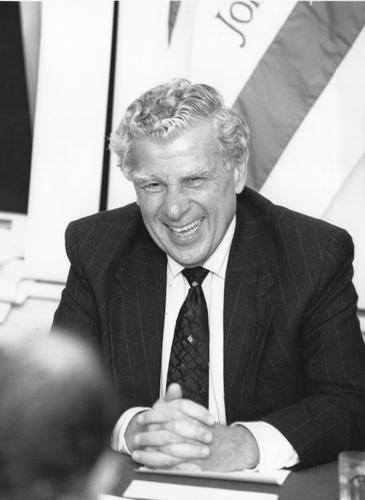
I expect to recover my equilibrium with time. What choice do I have? I try to honor the memory of my parents, not by aspiring to perfection, but by committing myself to practices that best provide for the needs of my patients. Like the system of care within which I function, I have plenty of opportunities for improvement (Figures 1 and 2).
期刊介绍:
Journal of the American Geriatrics Society (JAGS) is the go-to journal for clinical aging research. We provide a diverse, interprofessional community of healthcare professionals with the latest insights on geriatrics education, clinical practice, and public policy—all supporting the high-quality, person-centered care essential to our well-being as we age. Since the publication of our first edition in 1953, JAGS has remained one of the oldest and most impactful journals dedicated exclusively to gerontology and geriatrics.





 京公网安备 11010802042870号
京ICP备2023020795号-1
京公网安备 11010802042870号
京ICP备2023020795号-1

 分享
分享
 求助内容:
求助内容: 应助结果提醒方式:
 扫码关注我们
