{"title":"The evolutionary history evident in grass pollen morphology","authors":"Surangi W. Punyasena","doi":"10.1111/nph.20387","DOIUrl":null,"url":null,"abstract":"<p>Distinguishing among the species, genera, subfamilies, or tribes of Poaceae would provide significant insight into the evolution and establishment of grasses and grassland communities. Even discrimination at the rank of morphotype would allow a more detailed assessment of changes in grass diversity through time than is possible with traditional palynological methods. One proposed approach to delimiting grass pollen morphotypes focuses on the morphology of the pollen surface ornamentation visible under very high magnification. Introduced a decade ago by Mander <i>et al</i>. (<span>2013</span>), we characterized the complexity of the grass pollen exine using the topological method of subgraph centrality, which describes the relationship of a node (or in this case, a pixel) to all other nodes (or pixels) (Estrada & Rodriguez-Velazquez, <span>2005</span>). ‘Centrality’ refers to the relative importance of a node to local and global connectivity. So, given a cropped image of the pollen grain exine, binarized into a white foreground and a black background, the connection between pixels and their immediate neighbors can be weighted, with connections within the foreground or the background holding high weight and connections across the two assigned as low weight. Expanding the network outward, pixels that are more centrally connected within a defined area will hold a higher value than those at a boundary (Fig. 2). This provides a dynamic range of values that quantitatively characterize complex shapes.</p><p>Wei <i>et al</i>. are the first to apply Mander <i>et al</i>. (<span>2013</span>)'s method to the fossil record. They focus on the shape of the pollen surface foreground visible in scanning electron micrographs. This foreground is defined by the top two (SC2) or top three (SC3) quantiles of pixel brightness in these grayscale images. Pixels from these binarized images are ranked by their subgraph centrality values and the number of foreground objects defined at 5% threshold increments is tallied. This produces two vectors, each with 19 elements, that together with the size and density of ornamentation, describe the morphological complexity of a pollen grain's surface. Wei <i>et al</i>. use these morphological characters to define a morphospace for grass pollen. A morphospace captures the theoretical hyperspace of all possible variations in an organism's form (McGhee, <span>2006</span>), and the changes in the area occupied within a morphospace represent evolutionary shifts in a taxon's morphology.</p><p>Wei <i>et al</i>. show that grass pollen morphology, already simple and psilate, has further simplified from the early Miocene, with surface ornamentation getting progressively less and less complex. This is the first demonstration of morphological evolution in grass pollen on evolutionary timescales. Notably, the morphospace occupied by the pollen of living Neotropical grass species in the study is sparsely occupied by the fossil specimens. There is limited overlap between the pollen grain morphology of extant and fossil species, as well as between early Miocene and late Miocene specimens. This points to the potential extinction or extirpation of many Neotropical fossil morphotypes. The morphospace progression of grass pollen morphology from past to present suggests either morphological drift with taxonomic turnover or directed selection for simpler exine ornamentation in Neotropical grasses over the last 23 million years.</p><p>Wei <i>et al</i>. rule out the fossilization process and abiotic factors as potential drivers of this shift and suggest that wind pollination may play a role in selection for a simpler exine. But in a recent study on Quaternary grass pollen (Adaïmé <i>et al</i>., <span>2024b</span>), we offer an alternative hypothesis. The exine of grass pollen may reflect the evolution of different resource allocation strategies. Grass species mostly employ one of two photosynthetic pathways (C<sub>3</sub> or C<sub>4</sub>), which have consequences for carbon allocation within the plant. C<sub>3</sub> grasses have leaves with higher tissue density, while C<sub>4</sub> grasses invest more in their root systems (Atkinson <i>et al</i>., <span>2016</span>). This trade-off in carbon allocation between the shoot and root systems may be reflected in not only the leaves and roots, but also flowers, seeds, and pollen. We observed thinner walls and simpler ornamentation in the pollen of extant C<sub>4</sub> grasses (Adaïmé <i>et al</i>., <span>2024b</span>), and a similar pattern can be observed in the results from Wei <i>et al</i>. When living species are color-coded by photosynthetic pathway, it becomes clear that while C<sub>3</sub> and C<sub>4</sub> grass pollen overlap morphologically, the fossil specimens overlap the morphospace occupied by C<sub>3</sub> more than that of C<sub>4</sub> species (Fig. 3). C<sub>3</sub> grass pollen is characterized by higher PC1 scores than C<sub>4</sub> grasses and older fossil specimens are characterized by higher PC1 scores than younger fossil specimens. This suggests that the first principal component of the morphological measurements from Wei <i>et al</i>. captures a shift in photosynthetic pathway and perhaps a shift in carbon allocation between roots and shoots, similar to that observed in Adaïmé <i>et al</i>. (<span>2024b</span>). This shift is dramatic but expected, given the global expansion of C<sub>4</sub> grasslands in the late Miocene (Osborne, <span>2008</span>) likely resulting from increased fire frequency (Hoetzel <i>et al</i>., <span>2013</span>) and the drawdown of atmospheric CO<sub>2</sub> (Brown <i>et al</i>., <span>2022</span>).</p><p>The results from Wei <i>et al</i>. and other recent studies (Romero <i>et al</i>., <span>2020a</span>; Adaïmé <i>et al</i>., <span>2024a</span>,<span>b</span>) clearly demonstrate how much we have underestimated the extent of ecological and evolutionary information preserved in pollen morphology, particularly within the fine-scale structures evident under high magnification. However, the extended delay between the publication of the subgraph centrality method by Mander <i>et al</i>. (<span>2013</span>) and its application by Wei <i>et al</i>. speaks to the broader challenge of gathering the image datasets needed for these intensive morphometric analyses. Producing 1157 scanning electron micrographs is no small feat. That 354 of those were of fossil specimens is even more remarkable. Few researchers have attempted to gather an electron micrograph library of this scale, but Wei <i>et al</i>. demonstrate the discoveries that are possible with intensive microscopic imaging.</p><p>Electron microscopy, alongside comparable methods like optical superresolution (Sivaguru <i>et al</i>., <span>2018</span>; Romero <i>et al</i>., <span>2020b</span>; Fig. 1), hold a critical place in pollen analysis. Arguably, high-resolution imaging and image analysis should play a larger role in our field. The morphology we are able to observe influences both the hypotheses we test and the robustness of our results (Mander & Punyasena, <span>2014</span>). Large-scale microscopic imaging of living and fossil pollen and spores and the quantification of the traditional qualitative terminology of pollen analysis is the next frontier of palynology. It is the critical first step in decoding the evolutionary information contained within the microscopic morphology of pollen and spores.</p><p>The New Phytologist Foundation remains neutral with regard to jurisdictional claims in maps and in any institutional affiliations.</p>","PeriodicalId":214,"journal":{"name":"New Phytologist","volume":"246 1","pages":"8-11"},"PeriodicalIF":8.1000,"publicationDate":"2025-01-09","publicationTypes":"Journal Article","fieldsOfStudy":null,"isOpenAccess":false,"openAccessPdf":"https://onlinelibrary.wiley.com/doi/epdf/10.1111/nph.20387","citationCount":"0","resultStr":null,"platform":"Semanticscholar","paperid":null,"PeriodicalName":"New Phytologist","FirstCategoryId":"99","ListUrlMain":"https://nph.onlinelibrary.wiley.com/doi/10.1111/nph.20387","RegionNum":1,"RegionCategory":"生物学","ArticlePicture":[],"TitleCN":null,"AbstractTextCN":null,"PMCID":null,"EPubDate":"","PubModel":"","JCR":"Q1","JCRName":"PLANT SCIENCES","Score":null,"Total":0}
引用次数: 0
Abstract
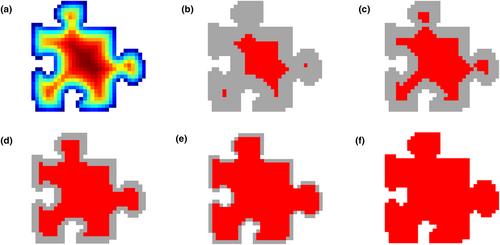
Distinguishing among the species, genera, subfamilies, or tribes of Poaceae would provide significant insight into the evolution and establishment of grasses and grassland communities. Even discrimination at the rank of morphotype would allow a more detailed assessment of changes in grass diversity through time than is possible with traditional palynological methods. One proposed approach to delimiting grass pollen morphotypes focuses on the morphology of the pollen surface ornamentation visible under very high magnification. Introduced a decade ago by Mander et al. (2013), we characterized the complexity of the grass pollen exine using the topological method of subgraph centrality, which describes the relationship of a node (or in this case, a pixel) to all other nodes (or pixels) (Estrada & Rodriguez-Velazquez, 2005). ‘Centrality’ refers to the relative importance of a node to local and global connectivity. So, given a cropped image of the pollen grain exine, binarized into a white foreground and a black background, the connection between pixels and their immediate neighbors can be weighted, with connections within the foreground or the background holding high weight and connections across the two assigned as low weight. Expanding the network outward, pixels that are more centrally connected within a defined area will hold a higher value than those at a boundary (Fig. 2). This provides a dynamic range of values that quantitatively characterize complex shapes.
Wei et al. are the first to apply Mander et al. (2013)'s method to the fossil record. They focus on the shape of the pollen surface foreground visible in scanning electron micrographs. This foreground is defined by the top two (SC2) or top three (SC3) quantiles of pixel brightness in these grayscale images. Pixels from these binarized images are ranked by their subgraph centrality values and the number of foreground objects defined at 5% threshold increments is tallied. This produces two vectors, each with 19 elements, that together with the size and density of ornamentation, describe the morphological complexity of a pollen grain's surface. Wei et al. use these morphological characters to define a morphospace for grass pollen. A morphospace captures the theoretical hyperspace of all possible variations in an organism's form (McGhee, 2006), and the changes in the area occupied within a morphospace represent evolutionary shifts in a taxon's morphology.
Wei et al. show that grass pollen morphology, already simple and psilate, has further simplified from the early Miocene, with surface ornamentation getting progressively less and less complex. This is the first demonstration of morphological evolution in grass pollen on evolutionary timescales. Notably, the morphospace occupied by the pollen of living Neotropical grass species in the study is sparsely occupied by the fossil specimens. There is limited overlap between the pollen grain morphology of extant and fossil species, as well as between early Miocene and late Miocene specimens. This points to the potential extinction or extirpation of many Neotropical fossil morphotypes. The morphospace progression of grass pollen morphology from past to present suggests either morphological drift with taxonomic turnover or directed selection for simpler exine ornamentation in Neotropical grasses over the last 23 million years.
Wei et al. rule out the fossilization process and abiotic factors as potential drivers of this shift and suggest that wind pollination may play a role in selection for a simpler exine. But in a recent study on Quaternary grass pollen (Adaïmé et al., 2024b), we offer an alternative hypothesis. The exine of grass pollen may reflect the evolution of different resource allocation strategies. Grass species mostly employ one of two photosynthetic pathways (C3 or C4), which have consequences for carbon allocation within the plant. C3 grasses have leaves with higher tissue density, while C4 grasses invest more in their root systems (Atkinson et al., 2016). This trade-off in carbon allocation between the shoot and root systems may be reflected in not only the leaves and roots, but also flowers, seeds, and pollen. We observed thinner walls and simpler ornamentation in the pollen of extant C4 grasses (Adaïmé et al., 2024b), and a similar pattern can be observed in the results from Wei et al. When living species are color-coded by photosynthetic pathway, it becomes clear that while C3 and C4 grass pollen overlap morphologically, the fossil specimens overlap the morphospace occupied by C3 more than that of C4 species (Fig. 3). C3 grass pollen is characterized by higher PC1 scores than C4 grasses and older fossil specimens are characterized by higher PC1 scores than younger fossil specimens. This suggests that the first principal component of the morphological measurements from Wei et al. captures a shift in photosynthetic pathway and perhaps a shift in carbon allocation between roots and shoots, similar to that observed in Adaïmé et al. (2024b). This shift is dramatic but expected, given the global expansion of C4 grasslands in the late Miocene (Osborne, 2008) likely resulting from increased fire frequency (Hoetzel et al., 2013) and the drawdown of atmospheric CO2 (Brown et al., 2022).
The results from Wei et al. and other recent studies (Romero et al., 2020a; Adaïmé et al., 2024a,b) clearly demonstrate how much we have underestimated the extent of ecological and evolutionary information preserved in pollen morphology, particularly within the fine-scale structures evident under high magnification. However, the extended delay between the publication of the subgraph centrality method by Mander et al. (2013) and its application by Wei et al. speaks to the broader challenge of gathering the image datasets needed for these intensive morphometric analyses. Producing 1157 scanning electron micrographs is no small feat. That 354 of those were of fossil specimens is even more remarkable. Few researchers have attempted to gather an electron micrograph library of this scale, but Wei et al. demonstrate the discoveries that are possible with intensive microscopic imaging.
Electron microscopy, alongside comparable methods like optical superresolution (Sivaguru et al., 2018; Romero et al., 2020b; Fig. 1), hold a critical place in pollen analysis. Arguably, high-resolution imaging and image analysis should play a larger role in our field. The morphology we are able to observe influences both the hypotheses we test and the robustness of our results (Mander & Punyasena, 2014). Large-scale microscopic imaging of living and fossil pollen and spores and the quantification of the traditional qualitative terminology of pollen analysis is the next frontier of palynology. It is the critical first step in decoding the evolutionary information contained within the microscopic morphology of pollen and spores.
The New Phytologist Foundation remains neutral with regard to jurisdictional claims in maps and in any institutional affiliations.
区分禾本科的种、属、亚科或部落,将对禾本科和草地群落的进化和建立提供重要的见解。即使是在形态等级上的区分,也可以比传统的孢粉学方法更详细地评估草的多样性随时间的变化。一种划分草花粉形态类型的方法侧重于在非常高倍放大下可见的花粉表面纹饰的形态。十年前由Mander等人(2013)引入,我们使用子图中心性的拓扑方法表征了草花粉外叶的复杂性,该方法描述了节点(或在这种情况下,一个像素)与所有其他节点(或像素)的关系(Estrada &;Rodriguez-Velazquez, 2005)。“中心性”指的是节点对本地和全球连接性的相对重要性。因此,给定花粉粒外皮的裁剪图像,二值化成白色前景和黑色背景,像素与其近邻之间的连接可以加权,前景或背景内的连接具有高权重,而两者之间的连接被分配为低权重。将网络向外扩展,在定义区域内更集中连接的像素将比边界处的像素保持更高的值(图2)。这提供了定量表征复杂形状的动态值范围。Wei等人率先将Mander et al.(2013)的方法应用于化石记录。他们专注于在扫描电子显微照片中可见的花粉表面前景的形状。前景由这些灰度图像中像素亮度的前两个(SC2)或前三个(SC3)分位数定义。这些二值化图像中的像素根据其子图中心性值进行排序,并计算以5%阈值增量定义的前景对象的数量。这样就产生了两个向量,每个向量有19个元素,再加上纹饰的大小和密度,就描述了花粉粒表面的形态复杂性。Wei等人利用这些形态特征定义了草花粉的形态空间。形态空间捕获了生物形态中所有可能变化的理论超空间(McGhee, 2006),形态空间中占据区域的变化代表了分类单元形态的进化转变。Wei等人的研究表明,从中新世早期开始,原本简单的草花粉形态进一步简化,表面纹饰逐渐变得越来越不复杂。这是首次在进化时间尺度上证明草花粉的形态进化。值得注意的是,研究中现存新热带草种花粉所占据的形态空间很少被化石标本所占据。现存花粉粒形态与化石种、早中新世与晚中新世花粉粒形态有一定的重叠。这表明许多新热带化石形态可能灭绝或消失。从过去到现在的花粉形态空间演变表明,在过去的2300万年中,新热带禾本科植物的花粉形态要么是随着分类转换而发生的形态漂移,要么是对更简单的外叶纹饰的直接选择。Wei等人排除了石化过程和非生物因素作为这种转变的潜在驱动因素,并提出风媒传粉可能在选择更简单的外叶中发挥作用。但在最近对第四纪草花粉的研究中(Adaïmé et al., 2024b),我们提出了另一种假设。草花粉的外叶可能反映了不同资源配置策略的演变。禾草植物主要采用两种光合作用途径(C3或C4)中的一种,这对植物内部的碳分配有影响。C3草的叶片组织密度更高,而C4草对根系的投入更多(Atkinson et al., 2016)。这种碳分配在茎和根系统之间的权衡不仅可以反映在叶和根上,还可以反映在花、种子和花粉上。我们观察到现存C4禾草的花粉壁更薄,纹饰更简单(Adaïmé et al., 2024b), Wei等人的结果也显示了类似的模式。通过光合作用途径对现存物种进行颜色编码时,可以清楚地看到,虽然C3和C4草花粉在形态上重叠,但化石标本中C3占据的形态空间重叠程度高于C4(图3)。C3草花粉的PC1评分高于C4草,而较老的化石标本的PC1评分高于较年轻的化石标本。这表明来自Wei等人的形态学测量的第一主成分。 捕获了光合作用途径的转变,或许还捕获了根和芽之间碳分配的转变,类似于Adaïmé等人(2024b)所观察到的情况。考虑到中新世晚期C4草地的全球扩张(Osborne, 2008)可能是由于火灾频率增加(Hoetzel et al., 2013)和大气二氧化碳的减少(Brown et al., 2022),这种转变是戏剧性的,但也是意料之中的。Wei等人近期研究的结果(Romero et al., 2020a;Adaïmé等人,2024a,b)清楚地表明,我们低估了花粉形态中保存的生态和进化信息的程度,特别是在高倍放大下明显的精细结构中。然而,从Mander等人(2013)发表子图中心性方法到Wei等人应用子图中心性方法之间的延迟,说明了收集这些密集形态计量学分析所需的图像数据集的更广泛挑战。制作1157张扫描电子显微照片可不是一件小事。其中的354件是化石标本,这一点更加引人注目。很少有研究人员试图收集这种规模的电子显微照片库,但Wei等人证明了密集显微成像可能带来的发现。电子显微镜,以及光学超分辨率等类似方法(Sivaguru等人,2018;Romero et al., 2020b;图1),在花粉分析中占有重要地位。可以说,高分辨率成像和图像分析应该在我们的领域发挥更大的作用。我们能够观察到的形态既影响我们测试的假设,也影响我们结果的稳健性(Mander &;Punyasena, 2014)。活体和化石花粉和孢子的大规模显微成像以及花粉分析的传统定性术语的量化是孢粉学的下一个前沿。这是破译花粉和孢子微观形态中包含的进化信息的关键的第一步。新植物学家基金会对地图和任何机构的管辖权要求保持中立。
期刊介绍:
New Phytologist is an international electronic journal published 24 times a year. It is owned by the New Phytologist Foundation, a non-profit-making charitable organization dedicated to promoting plant science. The journal publishes excellent, novel, rigorous, and timely research and scholarship in plant science and its applications. The articles cover topics in five sections: Physiology & Development, Environment, Interaction, Evolution, and Transformative Plant Biotechnology. These sections encompass intracellular processes, global environmental change, and encourage cross-disciplinary approaches. The journal recognizes the use of techniques from molecular and cell biology, functional genomics, modeling, and system-based approaches in plant science. Abstracting and Indexing Information for New Phytologist includes Academic Search, AgBiotech News & Information, Agroforestry Abstracts, Biochemistry & Biophysics Citation Index, Botanical Pesticides, CAB Abstracts®, Environment Index, Global Health, and Plant Breeding Abstracts, and others.





 京公网安备 11010802042870号
京ICP备2023020795号-1
京公网安备 11010802042870号
京ICP备2023020795号-1

 分享
分享
 求助内容:
求助内容: 应助结果提醒方式:
 扫码关注我们
