Michael Shimelash, Grigory Sidorenkov, Bert van der Vegt, Mathilde Jalving, Emöke Rácz, Geertruida H de Bock
{"title":"Change in Metabolic Markers and the Risk of Skin Cancer: Results from the Lifelines Cohort Study in the Netherlands.","authors":"Michael Shimelash, Grigory Sidorenkov, Bert van der Vegt, Mathilde Jalving, Emöke Rácz, Geertruida H de Bock","doi":"10.1158/1055-9965.EPI-24-1235","DOIUrl":null,"url":null,"abstract":"<p><strong>Background: </strong>Skin cancers are the most common cancers in Caucasians, and their incidence is rising. Although metabolic and anthropometric markers play a role in cancer development, the relationship between metabolic and anthropometric changes in skin cancer remains unclear. This study aimed to examine possible associations between these changes and the risk of skin cancer.</p><p><strong>Methods: </strong>Participants without prior skin cancer history from the Northern Netherlands representative of the general population were included. Histopathology data were obtained from the Dutch Nationwide Pathology Database. Adjusted Cox regression analyzed associations between metabolic changes and time to pathology-confirmed skin cancer incidence over a 7-year follow-up, assessing overall skin cancer risk and subtypes, including melanoma and nonmelanoma skin cancer.</p><p><strong>Results: </strong>Out of 97,106 participants, 4,195 (4.3%) developed skin cancer. Decrease and increase in body mass index (BMI) were both associated with lower skin cancer risk: adjusted HRs (aHR) of 0.88 (0.80-0.98) and 0.78 (0.72-0.86), respectively. Triglyceride and waist-to-hip ratio decreases were also associated with lower risk: aHR: 0.89 (0.80-0.98) and 0.89 (0.83-0.98), respectively. Increase in Hemoglobin A1c (HbA1c) was associated with a higher risk in individuals below the age of 45 years at baseline: aHR: 1.21 (1.01-1.45). Subtype analysis showed an increase in BMI was associated with lower melanoma risk: aHR: 0.72 (0.58-0.91).</p><p><strong>Conclusions: </strong>Changes in BMI and decrease in triglycerides and waist-to-hip ratio are related to lower skin cancer risk, whereas an increase in HbA1c may elevate risk in individuals younger than 45 at baseline. These findings highlight the importance of non-sunlight-related risk factors for skin cancer prevention and the need for further research into underlying mechanisms.</p><p><strong>Impact: </strong>This study contributes to the broader understanding of how metabolic health impacts skin cancer development, offering potential avenues for targeted prevention strategies.</p>","PeriodicalId":9458,"journal":{"name":"Cancer Epidemiology Biomarkers & Prevention","volume":" ","pages":"598-609"},"PeriodicalIF":3.4000,"publicationDate":"2025-04-03","publicationTypes":"Journal Article","fieldsOfStudy":null,"isOpenAccess":false,"openAccessPdf":"https://www.ncbi.nlm.nih.gov/pmc/articles/PMC11966110/pdf/","citationCount":"0","resultStr":null,"platform":"Semanticscholar","paperid":null,"PeriodicalName":"Cancer Epidemiology Biomarkers & Prevention","FirstCategoryId":"3","ListUrlMain":"https://doi.org/10.1158/1055-9965.EPI-24-1235","RegionNum":3,"RegionCategory":"医学","ArticlePicture":[],"TitleCN":null,"AbstractTextCN":null,"PMCID":null,"EPubDate":"","PubModel":"","JCR":"Q2","JCRName":"ONCOLOGY","Score":null,"Total":0}
引用次数: 0
Abstract
Background: Skin cancers are the most common cancers in Caucasians, and their incidence is rising. Although metabolic and anthropometric markers play a role in cancer development, the relationship between metabolic and anthropometric changes in skin cancer remains unclear. This study aimed to examine possible associations between these changes and the risk of skin cancer.
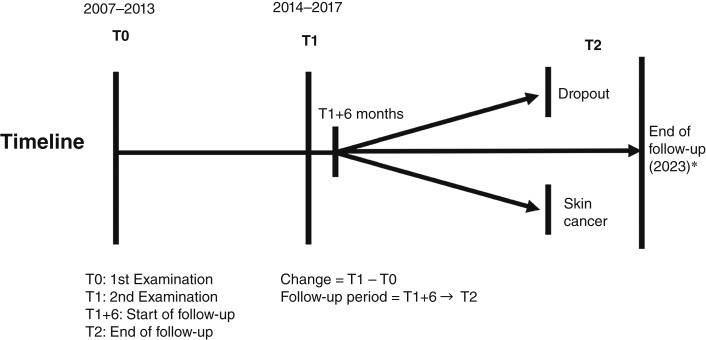
Methods: Participants without prior skin cancer history from the Northern Netherlands representative of the general population were included. Histopathology data were obtained from the Dutch Nationwide Pathology Database. Adjusted Cox regression analyzed associations between metabolic changes and time to pathology-confirmed skin cancer incidence over a 7-year follow-up, assessing overall skin cancer risk and subtypes, including melanoma and nonmelanoma skin cancer.
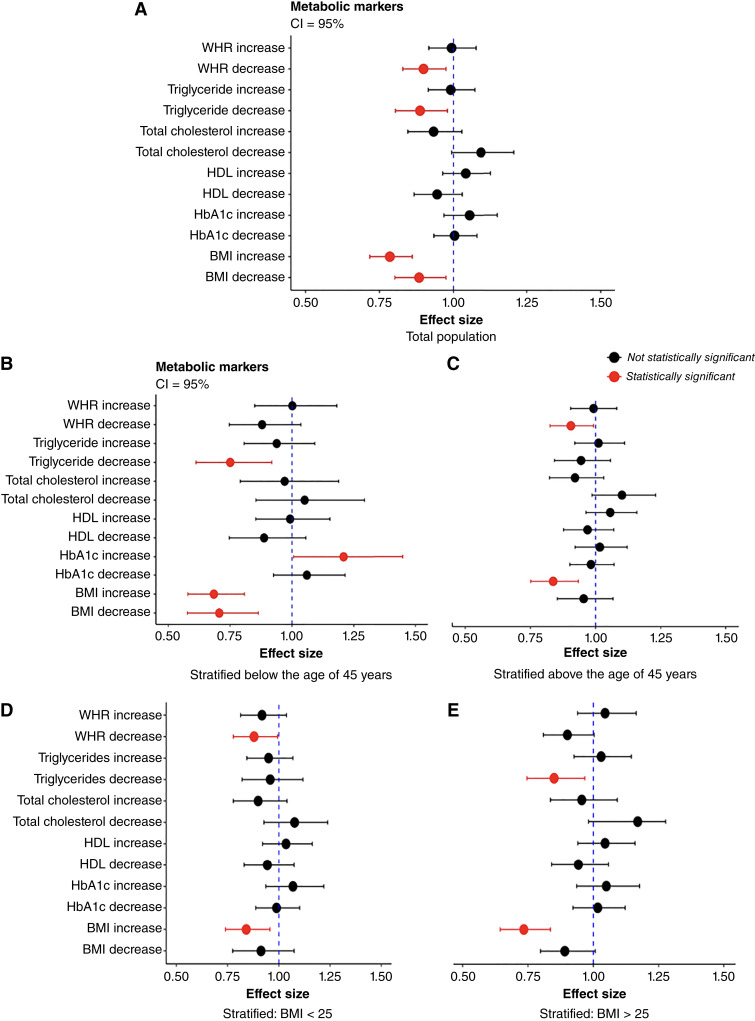
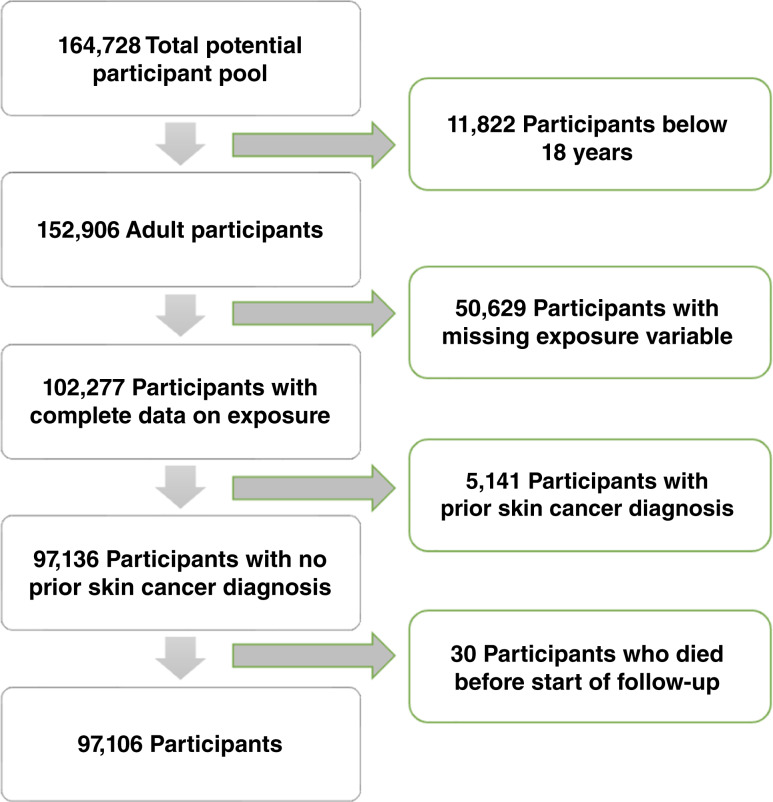
Results: Out of 97,106 participants, 4,195 (4.3%) developed skin cancer. Decrease and increase in body mass index (BMI) were both associated with lower skin cancer risk: adjusted HRs (aHR) of 0.88 (0.80-0.98) and 0.78 (0.72-0.86), respectively. Triglyceride and waist-to-hip ratio decreases were also associated with lower risk: aHR: 0.89 (0.80-0.98) and 0.89 (0.83-0.98), respectively. Increase in Hemoglobin A1c (HbA1c) was associated with a higher risk in individuals below the age of 45 years at baseline: aHR: 1.21 (1.01-1.45). Subtype analysis showed an increase in BMI was associated with lower melanoma risk: aHR: 0.72 (0.58-0.91).
Conclusions: Changes in BMI and decrease in triglycerides and waist-to-hip ratio are related to lower skin cancer risk, whereas an increase in HbA1c may elevate risk in individuals younger than 45 at baseline. These findings highlight the importance of non-sunlight-related risk factors for skin cancer prevention and the need for further research into underlying mechanisms.
Impact: This study contributes to the broader understanding of how metabolic health impacts skin cancer development, offering potential avenues for targeted prevention strategies.
期刊介绍:
Cancer Epidemiology, Biomarkers & Prevention publishes original peer-reviewed, population-based research on cancer etiology, prevention, surveillance, and survivorship. The following topics are of special interest: descriptive, analytical, and molecular epidemiology; biomarkers including assay development, validation, and application; chemoprevention and other types of prevention research in the context of descriptive and observational studies; the role of behavioral factors in cancer etiology and prevention; survivorship studies; risk factors; implementation science and cancer care delivery; and the science of cancer health disparities. Besides welcoming manuscripts that address individual subjects in any of the relevant disciplines, CEBP editors encourage the submission of manuscripts with a transdisciplinary approach.



 京公网安备 11010802042870号
京ICP备2023020795号-1
京公网安备 11010802042870号
京ICP备2023020795号-1

 分享
分享
 求助内容:
求助内容: 应助结果提醒方式:
 扫码关注我们
