{"title":"Alginate-Based Hydrogels with Amniotic Membrane Stem Cells for Wound Dressing Application.","authors":"Nurul Fitriani, Gofarana Wilar, Angga Cipta Narsa, Khaled M Elamin, Nasrul Wathoni","doi":"10.2147/SCCAA.S493125","DOIUrl":null,"url":null,"abstract":"<p><strong>Objective: </strong>Chronic wounds are a common clinical problem that necessitate the exploration of novel regenerative therapies. We report a method to investigate the in vitro wound healing capacity of an innovative biomaterial, which is based on amniotic membrane-derived stem cells (AMSCs) embedded in an alginate hydrogel matrix. The aim of this study was to prepare an sodium alginate-based hydrogel, cross-linked calcium chloride (CaCl<sub>2)</sub> with the active ingredient AMSC (AMSC/Alg-H) and to evaluate its in vitro effectiveness for wound closure.</p><p><strong>Methods: </strong>This hydrogel preparation involved combining sterile solutions of AMSC, sodium alginate, and CaCl<sub>2,</sub> followed by rinsing with serum-free media. The cells were cultured in different 6-well plates, namely sodium alginate, calcium chloride, AMSC, Alg-H, and AMSC/Alg-H, in complete medium with 10% FBS. The hydrogel was successfully formulated, as confirmed by characterization techniques including Scanning Electron Microscopy (SEM), Fourier Transform Infrared (FTIR) spectroscopy, Differential Scanning Calorimetry (DSC), Cytotoxicity Studies, TGF-β1 Level Measurement by ELISA, and Cell Scratch Wound Assay.</p><p><strong>Results: </strong>Cryo-EM characterization of the Alg-H preparation successfully demonstrated the encapsulation of MSCs. FTIR and DSC analyses indicate that crosslinking transpires in Alg-H encapsulating AMSC. The AMSC/Alg-H preparation showed no significant difference in toxicity compared to HaCaT cells (p < 0.05), indicating it was not toxic to HaCaT cells. Furthermore, in the scratch wound assay test at 24 hours, the AMSC/Alg-H preparation achieved 100% wound closure, outperforming both AMSC and Alg-H alone. In vitro assessment revealed that AMSC/Alg-H significantly enhanced key wound healing processes, including cell proliferation and migration, compared to Alg-H.</p><p><strong>Conclusion: </strong>Our study demonstrated the promising potential of AMSC/Alg-H as an enhanced regenerative therapy for in vitro wound healing. AMSC/Alg-H was able to maintain the viability of AMSCs and facilitate the formation of tissue-like structures.</p>","PeriodicalId":44934,"journal":{"name":"Stem Cells and Cloning-Advances and Applications","volume":"18 ","pages":"1-13"},"PeriodicalIF":2.6000,"publicationDate":"2025-01-10","publicationTypes":"Journal Article","fieldsOfStudy":null,"isOpenAccess":false,"openAccessPdf":"https://www.ncbi.nlm.nih.gov/pmc/articles/PMC11730520/pdf/","citationCount":"0","resultStr":null,"platform":"Semanticscholar","paperid":null,"PeriodicalName":"Stem Cells and Cloning-Advances and Applications","FirstCategoryId":"1085","ListUrlMain":"https://doi.org/10.2147/SCCAA.S493125","RegionNum":0,"RegionCategory":null,"ArticlePicture":[],"TitleCN":null,"AbstractTextCN":null,"PMCID":null,"EPubDate":"2025/1/1 0:00:00","PubModel":"eCollection","JCR":"Q4","JCRName":"CELL BIOLOGY","Score":null,"Total":0}
引用次数: 0
Abstract
Objective: Chronic wounds are a common clinical problem that necessitate the exploration of novel regenerative therapies. We report a method to investigate the in vitro wound healing capacity of an innovative biomaterial, which is based on amniotic membrane-derived stem cells (AMSCs) embedded in an alginate hydrogel matrix. The aim of this study was to prepare an sodium alginate-based hydrogel, cross-linked calcium chloride (CaCl2) with the active ingredient AMSC (AMSC/Alg-H) and to evaluate its in vitro effectiveness for wound closure.
Methods: This hydrogel preparation involved combining sterile solutions of AMSC, sodium alginate, and CaCl2, followed by rinsing with serum-free media. The cells were cultured in different 6-well plates, namely sodium alginate, calcium chloride, AMSC, Alg-H, and AMSC/Alg-H, in complete medium with 10% FBS. The hydrogel was successfully formulated, as confirmed by characterization techniques including Scanning Electron Microscopy (SEM), Fourier Transform Infrared (FTIR) spectroscopy, Differential Scanning Calorimetry (DSC), Cytotoxicity Studies, TGF-β1 Level Measurement by ELISA, and Cell Scratch Wound Assay.
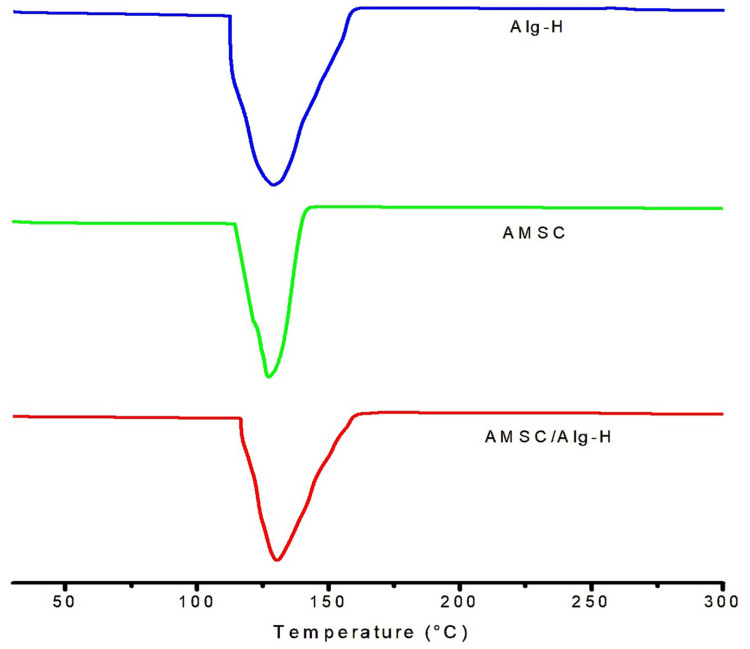
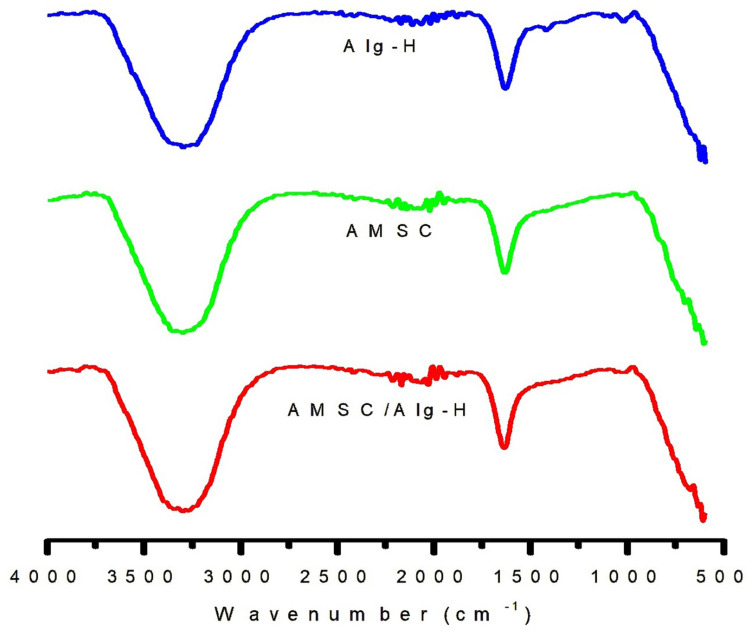
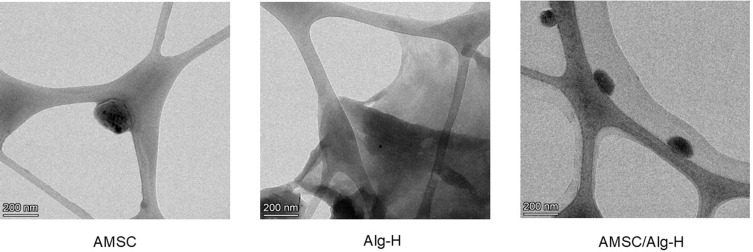
Results: Cryo-EM characterization of the Alg-H preparation successfully demonstrated the encapsulation of MSCs. FTIR and DSC analyses indicate that crosslinking transpires in Alg-H encapsulating AMSC. The AMSC/Alg-H preparation showed no significant difference in toxicity compared to HaCaT cells (p < 0.05), indicating it was not toxic to HaCaT cells. Furthermore, in the scratch wound assay test at 24 hours, the AMSC/Alg-H preparation achieved 100% wound closure, outperforming both AMSC and Alg-H alone. In vitro assessment revealed that AMSC/Alg-H significantly enhanced key wound healing processes, including cell proliferation and migration, compared to Alg-H.
Conclusion: Our study demonstrated the promising potential of AMSC/Alg-H as an enhanced regenerative therapy for in vitro wound healing. AMSC/Alg-H was able to maintain the viability of AMSCs and facilitate the formation of tissue-like structures.





 京公网安备 11010802042870号
京ICP备2023020795号-1
京公网安备 11010802042870号
京ICP备2023020795号-1

 分享
分享
 求助内容:
求助内容: 应助结果提醒方式:
 扫码关注我们
