{"title":"Prenatal vitamin utilization and its determinants among pregnant women in south Gondar zone: multicenter cross-sectional study.","authors":"Begizew Yimenu Mekuriaw, Dagne Addisu, Wassie Yazie Ferede, Fillorenes Ayalew Sisay, Assefa Kebie Mitiku, Tegegne Wale Belachew, Tigist Seid Yimer, Habtie Bantider Wubet, Selamawit Girma Tadesse, Negesse Zurbachew Gobezie, Alemie Fentie Mebratie, Moges Kefale Alachew, Temesgen Dessie Mengistu, Yonas Zenebe Yiregu, Rahel Birhanu Arage, Anteneh Mengist Dessie, Fikadu Geremew Gebeyehu, Geremew Bishaw Mekonen, Habtam Desse Alemayehu, Abeba Belay Ayalew, Yitayal Ayalew Goshu, Besfat Berihun Erega","doi":"10.3389/fgwh.2024.1474928","DOIUrl":null,"url":null,"abstract":"<p><strong>Background: </strong>Prenatal vitamin and mineral supplements are commonly advised as clinical practice standard of care. In spite of Ethiopian government focus on maternal nutrition programmes targeting pregnant and lactating women, Micronutrient deficiencies are still quite common and are regarded as a serious public health issue and also little is known regarding utilization and barriers to prenatal vitamin use during pregnancy. This study aimed to assess utilization and associated factors of prenatal vitamins among pregnant women attending antenatal care at public hospitals in the south Gondar zone, 2024.</p><p><strong>Methods: </strong>Multi center crossectional study design was conducted among 416 pregnant women from March 1 to May 30, 2024. Systematic sampling technique was used to select the study participants. Data was collected using Interviewer administered questionnaire. After data, SPSS version 26 software was used for analysis. Factors associated with utilization of prenatal vitamins were identified using bi-variable and multi variable logistic regression models. Statistical significance was declared at 95%CI and <i>p</i>-value < 0.05.</p><p><strong>Result: </strong>In this study, we found that 87.5% (95% CI: 84.31, 90.34) of pregnant women did not use prenatal vitamins. Women not having formal education (AOR = 2.72, 95%CI: 1.44-5.15), being unplanned pregnancy (AOR = 2.58, 95%CI: 1.76-3.78), husband being decision maker in health care (AOR = 1.71, 95%CI:1.09-2.68), having poor knowledge (AOR = 3.27, 95%CI: 1.44-7.42) and unfavorable attitude (AOR = 3.63, 95%CI: 1.61-8.18) on prenatal vitamins were significantly associated with non-users of prenatal vitamins.</p><p><strong>Conclusion: </strong>The proportion of non-users of prenatal vitamin were higher. Educational level of women, pregnancy plan, decision on health care, knowledge and attitude on prenatal vitamins had statistically significant with utilization of prenatal vitamins. Developing and implementing targeted educational programs to increase awareness about the importance and benefits of prenatal vitamins and encouraging women to take an active role in their healthcare decisions is recommended to improve the utilization of prenatal vitamins.</p>","PeriodicalId":73087,"journal":{"name":"Frontiers in global women's health","volume":"5 ","pages":"1474928"},"PeriodicalIF":2.4000,"publicationDate":"2025-01-06","publicationTypes":"Journal Article","fieldsOfStudy":null,"isOpenAccess":false,"openAccessPdf":"https://www.ncbi.nlm.nih.gov/pmc/articles/PMC11744017/pdf/","citationCount":"0","resultStr":null,"platform":"Semanticscholar","paperid":null,"PeriodicalName":"Frontiers in global women's health","FirstCategoryId":"1085","ListUrlMain":"https://doi.org/10.3389/fgwh.2024.1474928","RegionNum":0,"RegionCategory":null,"ArticlePicture":[],"TitleCN":null,"AbstractTextCN":null,"PMCID":null,"EPubDate":"2024/1/1 0:00:00","PubModel":"eCollection","JCR":"Q2","JCRName":"OBSTETRICS & GYNECOLOGY","Score":null,"Total":0}
引用次数: 0
Abstract
Background: Prenatal vitamin and mineral supplements are commonly advised as clinical practice standard of care. In spite of Ethiopian government focus on maternal nutrition programmes targeting pregnant and lactating women, Micronutrient deficiencies are still quite common and are regarded as a serious public health issue and also little is known regarding utilization and barriers to prenatal vitamin use during pregnancy. This study aimed to assess utilization and associated factors of prenatal vitamins among pregnant women attending antenatal care at public hospitals in the south Gondar zone, 2024.
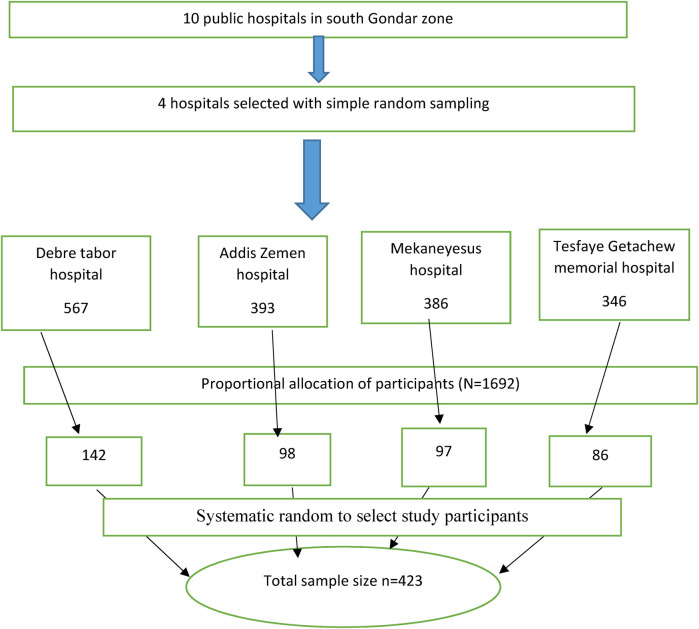
Methods: Multi center crossectional study design was conducted among 416 pregnant women from March 1 to May 30, 2024. Systematic sampling technique was used to select the study participants. Data was collected using Interviewer administered questionnaire. After data, SPSS version 26 software was used for analysis. Factors associated with utilization of prenatal vitamins were identified using bi-variable and multi variable logistic regression models. Statistical significance was declared at 95%CI and p-value < 0.05.
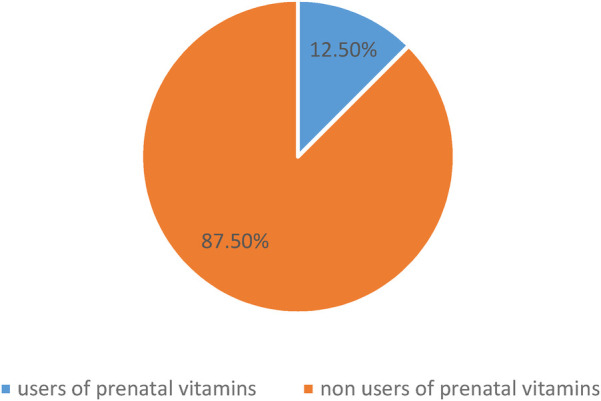
Result: In this study, we found that 87.5% (95% CI: 84.31, 90.34) of pregnant women did not use prenatal vitamins. Women not having formal education (AOR = 2.72, 95%CI: 1.44-5.15), being unplanned pregnancy (AOR = 2.58, 95%CI: 1.76-3.78), husband being decision maker in health care (AOR = 1.71, 95%CI:1.09-2.68), having poor knowledge (AOR = 3.27, 95%CI: 1.44-7.42) and unfavorable attitude (AOR = 3.63, 95%CI: 1.61-8.18) on prenatal vitamins were significantly associated with non-users of prenatal vitamins.
Conclusion: The proportion of non-users of prenatal vitamin were higher. Educational level of women, pregnancy plan, decision on health care, knowledge and attitude on prenatal vitamins had statistically significant with utilization of prenatal vitamins. Developing and implementing targeted educational programs to increase awareness about the importance and benefits of prenatal vitamins and encouraging women to take an active role in their healthcare decisions is recommended to improve the utilization of prenatal vitamins.



 京公网安备 11010802042870号
京ICP备2023020795号-1
京公网安备 11010802042870号
京ICP备2023020795号-1

 分享
分享

 求助内容:
求助内容: 应助结果提醒方式:
 扫码关注我们
