Guoshuai Xu, Qinghong Zhang, Renjia Cheng, Jun Qu, Wenqiang Li
{"title":"Survival strategies of cancer cells: the role of macropinocytosis in nutrient acquisition, metabolic reprogramming, and therapeutic targeting.","authors":"Guoshuai Xu, Qinghong Zhang, Renjia Cheng, Jun Qu, Wenqiang Li","doi":"10.1080/15548627.2025.2452149","DOIUrl":null,"url":null,"abstract":"<p><p>Macropinocytosis is a nonselective form of endocytosis that allows cancer cells to largely take up the extracellular fluid and its contents, including nutrients, growth factors, etc. We first elaborate meticulously on the process of macropinocytosis. Only by thoroughly understanding this entire process can we devise targeted strategies against it. We then focus on the central role of the MTOR (mechanistic target of rapamycin kinase) complex 1 (MTORC1) in regulating macropinocytosis, highlighting its significance as a key signaling hub where various pathways converge to control nutrient uptake and metabolic processes. The article covers a comprehensive analysis of the literature on the molecular mechanisms governing macropinocytosis, including the initiation, maturation, and recycling of macropinosomes, with an emphasis on how these processes are hijacked by cancer cells to sustain their growth. Key discussions include the potential therapeutic strategies targeting macropinocytosis, such as enhancing drug delivery via this pathway, inhibiting macropinocytosis to starve cancer cells, blocking the degradation and recycling of macropinosomes, and inducing methuosis - a form of cell death triggered by excessive macropinocytosis. Targeting macropinocytosis represents a novel and innovative approach that could significantly advance the treatment of cancers that rely on this pathway for survival. Through continuous research and innovation, we look forward to developing more effective and safer anti-cancer therapies that will bring new hope to patients.<b>Abbreviation</b>: AMPK: AMP-activated protein kinase; ASOs: antisense oligonucleotides; CAD: carbamoyl-phosphate synthetase 2, aspartate transcarbamylase, and dihydroorotase; DC: dendritic cell; EGF: epidermal growth factor; EGFR: epidermal growth factor receptor; ERBB2: erb-b2 receptor tyrosine kinase 2; ESCRT: endosomal sorting complex required for transport; GAP: GTPase-activating protein; GEF: guanine nucleotide exchange factor; GRB2: growth factor receptor bound protein 2; LPP: lipopolyplex; MTOR: mechanistic target of rapamycin kinase; MTORC1: mechanistic target of rapamycin kinase complex 1; MTORC2: mechanistic target of rapamycin kinase complex 2; NSCLC: non-small cell lung cancer; PADC: pancreatic ductal adenocarcinoma; PDPK1: 3-phosphoinositide dependent protein kinase 1; PI3K: phosphoinositide 3-kinase; PIK3C3: phosphatidylinositol 3-kinase catalytic subunit type 3; PtdIns(3,4,5)P<sub>3</sub>: phosphatidylinositol-(3,4,5)-trisphosphate; PtdIns(4,5)P<sub>2</sub>: phosphatidylinositol-(4,5)-bisphosphate; PTT: photothermal therapies; RAC1: Rac family small GTPase 1; RPS6: ribosomal protein S6; RPS6KB1: ribosomal protein S6 kinase B1; RTKs: receptor tyrosine kinases; SREBF: sterol regulatory element binding transcription factor; TFEB: transcription factor EB; TNBC: triple-negative breast cancer; TSC2: TSC complex subunit 2; ULK1: unc-51 like autophagy activating kinase 1; UPS: ubiquitin-proteasome system.</p>","PeriodicalId":93893,"journal":{"name":"Autophagy","volume":" ","pages":"693-718"},"PeriodicalIF":14.3000,"publicationDate":"2025-04-01","publicationTypes":"Journal Article","fieldsOfStudy":null,"isOpenAccess":false,"openAccessPdf":"https://www.ncbi.nlm.nih.gov/pmc/articles/PMC11925119/pdf/","citationCount":"0","resultStr":null,"platform":"Semanticscholar","paperid":null,"PeriodicalName":"Autophagy","FirstCategoryId":"1085","ListUrlMain":"https://doi.org/10.1080/15548627.2025.2452149","RegionNum":0,"RegionCategory":null,"ArticlePicture":[],"TitleCN":null,"AbstractTextCN":null,"PMCID":null,"EPubDate":"2025/1/26 0:00:00","PubModel":"Epub","JCR":"","JCRName":"","Score":null,"Total":0}
引用次数: 0
Abstract
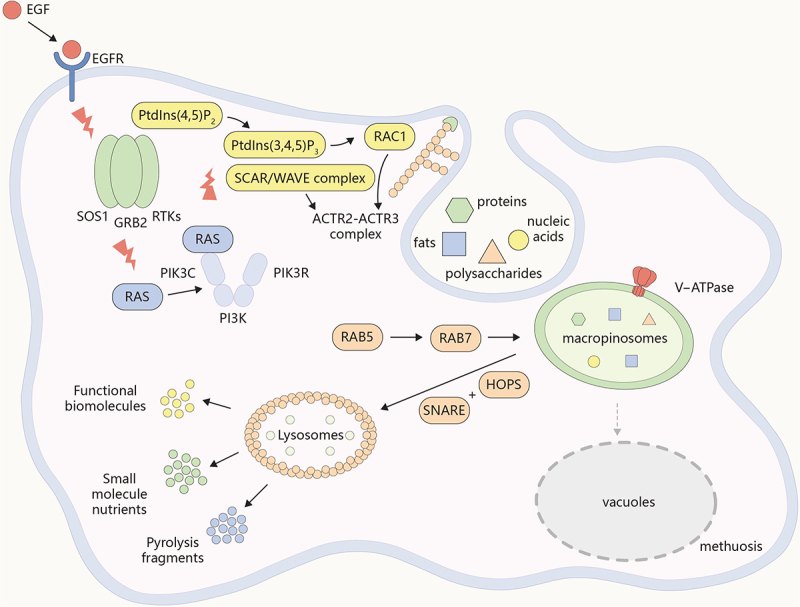
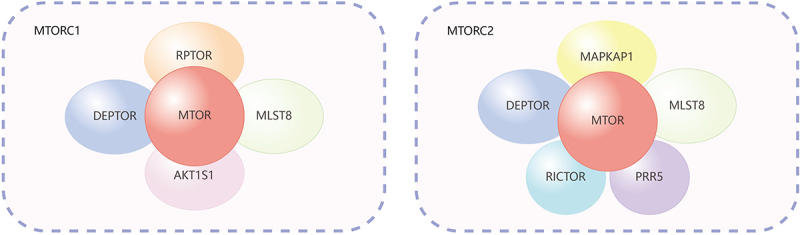
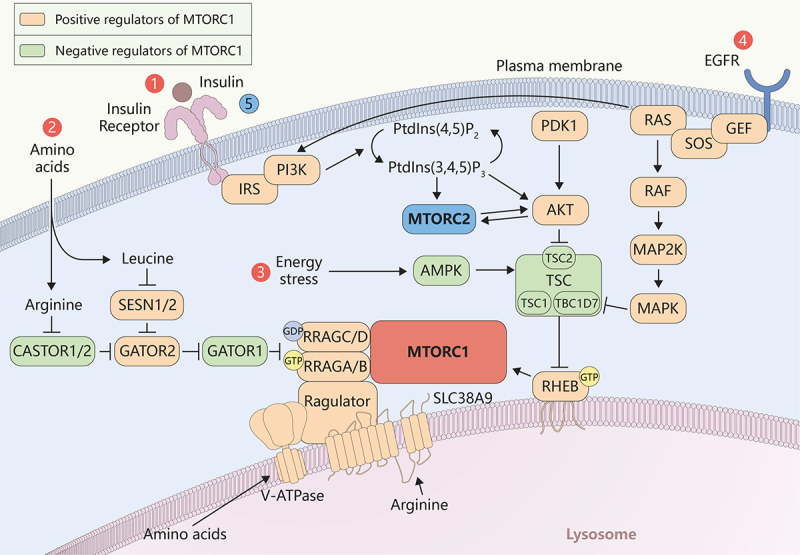
Macropinocytosis is a nonselective form of endocytosis that allows cancer cells to largely take up the extracellular fluid and its contents, including nutrients, growth factors, etc. We first elaborate meticulously on the process of macropinocytosis. Only by thoroughly understanding this entire process can we devise targeted strategies against it. We then focus on the central role of the MTOR (mechanistic target of rapamycin kinase) complex 1 (MTORC1) in regulating macropinocytosis, highlighting its significance as a key signaling hub where various pathways converge to control nutrient uptake and metabolic processes. The article covers a comprehensive analysis of the literature on the molecular mechanisms governing macropinocytosis, including the initiation, maturation, and recycling of macropinosomes, with an emphasis on how these processes are hijacked by cancer cells to sustain their growth. Key discussions include the potential therapeutic strategies targeting macropinocytosis, such as enhancing drug delivery via this pathway, inhibiting macropinocytosis to starve cancer cells, blocking the degradation and recycling of macropinosomes, and inducing methuosis - a form of cell death triggered by excessive macropinocytosis. Targeting macropinocytosis represents a novel and innovative approach that could significantly advance the treatment of cancers that rely on this pathway for survival. Through continuous research and innovation, we look forward to developing more effective and safer anti-cancer therapies that will bring new hope to patients.Abbreviation: AMPK: AMP-activated protein kinase; ASOs: antisense oligonucleotides; CAD: carbamoyl-phosphate synthetase 2, aspartate transcarbamylase, and dihydroorotase; DC: dendritic cell; EGF: epidermal growth factor; EGFR: epidermal growth factor receptor; ERBB2: erb-b2 receptor tyrosine kinase 2; ESCRT: endosomal sorting complex required for transport; GAP: GTPase-activating protein; GEF: guanine nucleotide exchange factor; GRB2: growth factor receptor bound protein 2; LPP: lipopolyplex; MTOR: mechanistic target of rapamycin kinase; MTORC1: mechanistic target of rapamycin kinase complex 1; MTORC2: mechanistic target of rapamycin kinase complex 2; NSCLC: non-small cell lung cancer; PADC: pancreatic ductal adenocarcinoma; PDPK1: 3-phosphoinositide dependent protein kinase 1; PI3K: phosphoinositide 3-kinase; PIK3C3: phosphatidylinositol 3-kinase catalytic subunit type 3; PtdIns(3,4,5)P3: phosphatidylinositol-(3,4,5)-trisphosphate; PtdIns(4,5)P2: phosphatidylinositol-(4,5)-bisphosphate; PTT: photothermal therapies; RAC1: Rac family small GTPase 1; RPS6: ribosomal protein S6; RPS6KB1: ribosomal protein S6 kinase B1; RTKs: receptor tyrosine kinases; SREBF: sterol regulatory element binding transcription factor; TFEB: transcription factor EB; TNBC: triple-negative breast cancer; TSC2: TSC complex subunit 2; ULK1: unc-51 like autophagy activating kinase 1; UPS: ubiquitin-proteasome system.



 京公网安备 11010802042870号
京ICP备2023020795号-1
京公网安备 11010802042870号
京ICP备2023020795号-1

 分享
分享

 求助内容:
求助内容: 应助结果提醒方式:
 扫码关注我们
