Sarah Damanti, Rebecca De Lorenzo, Lorena Citterio, Laura Zagato, Elena Brioni, Cristiano Magnaghi, Marco Simonini, Maria Pia Ruggiero, Simona Santoro, Eleonora Senini, Marco Messina, Francesca Farina, Costanza Festorazzi, Giordano Vitali, Paolo Manunta, Angelo Andrea Manfredi, Chiara Lanzani, Patrizia Rovere-Querini
{"title":"Frailty index, frailty phenotype and 6-year mortality trends in the FRASNET cohort.","authors":"Sarah Damanti, Rebecca De Lorenzo, Lorena Citterio, Laura Zagato, Elena Brioni, Cristiano Magnaghi, Marco Simonini, Maria Pia Ruggiero, Simona Santoro, Eleonora Senini, Marco Messina, Francesca Farina, Costanza Festorazzi, Giordano Vitali, Paolo Manunta, Angelo Andrea Manfredi, Chiara Lanzani, Patrizia Rovere-Querini","doi":"10.3389/fmed.2024.1465066","DOIUrl":null,"url":null,"abstract":"<p><strong>Background: </strong>Frailty, a geriatric syndrome associated with adverse outcomes, lacks a universal definition. No consensus exists on the most effective frailty scale for predicting mortality.</p><p><strong>Methods: </strong>This prospective observational study followed community-dwelling volunteers for 6 years. Frailty was measured with the Frailty Index (FI) and the Frailty Phenotype (FP). Concordance was assessed using Cohen's Kappa coefficients. Age-and sex-adjusted Cox regression analyses were conducted to evaluate the association with mortality.</p><p><strong>Results: </strong>Out of 1,114 participants (median age 72 years, IQR 69-77), 186 were classified as frail by the FI, 13 by the FP and 48 by both definitions. The concordance between the two measures was fair (<i>κ</i> = 0.26). Thirty-nine individuals died during the follow-up period. The FI showed a stronger association with mortality (HR 75.29, 95% CI 8.12-697.68, <i>p</i> < 0.001) compared to the FP (HR 3.3, 95% CI 1.45-7.51, <i>p</i> = 0.004). Individuals classified as frail by both definitions had the highest mortality risk and the highest FI scores (median 0.36).</p><p><strong>Conclusion: </strong>Definitions of frailty identify different individuals as frail. The FI was more closely related to mortality than the FP. Individuals classified as frail according to both definitions displayed the highest complexity (corresponding also ho higher FI scores) and the greatest mortality. The FI demonstrated a more accurate ability to predict mortality due to its comprehensive nature.</p>","PeriodicalId":12488,"journal":{"name":"Frontiers in Medicine","volume":"11 ","pages":"1465066"},"PeriodicalIF":3.1000,"publicationDate":"2025-01-08","publicationTypes":"Journal Article","fieldsOfStudy":null,"isOpenAccess":false,"openAccessPdf":"https://www.ncbi.nlm.nih.gov/pmc/articles/PMC11750773/pdf/","citationCount":"0","resultStr":null,"platform":"Semanticscholar","paperid":null,"PeriodicalName":"Frontiers in Medicine","FirstCategoryId":"3","ListUrlMain":"https://doi.org/10.3389/fmed.2024.1465066","RegionNum":3,"RegionCategory":"医学","ArticlePicture":[],"TitleCN":null,"AbstractTextCN":null,"PMCID":null,"EPubDate":"2024/1/1 0:00:00","PubModel":"eCollection","JCR":"Q1","JCRName":"MEDICINE, GENERAL & INTERNAL","Score":null,"Total":0}
引用次数: 0
Abstract
Background: Frailty, a geriatric syndrome associated with adverse outcomes, lacks a universal definition. No consensus exists on the most effective frailty scale for predicting mortality.
Methods: This prospective observational study followed community-dwelling volunteers for 6 years. Frailty was measured with the Frailty Index (FI) and the Frailty Phenotype (FP). Concordance was assessed using Cohen's Kappa coefficients. Age-and sex-adjusted Cox regression analyses were conducted to evaluate the association with mortality.
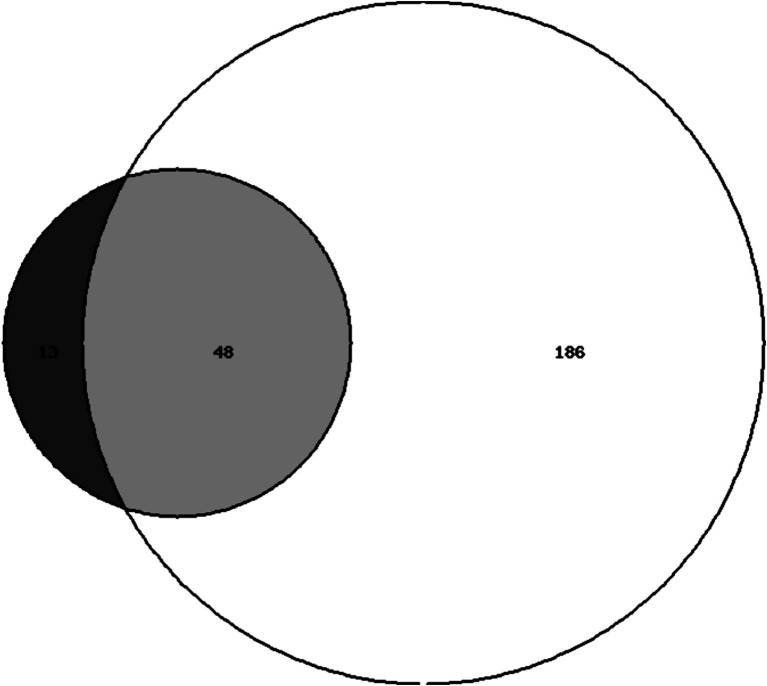
Results: Out of 1,114 participants (median age 72 years, IQR 69-77), 186 were classified as frail by the FI, 13 by the FP and 48 by both definitions. The concordance between the two measures was fair (κ = 0.26). Thirty-nine individuals died during the follow-up period. The FI showed a stronger association with mortality (HR 75.29, 95% CI 8.12-697.68, p < 0.001) compared to the FP (HR 3.3, 95% CI 1.45-7.51, p = 0.004). Individuals classified as frail by both definitions had the highest mortality risk and the highest FI scores (median 0.36).
Conclusion: Definitions of frailty identify different individuals as frail. The FI was more closely related to mortality than the FP. Individuals classified as frail according to both definitions displayed the highest complexity (corresponding also ho higher FI scores) and the greatest mortality. The FI demonstrated a more accurate ability to predict mortality due to its comprehensive nature.
背景:虚弱是一种与不良后果相关的老年综合征,缺乏一个普遍的定义。对于预测死亡率的最有效的虚弱程度,目前还没有达成共识。方法:这项前瞻性观察性研究对居住在社区的志愿者进行了为期6年的跟踪调查。用脆弱指数(FI)和脆弱表型(FP)来衡量脆弱程度。采用Cohen’s Kappa系数评价一致性。进行了年龄和性别校正的Cox回归分析,以评估其与死亡率的关系。结果:在1114名参与者中(中位年龄72 岁,IQR 69-77), 186人被FI分类为虚弱,13人被FP分类,48人被两种定义分类。两指标间的一致性尚可(κ = 0.26)。39人在随访期间死亡。FI与死亡率有较强的相关性(HR 75.29, 95% CI 8.12-697.68, p p = 0.004)。被两种定义归类为虚弱的个体具有最高的死亡风险和最高的FI评分(中位数0.36)。结论:虚弱的定义将不同的个体定义为虚弱。FI与死亡率的关系比FP更密切。根据这两种定义分类为虚弱的个体显示出最高的复杂性(相应的FI分数也更高)和最高的死亡率。FI由于其综合性质,显示出更准确的预测死亡率的能力。
期刊介绍:
Frontiers in Medicine publishes rigorously peer-reviewed research linking basic research to clinical practice and patient care, as well as translating scientific advances into new therapies and diagnostic tools. Led by an outstanding Editorial Board of international experts, this multidisciplinary open-access journal is at the forefront of disseminating and communicating scientific knowledge and impactful discoveries to researchers, academics, clinicians and the public worldwide.
In addition to papers that provide a link between basic research and clinical practice, a particular emphasis is given to studies that are directly relevant to patient care. In this spirit, the journal publishes the latest research results and medical knowledge that facilitate the translation of scientific advances into new therapies or diagnostic tools. The full listing of the Specialty Sections represented by Frontiers in Medicine is as listed below. As well as the established medical disciplines, Frontiers in Medicine is launching new sections that together will facilitate
- the use of patient-reported outcomes under real world conditions
- the exploitation of big data and the use of novel information and communication tools in the assessment of new medicines
- the scientific bases for guidelines and decisions from regulatory authorities
- access to medicinal products and medical devices worldwide
- addressing the grand health challenges around the world





 京公网安备 11010802042870号
京ICP备2023020795号-1
京公网安备 11010802042870号
京ICP备2023020795号-1

 分享
分享
 求助内容:
求助内容: 应助结果提醒方式:
 扫码关注我们
