Aikaterini Anagnostou MD, PhD , Matthew Greenhawt MD , Jay A. Lieberman MD , Christina E. Ciaccio MD , Sayantani B. Sindher MD , Blaine Creasy PhD , Katherine Baran PhD , Sachin Gupta MD , Anna Nowak-Wegrzyn MD, PhD
{"title":"Management of children with food allergies by allergists in the United States","authors":"Aikaterini Anagnostou MD, PhD , Matthew Greenhawt MD , Jay A. Lieberman MD , Christina E. Ciaccio MD , Sayantani B. Sindher MD , Blaine Creasy PhD , Katherine Baran PhD , Sachin Gupta MD , Anna Nowak-Wegrzyn MD, PhD","doi":"10.1016/j.jacig.2024.100379","DOIUrl":null,"url":null,"abstract":"<div><h3>Background</h3><div>Management of patients with food allergies is complex, especially in cases of patients with multiple and potentially severe food allergies. Although international guidelines exist for food allergy management, the role of the allergist in the decision-making process is key.</div></div><div><h3>Objective</h3><div>Our aim was to investigate the management patterns and educational needs of practicing allergists treating patients with food allergies.</div></div><div><h3>Methods</h3><div>An online survey was e-mailed to United States–based practicing allergists (N = 2833) in November-December 2021. The allergists were screened for managing 1 or more patients (including ≥25% pediatric patients) with food allergies per month. The allergists responded to questions regarding food allergy management in response to 2 hypothetical pediatric case studies, their familiarity with available guidelines and emerging treatments, and their future educational preferences. A descriptive analysis of outcomes was conducted.</div></div><div><h3>Results</h3><div>A total of 125 responding allergists (4.4%) met the eligibility criteria and completed the survey. The allergists prioritized written exposure action plans, patient-caregiver communication, prevention of serious reactions, and consideration of both food allergy severity and allergic comorbidities in the management of patients with food allergies. With regard to recommending biologics in the future, the allergists identified patient history of anaphylaxis and hospitalizations, food allergy severity, and allergic comorbidities as all being important factors to consider when deciding on appropriate treatment options. The allergists noted their ongoing educational needs, especially for current and emerging treatments for food allergies.</div></div><div><h3>Conclusion</h3><div>With the treatment landscape for food allergies evolving rapidly, the decision-making priorities and continuing educational needs of allergists will be important in optimizing the management of patients with food allergies.</div></div>","PeriodicalId":75041,"journal":{"name":"The journal of allergy and clinical immunology. Global","volume":"4 1","pages":"Article 100379"},"PeriodicalIF":0.0000,"publicationDate":"2025-02-01","publicationTypes":"Journal Article","fieldsOfStudy":null,"isOpenAccess":false,"openAccessPdf":"https://www.ncbi.nlm.nih.gov/pmc/articles/PMC11750536/pdf/","citationCount":"0","resultStr":null,"platform":"Semanticscholar","paperid":null,"PeriodicalName":"The journal of allergy and clinical immunology. Global","FirstCategoryId":"1085","ListUrlMain":"https://www.sciencedirect.com/science/article/pii/S2772829324001759","RegionNum":0,"RegionCategory":null,"ArticlePicture":[],"TitleCN":null,"AbstractTextCN":null,"PMCID":null,"EPubDate":"2024/12/6 0:00:00","PubModel":"Epub","JCR":"","JCRName":"","Score":null,"Total":0}
引用次数: 0
Abstract
Background
Management of patients with food allergies is complex, especially in cases of patients with multiple and potentially severe food allergies. Although international guidelines exist for food allergy management, the role of the allergist in the decision-making process is key.
Objective
Our aim was to investigate the management patterns and educational needs of practicing allergists treating patients with food allergies.
Methods
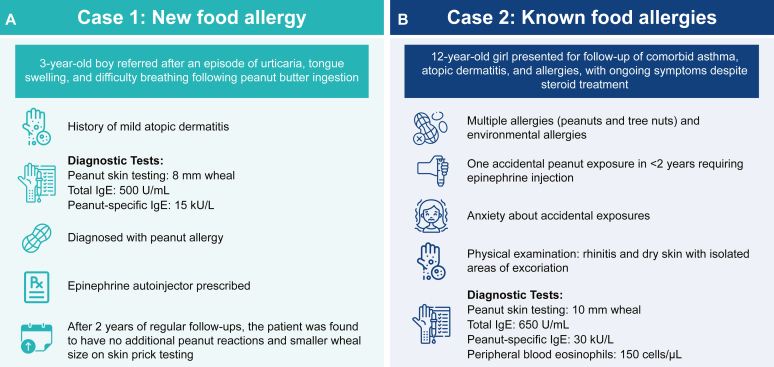
An online survey was e-mailed to United States–based practicing allergists (N = 2833) in November-December 2021. The allergists were screened for managing 1 or more patients (including ≥25% pediatric patients) with food allergies per month. The allergists responded to questions regarding food allergy management in response to 2 hypothetical pediatric case studies, their familiarity with available guidelines and emerging treatments, and their future educational preferences. A descriptive analysis of outcomes was conducted.
Results
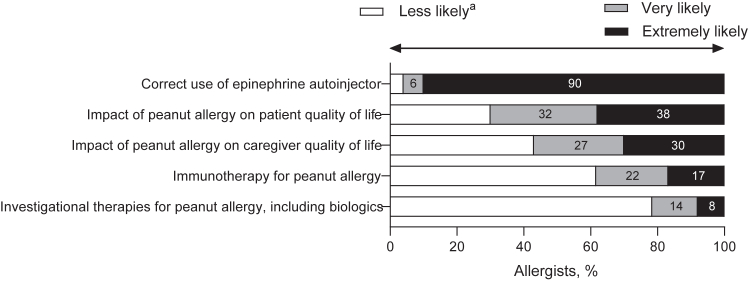
A total of 125 responding allergists (4.4%) met the eligibility criteria and completed the survey. The allergists prioritized written exposure action plans, patient-caregiver communication, prevention of serious reactions, and consideration of both food allergy severity and allergic comorbidities in the management of patients with food allergies. With regard to recommending biologics in the future, the allergists identified patient history of anaphylaxis and hospitalizations, food allergy severity, and allergic comorbidities as all being important factors to consider when deciding on appropriate treatment options. The allergists noted their ongoing educational needs, especially for current and emerging treatments for food allergies.
Conclusion
With the treatment landscape for food allergies evolving rapidly, the decision-making priorities and continuing educational needs of allergists will be important in optimizing the management of patients with food allergies.





 京公网安备 11010802042870号
京ICP备2023020795号-1
京公网安备 11010802042870号
京ICP备2023020795号-1

 分享
分享
 求助内容:
求助内容: 应助结果提醒方式:
 扫码关注我们
