{"title":"Biofilm architecture and dynamics of the oral ecosystem.","authors":"Rina Rani Ray","doi":"10.5114/bta.2024.145259","DOIUrl":null,"url":null,"abstract":"<p><p>The oral cavity, being a nutritionally enriched environment, has been proven to be an ideal habitat for biofilm development. Various microenvironments, including dental enamel, supra- and subgingival surfaces, salivary fluid, and the dorsal surface of the tongue, harbor diverse microbes. These biofilms typically consist of four major layers. Depending on the food, age, clinical state, and lifestyle of the patient, the microbial growth dynamics in oral biofilm varies significantly. The presence of pathogenic bacteria that disrupt the normal floral composition of the oral cavity can lead to plaque biofilm formation, which is a precursor to various diseases. Noteworthy pathogenic bacteria, such as <i>Porphyromonas gingivalis</i>, <i>Fusobacterium nucleatum</i>, and <i>Streptococcus mutans</i>, often initiate biofilm formation. Undiagnosed and untreated oral biofilm can lead to severe diseases like periodontitis and eventual tooth loss. Therefore, studying the architecture and dynamics of oral biofilms is essential and can be achieved through image analysis and modern technologies, such as AI-enabled technologies and surface topography-adaptive robotic superstructures.</p>","PeriodicalId":94371,"journal":{"name":"Biotechnologia","volume":"105 4","pages":"395-402"},"PeriodicalIF":0.0000,"publicationDate":"2024-12-19","publicationTypes":"Journal Article","fieldsOfStudy":null,"isOpenAccess":false,"openAccessPdf":"https://www.ncbi.nlm.nih.gov/pmc/articles/PMC11748217/pdf/","citationCount":"0","resultStr":null,"platform":"Semanticscholar","paperid":null,"PeriodicalName":"Biotechnologia","FirstCategoryId":"1085","ListUrlMain":"https://doi.org/10.5114/bta.2024.145259","RegionNum":0,"RegionCategory":null,"ArticlePicture":[],"TitleCN":null,"AbstractTextCN":null,"PMCID":null,"EPubDate":"2024/1/1 0:00:00","PubModel":"eCollection","JCR":"","JCRName":"","Score":null,"Total":0}
引用次数: 0
Abstract
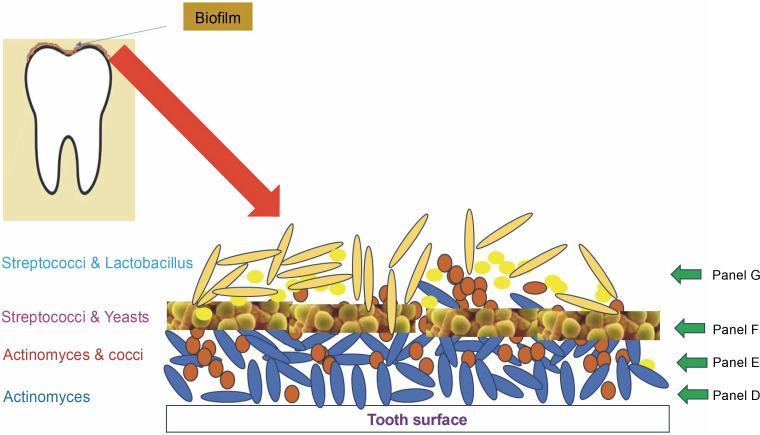
The oral cavity, being a nutritionally enriched environment, has been proven to be an ideal habitat for biofilm development. Various microenvironments, including dental enamel, supra- and subgingival surfaces, salivary fluid, and the dorsal surface of the tongue, harbor diverse microbes. These biofilms typically consist of four major layers. Depending on the food, age, clinical state, and lifestyle of the patient, the microbial growth dynamics in oral biofilm varies significantly. The presence of pathogenic bacteria that disrupt the normal floral composition of the oral cavity can lead to plaque biofilm formation, which is a precursor to various diseases. Noteworthy pathogenic bacteria, such as Porphyromonas gingivalis, Fusobacterium nucleatum, and Streptococcus mutans, often initiate biofilm formation. Undiagnosed and untreated oral biofilm can lead to severe diseases like periodontitis and eventual tooth loss. Therefore, studying the architecture and dynamics of oral biofilms is essential and can be achieved through image analysis and modern technologies, such as AI-enabled technologies and surface topography-adaptive robotic superstructures.




 京公网安备 11010802042870号
京ICP备2023020795号-1
京公网安备 11010802042870号
京ICP备2023020795号-1

 分享
分享

 求助内容:
求助内容: 应助结果提醒方式:
 扫码关注我们
