Elaheh Foroughi, Etrusca Brogi, Francesco Forfori, Seyyed Taghi Hashemi
{"title":"The effect of anesthesia on postoperative cognitive dysfunction in adults undergoing cataract surgery: a systematic review.","authors":"Elaheh Foroughi, Etrusca Brogi, Francesco Forfori, Seyyed Taghi Hashemi","doi":"10.1186/s12871-025-02897-3","DOIUrl":null,"url":null,"abstract":"<p><strong>Background: </strong>We systematically reviewed the evidence on the effect of anesthetic methods and drugs on the incidence of postoperative cognitive dysfunction (POCD) after cataract surgery.</p><p><strong>Methods: </strong>The Web of Science, PubMed, and Scopus databases were searched for relevant English reports published from 2000 to August 2024. After full-text screening and checking the quality assessment of each article using the JBI checklist, 9 relevant articles were included in this study. The included articles were reviewed to explain how different anesthetic modalities and drugs may affect the incidence of POCD after cataract surgery. Our study aimed to systematically investigate the relationship between various methods of anesthesia and POCD for people undergoing cataract surgery.</p><p><strong>Results: </strong>We included 9 clinical trials with 1014 participants, which analyzed the incidence of POCD after anesthetic interventions. Four articles compared the effect of anesthetic modality interventions on POCD and five studies compared the effect of anesthetic drugs on POCD. The studies used various cognitive measurement scales, including the Mini-Mental State Examination, Neurobehavioral Rating Scale, Blessed Orientation-Memory-Concentration Test, Iowa Satisfaction with Anesthesia scale, PALT, and VF test. All articles that compared local and topical anesthesia found no statistically significant difference in the incidence of cognitive dysfunction at postop days 1 and 7. General anesthesia may cause POCD approximately twofold than local anesthesia. Ketamine, Midazolam, or Dexmedetomidine seemed to reduce postoperative cognitive complications compared to the control group.</p><p><strong>Conclusions: </strong>This systematic review investigates how different anesthetic techniques and drugs may affect the incidence of POCD. The available literature is far from being conclusive and further studies are needed to reach any significant conclusions. It is necessary to adopt an appropriate anesthesia method for elderly and high-risk patients, especially people who have a history of cognitive problems undergoing elective cataract surgery, to reduce cognitive complications after surgery..</p>","PeriodicalId":9190,"journal":{"name":"BMC Anesthesiology","volume":"25 1","pages":"35"},"PeriodicalIF":2.6000,"publicationDate":"2025-01-23","publicationTypes":"Journal Article","fieldsOfStudy":null,"isOpenAccess":false,"openAccessPdf":"https://www.ncbi.nlm.nih.gov/pmc/articles/PMC11755816/pdf/","citationCount":"0","resultStr":null,"platform":"Semanticscholar","paperid":null,"PeriodicalName":"BMC Anesthesiology","FirstCategoryId":"3","ListUrlMain":"https://doi.org/10.1186/s12871-025-02897-3","RegionNum":3,"RegionCategory":"医学","ArticlePicture":[],"TitleCN":null,"AbstractTextCN":null,"PMCID":null,"EPubDate":"","PubModel":"","JCR":"Q2","JCRName":"ANESTHESIOLOGY","Score":null,"Total":0}
引用次数: 0
Abstract
Background: We systematically reviewed the evidence on the effect of anesthetic methods and drugs on the incidence of postoperative cognitive dysfunction (POCD) after cataract surgery.
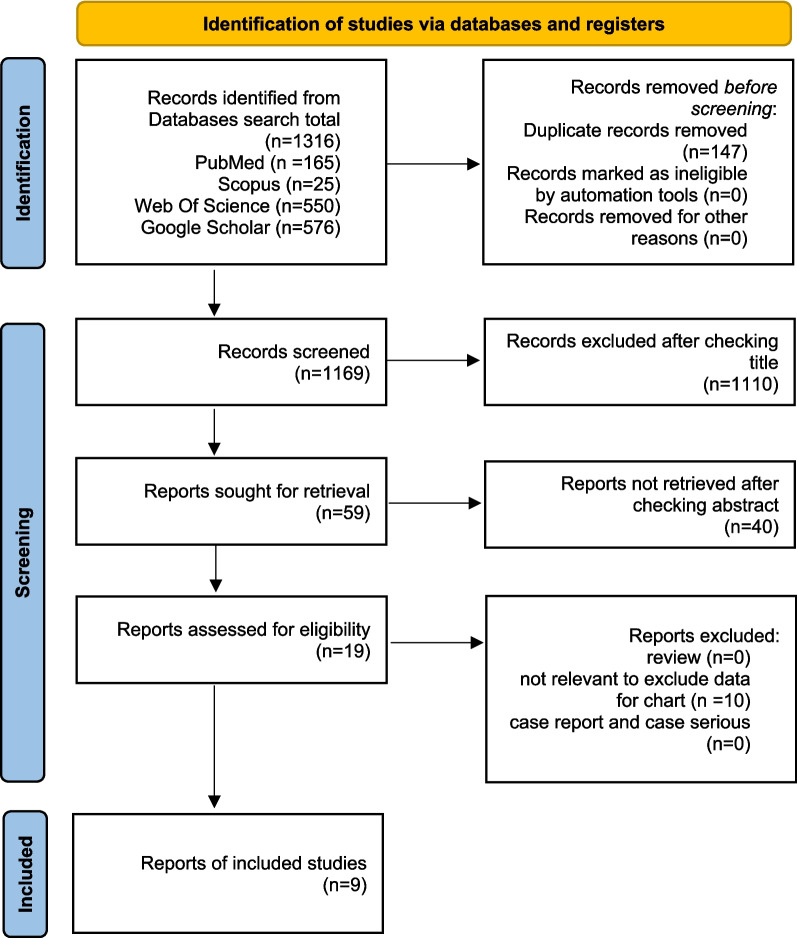
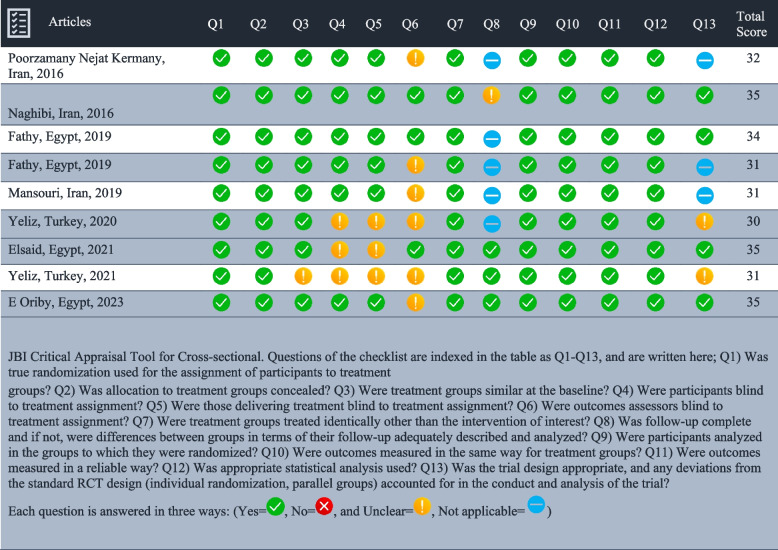
Methods: The Web of Science, PubMed, and Scopus databases were searched for relevant English reports published from 2000 to August 2024. After full-text screening and checking the quality assessment of each article using the JBI checklist, 9 relevant articles were included in this study. The included articles were reviewed to explain how different anesthetic modalities and drugs may affect the incidence of POCD after cataract surgery. Our study aimed to systematically investigate the relationship between various methods of anesthesia and POCD for people undergoing cataract surgery.
Results: We included 9 clinical trials with 1014 participants, which analyzed the incidence of POCD after anesthetic interventions. Four articles compared the effect of anesthetic modality interventions on POCD and five studies compared the effect of anesthetic drugs on POCD. The studies used various cognitive measurement scales, including the Mini-Mental State Examination, Neurobehavioral Rating Scale, Blessed Orientation-Memory-Concentration Test, Iowa Satisfaction with Anesthesia scale, PALT, and VF test. All articles that compared local and topical anesthesia found no statistically significant difference in the incidence of cognitive dysfunction at postop days 1 and 7. General anesthesia may cause POCD approximately twofold than local anesthesia. Ketamine, Midazolam, or Dexmedetomidine seemed to reduce postoperative cognitive complications compared to the control group.
Conclusions: This systematic review investigates how different anesthetic techniques and drugs may affect the incidence of POCD. The available literature is far from being conclusive and further studies are needed to reach any significant conclusions. It is necessary to adopt an appropriate anesthesia method for elderly and high-risk patients, especially people who have a history of cognitive problems undergoing elective cataract surgery, to reduce cognitive complications after surgery..
背景:我们系统地回顾了麻醉方法和药物对白内障术后认知功能障碍(POCD)发生率的影响。方法:检索Web of Science、PubMed和Scopus数据库2000年至2024年8月发表的相关英文报告。经过全文筛选,并使用JBI检查表对每篇文章进行质量评估后,9篇相关文章被纳入本研究。本文回顾了所纳入的文章,以解释不同的麻醉方式和药物如何影响白内障术后POCD的发生率。本研究旨在系统探讨白内障手术中不同麻醉方式与POCD的关系。结果:我们纳入了9项临床试验,共1014名受试者,分析了麻醉干预后POCD的发生率。四篇文章比较了麻醉方式干预对POCD的影响,五篇文章比较了麻醉药物对POCD的影响。本研究采用多种认知测量量表,包括简易精神状态测试、神经行为评定量表、定向-记忆-集中测试、爱荷华麻醉满意度量表、PALT和VF测试。所有比较局部麻醉和表面麻醉的文章都发现,在停药后第1天和第7天,认知功能障碍的发生率没有统计学上的显著差异。全身麻醉引起POCD的可能性是局部麻醉的两倍。与对照组相比,氯胺酮、咪达唑仑或右美托咪定似乎减少了术后认知并发症。结论:本系统综述探讨了不同麻醉技术和药物对POCD发生率的影响。现有的文献远没有结论性,需要进一步的研究才能得出任何重要的结论。老年及高危患者,特别是有认知问题史的患者,择期白内障手术需采用合适的麻醉方式,以减少术后认知并发症。
期刊介绍:
BMC Anesthesiology is an open access, peer-reviewed journal that considers articles on all aspects of anesthesiology, critical care, perioperative care and pain management, including clinical and experimental research into anesthetic mechanisms, administration and efficacy, technology and monitoring, and associated economic issues.




 京公网安备 11010802042870号
京ICP备2023020795号-1
京公网安备 11010802042870号
京ICP备2023020795号-1

 分享
分享
 求助内容:
求助内容: 应助结果提醒方式:
 扫码关注我们
