{"title":"A Comprehensive Review of Phenolic Compounds in Chia Seeds and Their Applications in the Food Industry.","authors":"Gayathri Balakrishnan, Sumedha Garg, Bharathi Ramesh, Emi Grace Mary Gowshika Rajendran, Kaavya Rathnakumar","doi":"10.1007/s11130-024-01248-w","DOIUrl":null,"url":null,"abstract":"<p><p>Chia seeds (Salvia hispanica L.) have emerged as a significant focus in the food industry due to their rich nutritional profile and health-promoting attributes. They are a major powerhouse of bioactive compounds such as flavonoids, phenolic acids, and tocopherols that have been shown to possess anti-inflammatory, anti-diabetic, anti-cholesterol functions, enhance cognitive performance, and improve heart health. This article provides an in-depth review of the phenolic compounds in chia seeds and various fractions such as oil, and chia meal, their bioaccessibility, along with unique applications in food products. Additionally, 'green techniques' for extracting chia oil, as a sustainable alternative to conventional methods, have also been discussed. The findings presented in this review suggest that chia seeds, due to their bioactive components and versatile functional properties, are well-positioned to be a valuable ingredient in the development of novel foods, contributing to better health outcomes and innovation in food processing.</p>","PeriodicalId":20092,"journal":{"name":"Plant Foods for Human Nutrition","volume":"80 1","pages":"46"},"PeriodicalIF":3.6000,"publicationDate":"2025-01-24","publicationTypes":"Journal Article","fieldsOfStudy":null,"isOpenAccess":false,"openAccessPdf":"","citationCount":"0","resultStr":null,"platform":"Semanticscholar","paperid":null,"PeriodicalName":"Plant Foods for Human Nutrition","FirstCategoryId":"97","ListUrlMain":"https://doi.org/10.1007/s11130-024-01248-w","RegionNum":2,"RegionCategory":"农林科学","ArticlePicture":[],"TitleCN":null,"AbstractTextCN":null,"PMCID":null,"EPubDate":"","PubModel":"","JCR":"Q2","JCRName":"CHEMISTRY, APPLIED","Score":null,"Total":0}
引用次数: 0
Abstract
Chia seeds (Salvia hispanica L.) have emerged as a significant focus in the food industry due to their rich nutritional profile and health-promoting attributes. They are a major powerhouse of bioactive compounds such as flavonoids, phenolic acids, and tocopherols that have been shown to possess anti-inflammatory, anti-diabetic, anti-cholesterol functions, enhance cognitive performance, and improve heart health. This article provides an in-depth review of the phenolic compounds in chia seeds and various fractions such as oil, and chia meal, their bioaccessibility, along with unique applications in food products. Additionally, 'green techniques' for extracting chia oil, as a sustainable alternative to conventional methods, have also been discussed. The findings presented in this review suggest that chia seeds, due to their bioactive components and versatile functional properties, are well-positioned to be a valuable ingredient in the development of novel foods, contributing to better health outcomes and innovation in food processing.
鼠尾草籽(Salvia hispanica L.)因其丰富的营养成分和促进健康的特性而成为食品工业的重要焦点。它们是类黄酮、酚酸和生育酚等生物活性化合物的主要来源,已被证明具有抗炎、抗糖尿病、抗胆固醇的功能,增强认知能力,改善心脏健康。本文综述了奇亚籽、奇亚籽油、奇亚籽粕中酚类化合物的生物可及性及其在食品中的独特应用。此外,还讨论了提取奇亚油的“绿色技术”,作为传统方法的可持续替代方法。本综述的研究结果表明,奇亚籽由于其生物活性成分和多种功能特性,在开发新型食品中具有良好的定位,有助于改善健康结果和食品加工的创新。
期刊介绍:
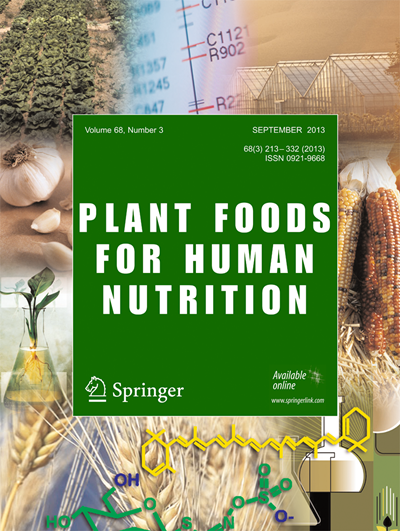
Plant Foods for Human Nutrition (previously Qualitas Plantarum) is an international journal that publishes reports of original research and critical reviews concerned with the improvement and evaluation of the nutritional quality of plant foods for humans, as they are influenced by:
- Biotechnology (all fields, including molecular biology and genetic engineering)
- Food science and technology
- Functional, nutraceutical or pharma foods
- Other nutrients and non-nutrients inherent in plant foods



 京公网安备 11010802042870号
京ICP备2023020795号-1
京公网安备 11010802042870号
京ICP备2023020795号-1

 分享
分享
 求助内容:
求助内容: 应助结果提醒方式:
 扫码关注我们
