{"title":"Theranostic Contact Lens for Ocular Cystinosis Utilizing Gold Nanoparticles.","authors":"Eunbe Ha, Hwajeong Kang, Hyeran Noh","doi":"10.3390/bios15010016","DOIUrl":null,"url":null,"abstract":"<p><p>Ocular cystinosis is a disease in which accumulated cystine crystals cause damage to the eyes, necessitating timely treatment and ongoing monitoring of cystine levels. The current treatment involves frequent administration of cysteamine eye drops, which suffer from low bioavailability and can lead to drug toxicity, making it essential to prescribe an appropriate dosage based on the patient's condition. Additionally, cystine crystal levels are typically assessed subjectively via slit-lamp examination, requiring frequent clinical visits and causing discomfort for the patient. In this study, we propose a theranostic contact lens that simultaneously performs therapy and diagnosis on a single platform utilizing gold nanoparticles (GNPs). The binding interactions between GNPs and cystine were confirmed in solution, and thermodynamic analysis further elucidated the bonding force between the two substances. With a comprehensive understanding of these interactions, we investigated the potential of the theranostic GNP-loaded contact lens (GNP-CL). Upon exposure to various concentrations of cystine, the GNP-CL demonstrated distinct color changes, transitioning from red to blue. This color shift enabled quantitative monitoring of cystine levels. The treatment efficacy was validated by confirming a reduction in cystine concentration following the reaction. This platform has the potential to improve disease management in ocular cystinosis by reducing the reliance on cysteamine and offering an objective self-monitoring tool that does not require specialized equipment.</p>","PeriodicalId":48608,"journal":{"name":"Biosensors-Basel","volume":"15 1","pages":""},"PeriodicalIF":5.6000,"publicationDate":"2025-01-03","publicationTypes":"Journal Article","fieldsOfStudy":null,"isOpenAccess":false,"openAccessPdf":"https://www.ncbi.nlm.nih.gov/pmc/articles/PMC11764065/pdf/","citationCount":"0","resultStr":null,"platform":"Semanticscholar","paperid":null,"PeriodicalName":"Biosensors-Basel","FirstCategoryId":"5","ListUrlMain":"https://doi.org/10.3390/bios15010016","RegionNum":3,"RegionCategory":"工程技术","ArticlePicture":[],"TitleCN":null,"AbstractTextCN":null,"PMCID":null,"EPubDate":"","PubModel":"","JCR":"Q1","JCRName":"CHEMISTRY, ANALYTICAL","Score":null,"Total":0}
引用次数: 0
Abstract
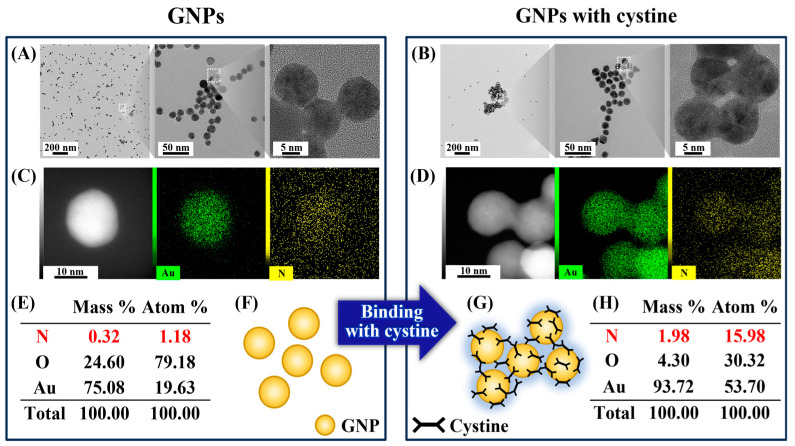
Ocular cystinosis is a disease in which accumulated cystine crystals cause damage to the eyes, necessitating timely treatment and ongoing monitoring of cystine levels. The current treatment involves frequent administration of cysteamine eye drops, which suffer from low bioavailability and can lead to drug toxicity, making it essential to prescribe an appropriate dosage based on the patient's condition. Additionally, cystine crystal levels are typically assessed subjectively via slit-lamp examination, requiring frequent clinical visits and causing discomfort for the patient. In this study, we propose a theranostic contact lens that simultaneously performs therapy and diagnosis on a single platform utilizing gold nanoparticles (GNPs). The binding interactions between GNPs and cystine were confirmed in solution, and thermodynamic analysis further elucidated the bonding force between the two substances. With a comprehensive understanding of these interactions, we investigated the potential of the theranostic GNP-loaded contact lens (GNP-CL). Upon exposure to various concentrations of cystine, the GNP-CL demonstrated distinct color changes, transitioning from red to blue. This color shift enabled quantitative monitoring of cystine levels. The treatment efficacy was validated by confirming a reduction in cystine concentration following the reaction. This platform has the potential to improve disease management in ocular cystinosis by reducing the reliance on cysteamine and offering an objective self-monitoring tool that does not require specialized equipment.
Biosensors-BaselBiochemistry, Genetics and Molecular Biology-Clinical Biochemistry
CiteScore
6.60
自引率
14.80%
发文量
983
审稿时长
11 weeks
期刊介绍:
Biosensors (ISSN 2079-6374) provides an advanced forum for studies related to the science and technology of biosensors and biosensing. It publishes original research papers, comprehensive reviews and communications. Our aim is to encourage scientists to publish their experimental and theoretical results in as much detail as possible. There is no restriction on the length of the papers. The full experimental details must be provided so that the results can be reproduced. Electronic files and software regarding the full details of the calculation or experimental procedure, if unable to be published in a normal way, can be deposited as supplementary electronic material.





 京公网安备 11010802042870号
京ICP备2023020795号-1
京公网安备 11010802042870号
京ICP备2023020795号-1

 分享
分享
 求助内容:
求助内容: 应助结果提醒方式:
 扫码关注我们
