Daniela Ceballos-Sánchez, Laura Sáez-Fuertes, Sergi Casanova-Crespo, Maria J Rodríguez-Lagunas, Margarida Castell, Francisco J Pérez-Cano, Malen Massot-Cladera
{"title":"Influence of Dietary Fiber and Polyphenols During Pre-Gestation, Gestation, or Lactation on Intestinal Gene Expression.","authors":"Daniela Ceballos-Sánchez, Laura Sáez-Fuertes, Sergi Casanova-Crespo, Maria J Rodríguez-Lagunas, Margarida Castell, Francisco J Pérez-Cano, Malen Massot-Cladera","doi":"10.3390/nu17020341","DOIUrl":null,"url":null,"abstract":"<p><strong>Background/objectives: </strong>Diet composition is important for health, especially during critical periods such as pre-gestation (P), gestation (G), or lactation (S), due to its potential impact not only on the mother but on the offspring. The Mediterranean diet includes many healthy foods rich in fiber and/or polyphenols, such as whole grains, fruits, vegetables, beans, and nuts. The present preclinical study assesses the impact of a diet rich in fiber and polyphenols (HFP diet) during one of those three periods (P, G, or S, three weeks each) on the rat gene expression of the small intestine obtained at the end of the lactation period.</p><p><strong>Methods: </strong>This analysis was performed by the mRNA two step PCR amplification by random primers and poly-T, followed by library generation and HiSeq X-Ten Illumina sequencing (Seqplexing), and further confirmed by Real time PCR and ELISA.</p><p><strong>Results: </strong>The results showed a broad number of genes significantly modulated after the HFP diet compared to the reference diet, with a higher number of genes modulated when the supplementing period was closer to the analysis day (S > G > P). Notably, genes involved in immune signaling, intestinal absorption, and cell growth were among those more significantly affected by the HFP dietary intervention. The HFP diet influenced the expression of key genes such as ferritin, fatty acid synthase, apelin, and complement proteins, among others. There was a unique gene modified in all the intervention periods (Family with Sequence Similarity 117 Member A, <i>Fam117A</i>, which codifies a protein with unknown function), indicating that this molecule may participate critically in the effects induced by fiber and polyphenols during these periods.</p><p><strong>Conclusions: </strong>Overall, in rats, the influence of diet for a three-week period around birth is able to modulate the intestinal gene expression, and consequently, maternal health, which can eventually have an indirect impact on the offspring.</p>","PeriodicalId":19486,"journal":{"name":"Nutrients","volume":"17 2","pages":""},"PeriodicalIF":5.0000,"publicationDate":"2025-01-18","publicationTypes":"Journal Article","fieldsOfStudy":null,"isOpenAccess":false,"openAccessPdf":"https://www.ncbi.nlm.nih.gov/pmc/articles/PMC11767784/pdf/","citationCount":"0","resultStr":null,"platform":"Semanticscholar","paperid":null,"PeriodicalName":"Nutrients","FirstCategoryId":"3","ListUrlMain":"https://doi.org/10.3390/nu17020341","RegionNum":2,"RegionCategory":"医学","ArticlePicture":[],"TitleCN":null,"AbstractTextCN":null,"PMCID":null,"EPubDate":"","PubModel":"","JCR":"Q1","JCRName":"NUTRITION & DIETETICS","Score":null,"Total":0}
引用次数: 0
Abstract
Background/objectives: Diet composition is important for health, especially during critical periods such as pre-gestation (P), gestation (G), or lactation (S), due to its potential impact not only on the mother but on the offspring. The Mediterranean diet includes many healthy foods rich in fiber and/or polyphenols, such as whole grains, fruits, vegetables, beans, and nuts. The present preclinical study assesses the impact of a diet rich in fiber and polyphenols (HFP diet) during one of those three periods (P, G, or S, three weeks each) on the rat gene expression of the small intestine obtained at the end of the lactation period.
Methods: This analysis was performed by the mRNA two step PCR amplification by random primers and poly-T, followed by library generation and HiSeq X-Ten Illumina sequencing (Seqplexing), and further confirmed by Real time PCR and ELISA.
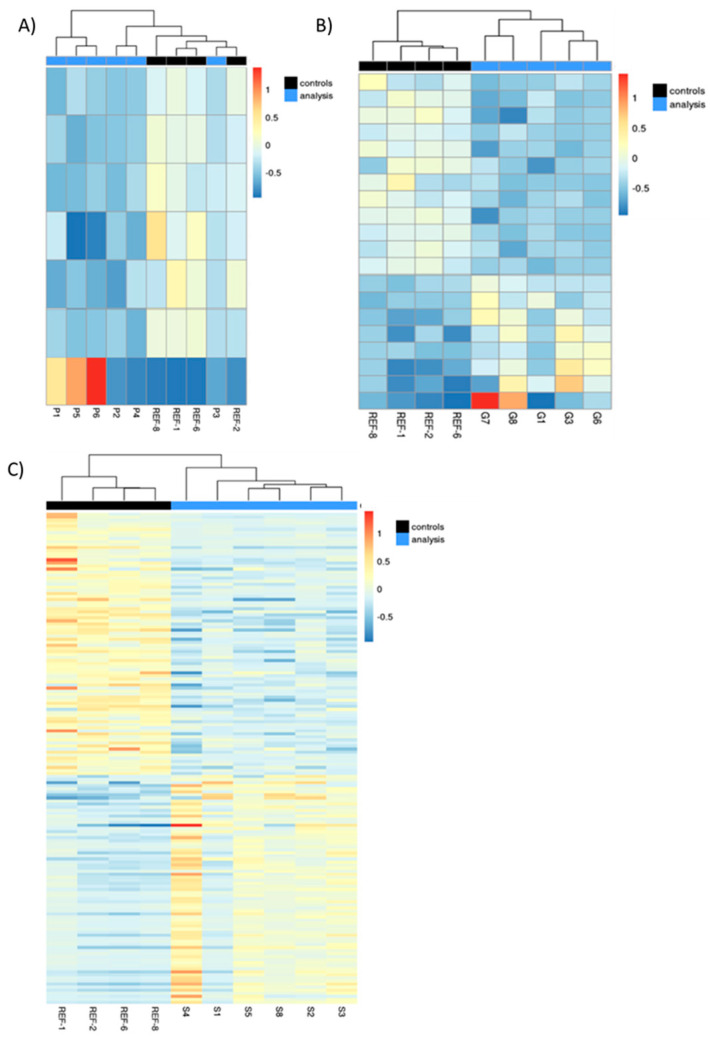
Results: The results showed a broad number of genes significantly modulated after the HFP diet compared to the reference diet, with a higher number of genes modulated when the supplementing period was closer to the analysis day (S > G > P). Notably, genes involved in immune signaling, intestinal absorption, and cell growth were among those more significantly affected by the HFP dietary intervention. The HFP diet influenced the expression of key genes such as ferritin, fatty acid synthase, apelin, and complement proteins, among others. There was a unique gene modified in all the intervention periods (Family with Sequence Similarity 117 Member A, Fam117A, which codifies a protein with unknown function), indicating that this molecule may participate critically in the effects induced by fiber and polyphenols during these periods.
Conclusions: Overall, in rats, the influence of diet for a three-week period around birth is able to modulate the intestinal gene expression, and consequently, maternal health, which can eventually have an indirect impact on the offspring.
背景/目的:饮食组成对健康很重要,特别是在孕前(P)、妊娠(G)或哺乳期(S)等关键时期,因为它不仅对母亲而且对后代都有潜在的影响。地中海饮食包括许多富含纤维和/或多酚的健康食物,如全谷物、水果、蔬菜、豆类和坚果。目前的临床前研究评估了在这三个时期(P、G或S,每个三个星期)中的一个时期,富含纤维和多酚的饮食(HFP饮食)对哺乳期结束时获得的大鼠小肠基因表达的影响。方法:采用随机引物和poly-T两步PCR扩增mRNA,然后进行文库生成和HiSeq X-Ten Illumina测序(Seqplexing),并通过Real time PCR和ELISA进一步验证。结果:结果显示,与对照日粮相比,添加HFP后,有大量基因被显著调节,当添加期更接近分析日(S > G > P)时,被调节的基因数量更多。值得注意的是,与免疫信号、肠道吸收和细胞生长有关的基因受到HFP饮食干预的影响更显著。HFP饮食影响了关键基因的表达,如铁蛋白、脂肪酸合成酶、apelin和补体蛋白等。在所有的干预时期都有一个独特的基因被修饰(Family with Sequence Similarity 117 Member a, Fam117A,其编码了一个功能未知的蛋白质),表明该分子可能在这些时期关键地参与了纤维和多酚诱导的效应。结论:总的来说,在大鼠中,出生前后三周的饮食影响能够调节肠道基因表达,从而调节母体健康,最终可能对后代产生间接影响。
期刊介绍:
Nutrients (ISSN 2072-6643) is an international, peer-reviewed open access advanced forum for studies related to Human Nutrition. It publishes reviews, regular research papers and short communications. Our aim is to encourage scientists to publish their experimental and theoretical results in as much detail as possible. There is no restriction on the length of the papers. The full experimental details must be provided so that the results can be reproduced.






 京公网安备 11010802042870号
京ICP备2023020795号-1
京公网安备 11010802042870号
京ICP备2023020795号-1

 分享
分享
 求助内容:
求助内容: 应助结果提醒方式:
 扫码关注我们
