Rodrigo Puentes , María Alejandra Dünner , Natalia T. Santis-Alay , Mario E. Soto-Marchant , Cecilia Canales , Janepsy Díaz
{"title":"Rate estimation and trend analysis of new HIV infections among the international migrant population in Chile from 2013 to 2022","authors":"Rodrigo Puentes , María Alejandra Dünner , Natalia T. Santis-Alay , Mario E. Soto-Marchant , Cecilia Canales , Janepsy Díaz","doi":"10.1016/j.jmh.2024.100297","DOIUrl":null,"url":null,"abstract":"<div><h3>Background</h3><div>International migrants are central to HIV research, but comparative data on their infection rates versus resident populations, including in Chile, are scarce. This study compares HIV incidence rates between international migrants and Chileans.</div></div><div><h3>Methods</h3><div>A longitudinal study was conducted. Crude and standardized rates of new HIV infections reported by the Institute of Public Health of Chile (ISP) were calculated for the period 2013 to 2022, using data from public and private health facilities nationwide. Population estimates for international migrants and Chileans were obtained from the National Institute of Statistics (INE) and the National Migration Service (SERMIG). Rates were adjusted for age and sex using the direct method.</div></div><div><h3>Results</h3><div>A total of 51,513 validated new HIV infections were analyzed, of which 14,936 (29.0 %) occurred in international migrants and 36,577 (71.0 %) in Chileans. International migrants showed an increase in incidence rates between 2013 and 2022 (adjusted rate from 22.6 [95 % CI: 18.3 – 27.0] to 115.6 [95 % CI: 110.5 – 120.7] new HIV infections per 100,000 population). Throughout the study period, the ratio of adjusted incidence rates between international migrants and Chileans increased from 1.0 [95 % CI: 0.9 – 1.2] to 7.6 [95 % CI: 7.2 – 8.0].</div></div><div><h3>Conclusions</h3><div>HIV incidence rates were higher in international migrants than in Chileans and increased over the study period. This may be influenced by various exogenous factors, including social determinants of health and the COVID-19 pandemic. It is crucial to focus on HIV diagnosis, prevention, and control strategies for international migrants in Chile.</div></div>","PeriodicalId":34448,"journal":{"name":"Journal of Migration and Health","volume":"11 ","pages":"Article 100297"},"PeriodicalIF":2.9000,"publicationDate":"2025-01-01","publicationTypes":"Journal Article","fieldsOfStudy":null,"isOpenAccess":false,"openAccessPdf":"https://www.ncbi.nlm.nih.gov/pmc/articles/PMC11759548/pdf/","citationCount":"0","resultStr":null,"platform":"Semanticscholar","paperid":null,"PeriodicalName":"Journal of Migration and Health","FirstCategoryId":"1085","ListUrlMain":"https://www.sciencedirect.com/science/article/pii/S2666623524000862","RegionNum":0,"RegionCategory":null,"ArticlePicture":[],"TitleCN":null,"AbstractTextCN":null,"PMCID":null,"EPubDate":"","PubModel":"","JCR":"Q1","JCRName":"PUBLIC, ENVIRONMENTAL & OCCUPATIONAL HEALTH","Score":null,"Total":0}
引用次数: 0
Abstract
Background
International migrants are central to HIV research, but comparative data on their infection rates versus resident populations, including in Chile, are scarce. This study compares HIV incidence rates between international migrants and Chileans.
Methods
A longitudinal study was conducted. Crude and standardized rates of new HIV infections reported by the Institute of Public Health of Chile (ISP) were calculated for the period 2013 to 2022, using data from public and private health facilities nationwide. Population estimates for international migrants and Chileans were obtained from the National Institute of Statistics (INE) and the National Migration Service (SERMIG). Rates were adjusted for age and sex using the direct method.
Results
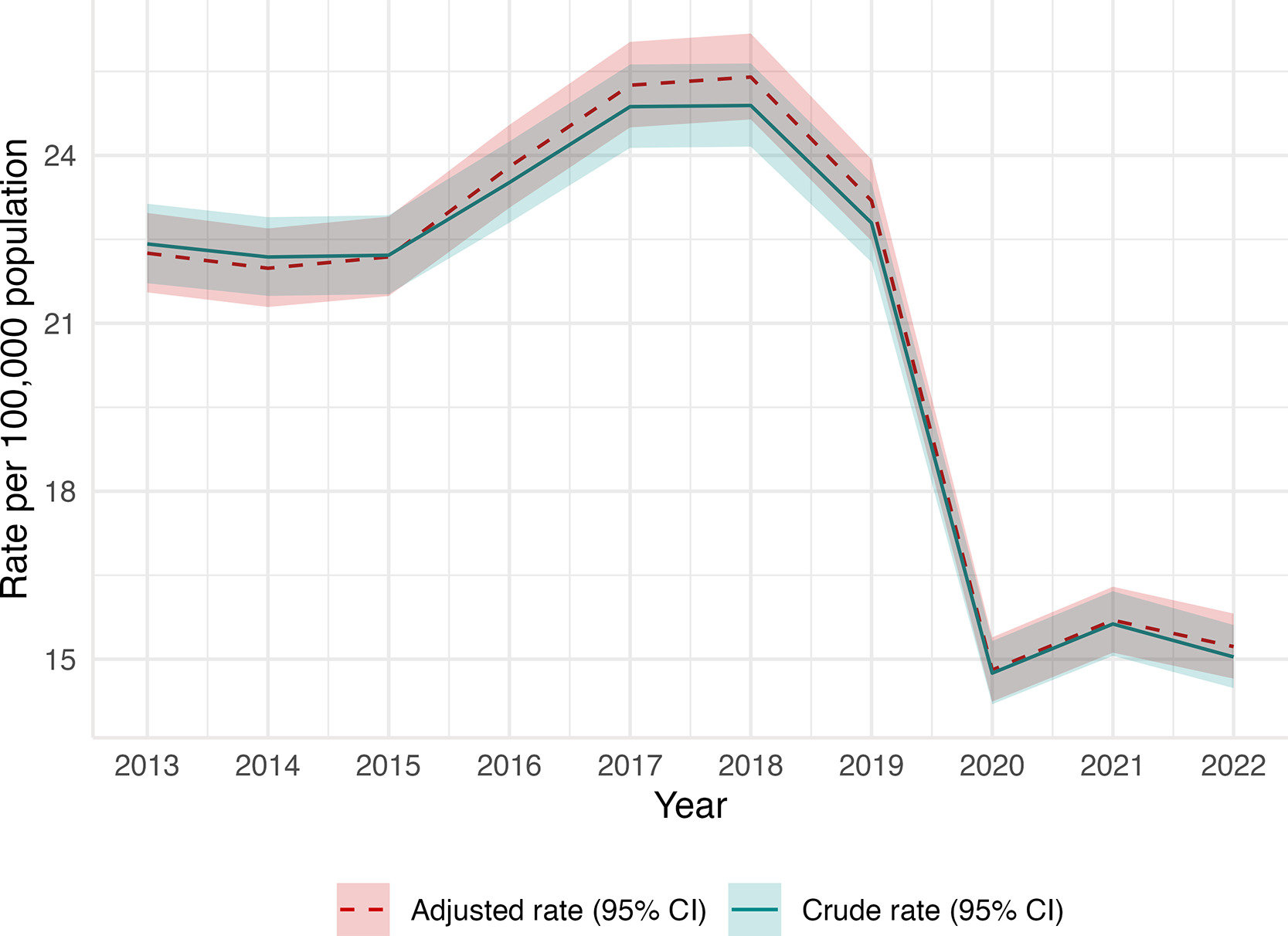
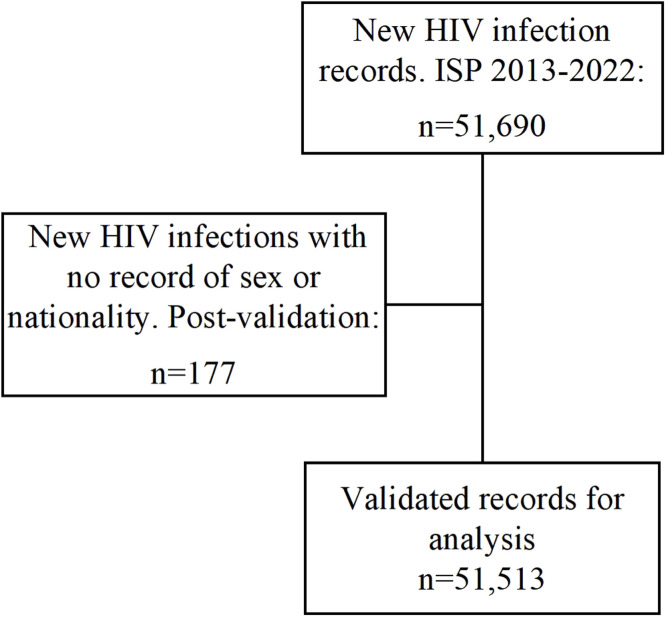
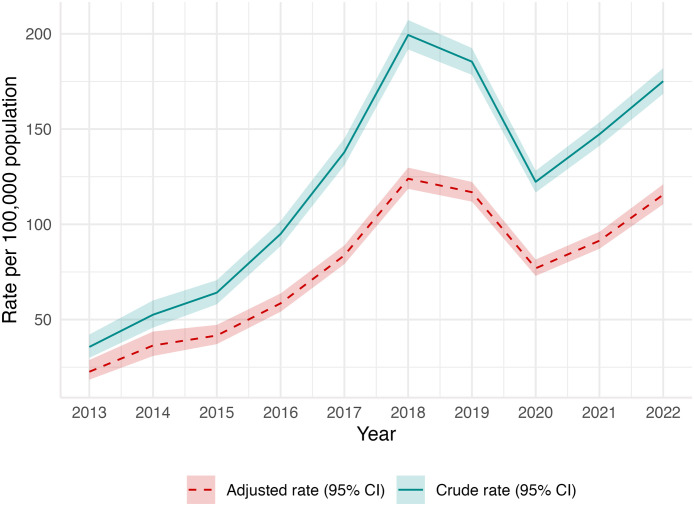
A total of 51,513 validated new HIV infections were analyzed, of which 14,936 (29.0 %) occurred in international migrants and 36,577 (71.0 %) in Chileans. International migrants showed an increase in incidence rates between 2013 and 2022 (adjusted rate from 22.6 [95 % CI: 18.3 – 27.0] to 115.6 [95 % CI: 110.5 – 120.7] new HIV infections per 100,000 population). Throughout the study period, the ratio of adjusted incidence rates between international migrants and Chileans increased from 1.0 [95 % CI: 0.9 – 1.2] to 7.6 [95 % CI: 7.2 – 8.0].
Conclusions
HIV incidence rates were higher in international migrants than in Chileans and increased over the study period. This may be influenced by various exogenous factors, including social determinants of health and the COVID-19 pandemic. It is crucial to focus on HIV diagnosis, prevention, and control strategies for international migrants in Chile.



 京公网安备 11010802042870号
京ICP备2023020795号-1
京公网安备 11010802042870号
京ICP备2023020795号-1

 分享
分享
 求助内容:
求助内容: 应助结果提醒方式:
 扫码关注我们
