Xinyu Jiang , Fulin Qu , Yuying Zhang , Xiaohong Zhu , Andy Y.F. Leung , Chi Sun Poon , Daniel C.W. Tsang
{"title":"Cold-bonded biochar-cement lightweight aggregates for evaporation-enhanced permeable bricks","authors":"Xinyu Jiang , Fulin Qu , Yuying Zhang , Xiaohong Zhu , Andy Y.F. Leung , Chi Sun Poon , Daniel C.W. Tsang","doi":"10.1016/j.jclepro.2025.144886","DOIUrl":null,"url":null,"abstract":"<div><div>Permeable concrete pavement is considered an effective means to alleviate the increasingly severe urban heat island effect. Traditional design emphasizes rapid water discharge but does not retain water to regulate the localized high temperature. To design high-evaporation permeable bricks, biochar is mixed as a moisture-absorbing filler in the artificial aggregates (AA). The compressive strength, bulk density, pore range, and crystal phase distribution of AA with 0–30% biochar content were tested. Then, the permeable bricks prepared by replacing natural aggregates (NA) by 0–50% AA were evaluated in terms of compressive strength, porosity, pore structure distribution, water absorption, permeability, and evaporation rate. Our results showed that biochar had a relatively high specific surface area and effectively improved the thermal performance of permeable bricks. The AA produced with 30% biochar met the standard for lightweight aggregates (LA). Replacing NA by AA would unavoidably affect the compressive strength, permeability, pore structure, and evaporation rate of the permeable bricks. Nevertheless, 50% AA substitution displayed better elongation and evaporation ability while complying with the strength requirements. The capillary water absorption rate of permeable bricks increased from 0.364 to 1.108 kg/m<sup>2</sup>h<sup>0.5</sup>, and the surface temperature was ∼14 °C lower than that of traditional design under wet condition. Moreover, the cooling process was extended by 21 h and AA improved the connected pore structure of permeable bricks. The life cycle assessment proved that our novel design could be carbon-negative, with a carbon sequestration of 110 kg/t of permeable bricks, thus contributing to the reduction of carbon footprints and promoting the development of green construction.</div></div>","PeriodicalId":349,"journal":{"name":"Journal of Cleaner Production","volume":"493 ","pages":"Article 144886"},"PeriodicalIF":10.0000,"publicationDate":"2025-02-15","publicationTypes":"Journal Article","fieldsOfStudy":null,"isOpenAccess":false,"openAccessPdf":"","citationCount":"0","resultStr":null,"platform":"Semanticscholar","paperid":null,"PeriodicalName":"Journal of Cleaner Production","FirstCategoryId":"93","ListUrlMain":"https://www.sciencedirect.com/science/article/pii/S0959652625002367","RegionNum":1,"RegionCategory":"环境科学与生态学","ArticlePicture":[],"TitleCN":null,"AbstractTextCN":null,"PMCID":null,"EPubDate":"2025/1/29 0:00:00","PubModel":"Epub","JCR":"Q1","JCRName":"ENGINEERING, ENVIRONMENTAL","Score":null,"Total":0}
引用次数: 0
Abstract
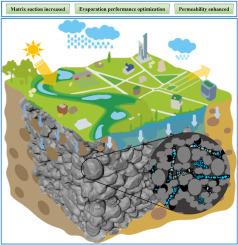
Permeable concrete pavement is considered an effective means to alleviate the increasingly severe urban heat island effect. Traditional design emphasizes rapid water discharge but does not retain water to regulate the localized high temperature. To design high-evaporation permeable bricks, biochar is mixed as a moisture-absorbing filler in the artificial aggregates (AA). The compressive strength, bulk density, pore range, and crystal phase distribution of AA with 0–30% biochar content were tested. Then, the permeable bricks prepared by replacing natural aggregates (NA) by 0–50% AA were evaluated in terms of compressive strength, porosity, pore structure distribution, water absorption, permeability, and evaporation rate. Our results showed that biochar had a relatively high specific surface area and effectively improved the thermal performance of permeable bricks. The AA produced with 30% biochar met the standard for lightweight aggregates (LA). Replacing NA by AA would unavoidably affect the compressive strength, permeability, pore structure, and evaporation rate of the permeable bricks. Nevertheless, 50% AA substitution displayed better elongation and evaporation ability while complying with the strength requirements. The capillary water absorption rate of permeable bricks increased from 0.364 to 1.108 kg/m2h0.5, and the surface temperature was ∼14 °C lower than that of traditional design under wet condition. Moreover, the cooling process was extended by 21 h and AA improved the connected pore structure of permeable bricks. The life cycle assessment proved that our novel design could be carbon-negative, with a carbon sequestration of 110 kg/t of permeable bricks, thus contributing to the reduction of carbon footprints and promoting the development of green construction.
期刊介绍:
The Journal of Cleaner Production is an international, transdisciplinary journal that addresses and discusses theoretical and practical Cleaner Production, Environmental, and Sustainability issues. It aims to help societies become more sustainable by focusing on the concept of 'Cleaner Production', which aims at preventing waste production and increasing efficiencies in energy, water, resources, and human capital use. The journal serves as a platform for corporations, governments, education institutions, regions, and societies to engage in discussions and research related to Cleaner Production, environmental, and sustainability practices.




 京公网安备 11010802042870号
京ICP备2023020795号-1
京公网安备 11010802042870号
京ICP备2023020795号-1

 分享
分享
 求助内容:
求助内容: 应助结果提醒方式:
 扫码关注我们
