Aya Sato, Manabu Sekiguchi, Koga Nakada, Taishi Yoshii, Taichi Q Itoh
{"title":"Effect of temperature cycles on the sleep-like state in Hydra vulgaris.","authors":"Aya Sato, Manabu Sekiguchi, Koga Nakada, Taishi Yoshii, Taichi Q Itoh","doi":"10.1186/s40851-025-00248-1","DOIUrl":null,"url":null,"abstract":"<p><strong>Background: </strong>Sleep is a conserved physiological phenomenon across species. It is mainly controlled by two processes: a circadian clock that regulates the timing of sleep and a homeostat that regulates the sleep drive. Even cnidarians, such as Hydra and jellyfish, which lack a brain, display sleep-like states. However, the manner in which environmental cues affect sleep-like states in these organisms remains unknown. In the present study, we investigated the effects of light and temperature cycles on the sleep-like state in Hydra vulgaris.</p><p><strong>Results: </strong>Our findings indicate that Hydra responds to temperature cycles with a difference of up to 5° C, resulting in decreased sleep duration under light conditions and increased sleep duration in dark conditions. Furthermore, our results reveal that Hydra prioritizes temperature changes over light as an environmental cue. Additionally, our body resection experiments show tissue-specific responsiveness in the generation ofthe sleep-like state under different environmental cues. Specifically, the upper body can generate the sleep-like state in response to a single environmental cue. In contrast, the lower body did not respond to 12-h light-dark cycles at a constant temperature.</p><p><strong>Conclusions: </strong>These findings indicate that both light and temperature influence the regulation of the sleep-like state in Hydra. Moreover, these observations highlight the existence of distinct regulatory mechanisms that govern patterns of the sleep-like state in brainless organisms, suggesting the potential involvement of specific regions for responsiveness of environmental cues for regulation of the sleep-like state.</p>","PeriodicalId":54280,"journal":{"name":"Zoological Letters","volume":"11 1","pages":"2"},"PeriodicalIF":1.7000,"publicationDate":"2025-01-28","publicationTypes":"Journal Article","fieldsOfStudy":null,"isOpenAccess":false,"openAccessPdf":"https://www.ncbi.nlm.nih.gov/pmc/articles/PMC11773864/pdf/","citationCount":"0","resultStr":null,"platform":"Semanticscholar","paperid":null,"PeriodicalName":"Zoological Letters","FirstCategoryId":"99","ListUrlMain":"https://doi.org/10.1186/s40851-025-00248-1","RegionNum":3,"RegionCategory":"生物学","ArticlePicture":[],"TitleCN":null,"AbstractTextCN":null,"PMCID":null,"EPubDate":"","PubModel":"","JCR":"Q2","JCRName":"ZOOLOGY","Score":null,"Total":0}
引用次数: 0
Abstract
Background: Sleep is a conserved physiological phenomenon across species. It is mainly controlled by two processes: a circadian clock that regulates the timing of sleep and a homeostat that regulates the sleep drive. Even cnidarians, such as Hydra and jellyfish, which lack a brain, display sleep-like states. However, the manner in which environmental cues affect sleep-like states in these organisms remains unknown. In the present study, we investigated the effects of light and temperature cycles on the sleep-like state in Hydra vulgaris.
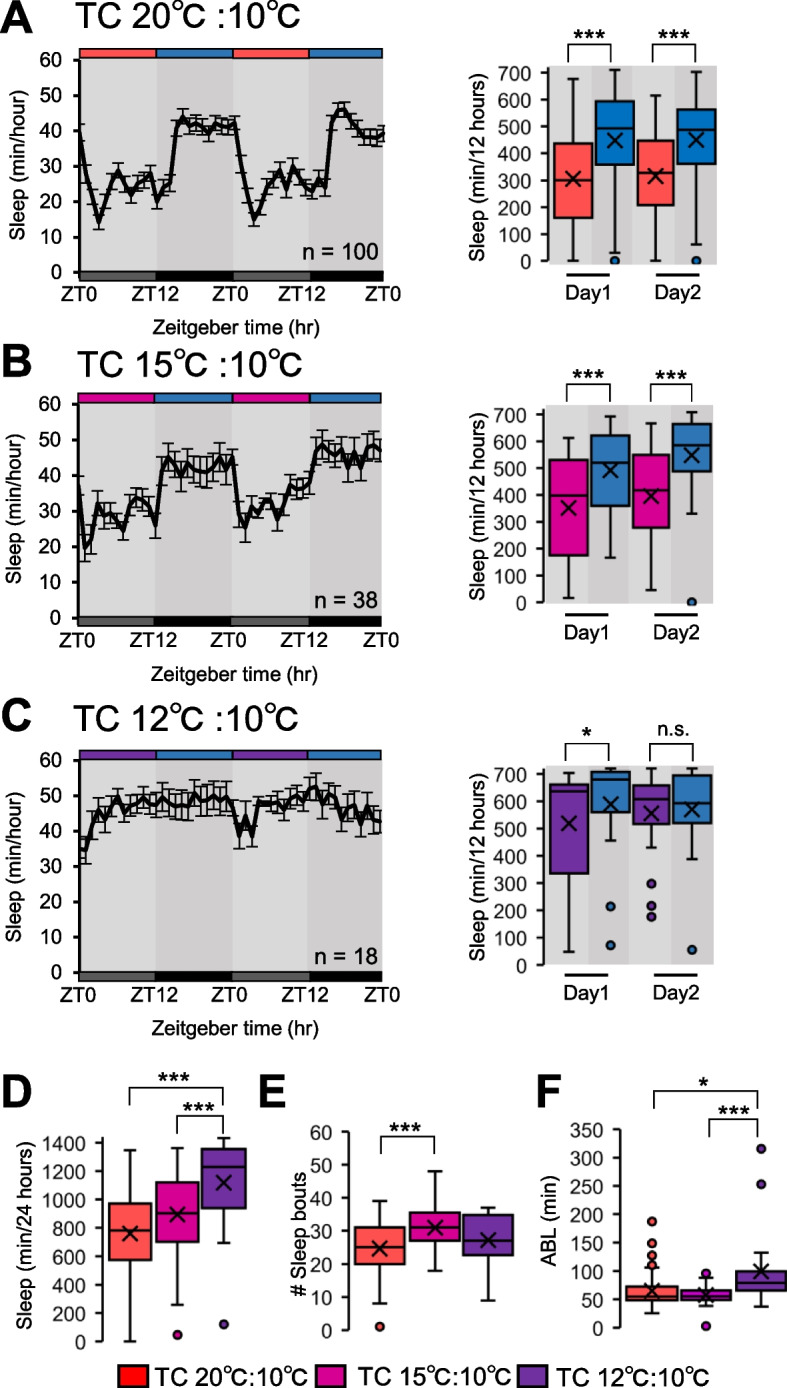
Results: Our findings indicate that Hydra responds to temperature cycles with a difference of up to 5° C, resulting in decreased sleep duration under light conditions and increased sleep duration in dark conditions. Furthermore, our results reveal that Hydra prioritizes temperature changes over light as an environmental cue. Additionally, our body resection experiments show tissue-specific responsiveness in the generation ofthe sleep-like state under different environmental cues. Specifically, the upper body can generate the sleep-like state in response to a single environmental cue. In contrast, the lower body did not respond to 12-h light-dark cycles at a constant temperature.
Conclusions: These findings indicate that both light and temperature influence the regulation of the sleep-like state in Hydra. Moreover, these observations highlight the existence of distinct regulatory mechanisms that govern patterns of the sleep-like state in brainless organisms, suggesting the potential involvement of specific regions for responsiveness of environmental cues for regulation of the sleep-like state.
Zoological LettersAgricultural and Biological Sciences-Animal Science and Zoology
CiteScore
3.60
自引率
0.00%
发文量
12
审稿时长
10 weeks
期刊介绍:
Zoological Letters is an open access journal that publishes new and important findings in the zoological sciences. As a sister journal to Zoological Science, Zoological Letters covers a wide range of basic fields of zoology, from taxonomy to bioinformatics. We also welcome submissions of paleontology reports as part of our effort to contribute to the development of new perspectives in evolutionary zoology. Our goal is to serve as a global publishing forum for fundamental researchers in all fields of zoology.





 京公网安备 11010802042870号
京ICP备2023020795号-1
京公网安备 11010802042870号
京ICP备2023020795号-1

 分享
分享
 求助内容:
求助内容: 应助结果提醒方式:
 扫码关注我们
