Astrid M Suchy-Dicey, W T Longstreth, Dedra S Buchwald, Kristoffer Rhoads, Thomas J Grabowski
{"title":"Cognitive reserve is associated with education, social determinants, and cognitive outcomes among older American Indians in the Strong Heart Study.","authors":"Astrid M Suchy-Dicey, W T Longstreth, Dedra S Buchwald, Kristoffer Rhoads, Thomas J Grabowski","doi":"10.1038/s44271-025-00198-6","DOIUrl":null,"url":null,"abstract":"<p><p>Cognitive reserve, a component of resilience, may be conceptualized as the ability to overcome accumulating neuropathology and maintain healthy aging and function. However, research measuring and evaluating it in American Indians is needed. We recruited American Indians from 3 regional centers for longitudinal examinations (2010-13, n = 818; 2017-19, n = 403) including MRI, cognitive, clinical, and questionnaire data. We defined cognitive reserve by measuring the residual from individual regressions of cognitive tests over imaged brain volumes, adjusted for age and sex. Analyses examined three different metrics of cognitive reserve against sociodemographic, clinical, and longitudinal cognitive data in causal mediation models. Better cognitive reserve was significantly associated with more education, higher income, lower prevalence of depression, lower prevalence of diabetes, and lower prevalence of kidney disease, but we found no statistically significant evidence for an association with plasma biomarkers for Alzheimer's disease and related dementias, APOE e4 carrier status, alcohol use, body mass, or hypertension. Better cognitive reserve was associated with better cognitive function over mean 6.7 years follow-up (range 4-9 years); and the association for education with cognition over time was mediated in part (15-24%) by cognitive reserve. Cognitive reserve, although challenging to measure, appears important for understanding the range of cognitive aging in American Indians.</p>","PeriodicalId":501698,"journal":{"name":"Communications Psychology","volume":"3 1","pages":"14"},"PeriodicalIF":0.0000,"publicationDate":"2025-01-28","publicationTypes":"Journal Article","fieldsOfStudy":null,"isOpenAccess":false,"openAccessPdf":"https://www.ncbi.nlm.nih.gov/pmc/articles/PMC11775147/pdf/","citationCount":"0","resultStr":null,"platform":"Semanticscholar","paperid":null,"PeriodicalName":"Communications Psychology","FirstCategoryId":"1085","ListUrlMain":"https://doi.org/10.1038/s44271-025-00198-6","RegionNum":0,"RegionCategory":null,"ArticlePicture":[],"TitleCN":null,"AbstractTextCN":null,"PMCID":null,"EPubDate":"","PubModel":"","JCR":"","JCRName":"","Score":null,"Total":0}
引用次数: 0
Abstract
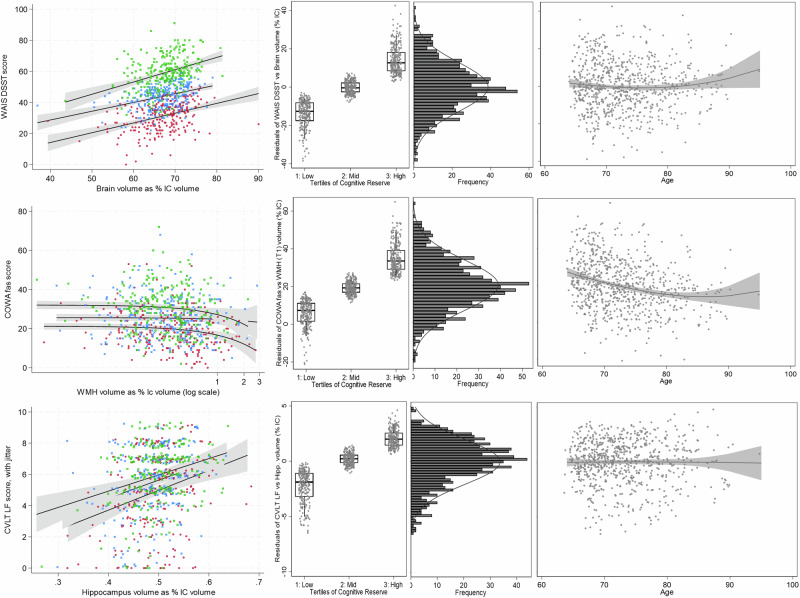
Cognitive reserve, a component of resilience, may be conceptualized as the ability to overcome accumulating neuropathology and maintain healthy aging and function. However, research measuring and evaluating it in American Indians is needed. We recruited American Indians from 3 regional centers for longitudinal examinations (2010-13, n = 818; 2017-19, n = 403) including MRI, cognitive, clinical, and questionnaire data. We defined cognitive reserve by measuring the residual from individual regressions of cognitive tests over imaged brain volumes, adjusted for age and sex. Analyses examined three different metrics of cognitive reserve against sociodemographic, clinical, and longitudinal cognitive data in causal mediation models. Better cognitive reserve was significantly associated with more education, higher income, lower prevalence of depression, lower prevalence of diabetes, and lower prevalence of kidney disease, but we found no statistically significant evidence for an association with plasma biomarkers for Alzheimer's disease and related dementias, APOE e4 carrier status, alcohol use, body mass, or hypertension. Better cognitive reserve was associated with better cognitive function over mean 6.7 years follow-up (range 4-9 years); and the association for education with cognition over time was mediated in part (15-24%) by cognitive reserve. Cognitive reserve, although challenging to measure, appears important for understanding the range of cognitive aging in American Indians.





 京公网安备 11010802042870号
京ICP备2023020795号-1
京公网安备 11010802042870号
京ICP备2023020795号-1

 分享
分享

 求助内容:
求助内容: 应助结果提醒方式:
 扫码关注我们
