Identification of multiple complications as independent risk factors associated with 1-, 3-, and 5-year mortality in hepatitis B-associated cirrhosis patients.
{"title":"Identification of multiple complications as independent risk factors associated with 1-, 3-, and 5-year mortality in hepatitis B-associated cirrhosis patients.","authors":"Duo Shen, Ling Sha, Ling Yang, Xuefeng Gu","doi":"10.1186/s12879-025-10566-6","DOIUrl":null,"url":null,"abstract":"<p><strong>Background: </strong>Hepatitis B-associated cirrhosis (HBC) is associated with severe complications and adverse clinical outcomes. This study aimed to develop and validate a predictive model for the occurrence of multiple complications (three or more) in patients with HBC and to explore the effects of multiple complications on HBC prognosis.</p><p><strong>Methods: </strong>In this retrospective cohort study, data from 121 HBC patients treated at Nanjing Second Hospital from February 2009 to November 2019 were analysed. The maximum follow-up period was 10.75 years, with a median of 5.75 years. Eight machine learning techniques were employed to construct predictive models, including C5.0, linear discriminant analysis (LDA), least absolute shrinkage and selection operator (LASSO), k-nearest neighbour (KNN), gradient boosting decision tree (GBDT), support vector machine (SVM), generalised linear model (GLM) and naive Bayes (NB), utilising variables such as medical history, demographics, clinical signs, and laboratory test results. Model performance was evaluated via receiver operating characteristic (ROC) curve analysis, residual analysis, calibration curve analysis, and decision curve analysis (DCA). The influence of multiple complications on HBC survival time was assessed via Kaplan‒Meier curve analysis. Furthermore, LASSO and univariable and multivariable Cox regression analyses were conducted to identify independent prognostic factors for overall survival (OS) in patients with HBC, followed by ROC, C-index, calibration curve, and DCA curve analyses of the constructed prognostic nomogram model. This study utilized bootstrap resampling for internal validation and employed the Medical Information Mart for Intensive Care IV (MIMIC-IV) database for external validation.</p><p><strong>Results: </strong>The GBDT model exhibited the highest area under the curve (AUC) and emerged as the optimal model for predicting the occurrence of multiple complications. The key predictive factors included posthospitalisation fever (PHF), body mass index (BMI), retinol binding protein (RBP), total bilirubin (TB) levels, and eosinophils (EOS). Kaplan-Meier analysis revealed that patients with multiple complications had significantly worse OS than those with fewer complications. Additionally, multivariable Cox regression analysis, informed by least absolute shrinkage and LASSO selection, identified hepatocellular carcinoma (HCC), multiple complications, and lactate dehydrogenase (LDH) levels as independent prognostic factors for OS. The prognostic model demonstrated 1-year, 3-year, and 5-year OS ROC AUCs of 0.802, 0.793, and 0.817, respectively. For the internal validation cohort, the corresponding AUC values were 0.797, 0.832, and 0.835. In contrast, the external validation cohort yielded a 1-year ROC AUC of 0.707. Calibration curves indicated good consistency of the model, and DCA demonstrated the model's clinical utility, showing high net benefits within certain threshold ranges. Compared with the univariable models, the multivariable ROC curves indicated higher AUC values for this prognostic model, and the model also possessed the best c-index.</p><p><strong>Conclusion: </strong>The GBDT prediction model provides a reliable tool for the early identification of high-risk HBC patients prone to developing multiple complications. The concurrent occurrence of multiple complications is an independent prognostic factor for OS in patients with HBC. The constructed prognostic model demonstrated remarkable predictive performance and clinical applicability, indicating its crucial role in enhancing patient outcomes through timely and targeted interventions.</p>","PeriodicalId":8981,"journal":{"name":"BMC Infectious Diseases","volume":"25 1","pages":"151"},"PeriodicalIF":3.0000,"publicationDate":"2025-02-01","publicationTypes":"Journal Article","fieldsOfStudy":null,"isOpenAccess":false,"openAccessPdf":"https://www.ncbi.nlm.nih.gov/pmc/articles/PMC11786570/pdf/","citationCount":"0","resultStr":null,"platform":"Semanticscholar","paperid":null,"PeriodicalName":"BMC Infectious Diseases","FirstCategoryId":"3","ListUrlMain":"https://doi.org/10.1186/s12879-025-10566-6","RegionNum":3,"RegionCategory":"医学","ArticlePicture":[],"TitleCN":null,"AbstractTextCN":null,"PMCID":null,"EPubDate":"","PubModel":"","JCR":"Q2","JCRName":"INFECTIOUS DISEASES","Score":null,"Total":0}
引用次数: 0
Abstract
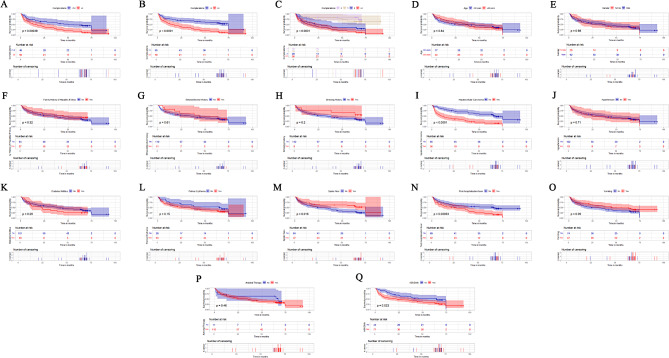
Background: Hepatitis B-associated cirrhosis (HBC) is associated with severe complications and adverse clinical outcomes. This study aimed to develop and validate a predictive model for the occurrence of multiple complications (three or more) in patients with HBC and to explore the effects of multiple complications on HBC prognosis.
Methods: In this retrospective cohort study, data from 121 HBC patients treated at Nanjing Second Hospital from February 2009 to November 2019 were analysed. The maximum follow-up period was 10.75 years, with a median of 5.75 years. Eight machine learning techniques were employed to construct predictive models, including C5.0, linear discriminant analysis (LDA), least absolute shrinkage and selection operator (LASSO), k-nearest neighbour (KNN), gradient boosting decision tree (GBDT), support vector machine (SVM), generalised linear model (GLM) and naive Bayes (NB), utilising variables such as medical history, demographics, clinical signs, and laboratory test results. Model performance was evaluated via receiver operating characteristic (ROC) curve analysis, residual analysis, calibration curve analysis, and decision curve analysis (DCA). The influence of multiple complications on HBC survival time was assessed via Kaplan‒Meier curve analysis. Furthermore, LASSO and univariable and multivariable Cox regression analyses were conducted to identify independent prognostic factors for overall survival (OS) in patients with HBC, followed by ROC, C-index, calibration curve, and DCA curve analyses of the constructed prognostic nomogram model. This study utilized bootstrap resampling for internal validation and employed the Medical Information Mart for Intensive Care IV (MIMIC-IV) database for external validation.
Results: The GBDT model exhibited the highest area under the curve (AUC) and emerged as the optimal model for predicting the occurrence of multiple complications. The key predictive factors included posthospitalisation fever (PHF), body mass index (BMI), retinol binding protein (RBP), total bilirubin (TB) levels, and eosinophils (EOS). Kaplan-Meier analysis revealed that patients with multiple complications had significantly worse OS than those with fewer complications. Additionally, multivariable Cox regression analysis, informed by least absolute shrinkage and LASSO selection, identified hepatocellular carcinoma (HCC), multiple complications, and lactate dehydrogenase (LDH) levels as independent prognostic factors for OS. The prognostic model demonstrated 1-year, 3-year, and 5-year OS ROC AUCs of 0.802, 0.793, and 0.817, respectively. For the internal validation cohort, the corresponding AUC values were 0.797, 0.832, and 0.835. In contrast, the external validation cohort yielded a 1-year ROC AUC of 0.707. Calibration curves indicated good consistency of the model, and DCA demonstrated the model's clinical utility, showing high net benefits within certain threshold ranges. Compared with the univariable models, the multivariable ROC curves indicated higher AUC values for this prognostic model, and the model also possessed the best c-index.
Conclusion: The GBDT prediction model provides a reliable tool for the early identification of high-risk HBC patients prone to developing multiple complications. The concurrent occurrence of multiple complications is an independent prognostic factor for OS in patients with HBC. The constructed prognostic model demonstrated remarkable predictive performance and clinical applicability, indicating its crucial role in enhancing patient outcomes through timely and targeted interventions.
期刊介绍:
BMC Infectious Diseases is an open access, peer-reviewed journal that considers articles on all aspects of the prevention, diagnosis and management of infectious and sexually transmitted diseases in humans, as well as related molecular genetics, pathophysiology, and epidemiology.





 京公网安备 11010802042870号
京ICP备2023020795号-1
京公网安备 11010802042870号
京ICP备2023020795号-1

 分享
分享
 求助内容:
求助内容: 应助结果提醒方式:
 扫码关注我们
