Mitra Soltani, Mohammad Reza Ahmadi, Zainab Shateri, Zahra Maghsoudi, Milad Rajabzadeh-Dehkordi, Moein Askarpour, Amir Hossein Asadi, Mehran Nouri
{"title":"The association between consumption of ultra-processed foods and sperm quality parameters: a cross-sectional study.","authors":"Mitra Soltani, Mohammad Reza Ahmadi, Zainab Shateri, Zahra Maghsoudi, Milad Rajabzadeh-Dehkordi, Moein Askarpour, Amir Hossein Asadi, Mehran Nouri","doi":"10.1186/s13104-025-07107-4","DOIUrl":null,"url":null,"abstract":"<p><strong>Background: </strong>While recent studies suggest a correlation between unhealthy dietary patterns, oxidative stress, inflammation, and male infertility, the potential association between ultra-processed foods (UPFs) and male infertility remains underexplored. Therefore, the aim of the present study was to investigate the association between UPF intake and male infertility by evaluating sperm quality parameters.</p><p><strong>Methods: </strong>The participants (n = 260) of the current cross-sectional study were recruited from an infertility center in Isfahan Province, Iran. Four semen parameters-such as total sperm motility, sperm concentration, sperm volume, and normal sperm morphology-were evaluated. Also, the participants' food intake was assessed using a validated 168-item food frequency questionnaire. Moreover, the NOVA system was employed to calculate the UPF index. The association between UPFs and sperm parameters was analyzed using logistic regression.</p><p><strong>Results: </strong>In the crude model, no significant associations were observed between the second and last tertiles of UPFs with abnormalities in sperm concentration, total motility, and morphology (p > 0.05 for all). However, after adjusting for age, marriage duration, body mass index, physical activity, depression, anxiety, stress, energy intake, cigarette history, and mineral and vitamin supplements, a significantly higher association was identified between the second tertile of UPFs and abnormalities in sperm concentration (odds ratio (OR) = 3.962, 95% confidence interval (CI): 1.345-11.670, p = 0.013).</p><p><strong>Conclusions: </strong>In conclusion, although the analysis did not find significant associations between UPF consumption and impaired sperm motility and morphology, it revealed significant trends linking higher UPF intake with lower sperm concentration. If future studies confirm these results, they could aid in designing interventional and preventive programs aimed at addressing infertility in men of reproductive age in the field of public health.</p>","PeriodicalId":9234,"journal":{"name":"BMC Research Notes","volume":"18 1","pages":"48"},"PeriodicalIF":1.7000,"publicationDate":"2025-02-01","publicationTypes":"Journal Article","fieldsOfStudy":null,"isOpenAccess":false,"openAccessPdf":"https://www.ncbi.nlm.nih.gov/pmc/articles/PMC11786443/pdf/","citationCount":"0","resultStr":null,"platform":"Semanticscholar","paperid":null,"PeriodicalName":"BMC Research Notes","FirstCategoryId":"1085","ListUrlMain":"https://doi.org/10.1186/s13104-025-07107-4","RegionNum":0,"RegionCategory":null,"ArticlePicture":[],"TitleCN":null,"AbstractTextCN":null,"PMCID":null,"EPubDate":"","PubModel":"","JCR":"Q2","JCRName":"MULTIDISCIPLINARY SCIENCES","Score":null,"Total":0}
引用次数: 0
Abstract
Background: While recent studies suggest a correlation between unhealthy dietary patterns, oxidative stress, inflammation, and male infertility, the potential association between ultra-processed foods (UPFs) and male infertility remains underexplored. Therefore, the aim of the present study was to investigate the association between UPF intake and male infertility by evaluating sperm quality parameters.
Methods: The participants (n = 260) of the current cross-sectional study were recruited from an infertility center in Isfahan Province, Iran. Four semen parameters-such as total sperm motility, sperm concentration, sperm volume, and normal sperm morphology-were evaluated. Also, the participants' food intake was assessed using a validated 168-item food frequency questionnaire. Moreover, the NOVA system was employed to calculate the UPF index. The association between UPFs and sperm parameters was analyzed using logistic regression.
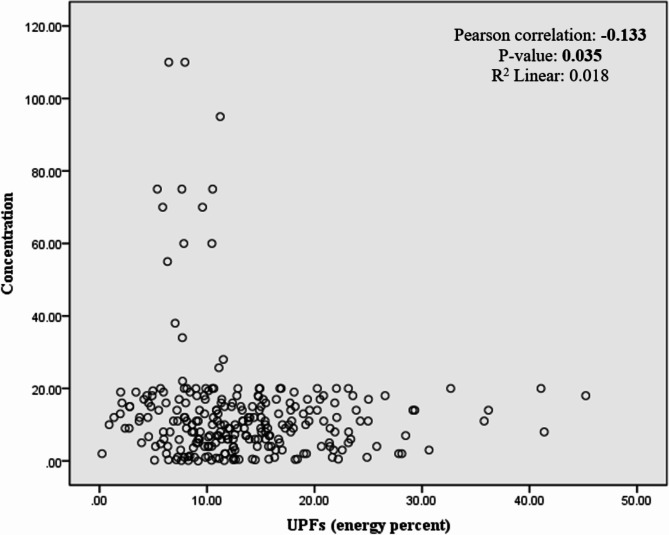
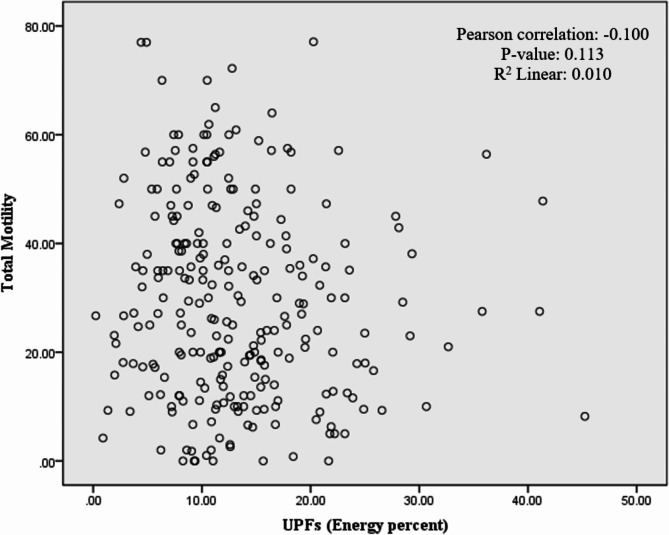
Results: In the crude model, no significant associations were observed between the second and last tertiles of UPFs with abnormalities in sperm concentration, total motility, and morphology (p > 0.05 for all). However, after adjusting for age, marriage duration, body mass index, physical activity, depression, anxiety, stress, energy intake, cigarette history, and mineral and vitamin supplements, a significantly higher association was identified between the second tertile of UPFs and abnormalities in sperm concentration (odds ratio (OR) = 3.962, 95% confidence interval (CI): 1.345-11.670, p = 0.013).
Conclusions: In conclusion, although the analysis did not find significant associations between UPF consumption and impaired sperm motility and morphology, it revealed significant trends linking higher UPF intake with lower sperm concentration. If future studies confirm these results, they could aid in designing interventional and preventive programs aimed at addressing infertility in men of reproductive age in the field of public health.
BMC Research NotesBiochemistry, Genetics and Molecular Biology-Biochemistry, Genetics and Molecular Biology (all)
CiteScore
3.60
自引率
0.00%
发文量
363
审稿时长
15 weeks
期刊介绍:
BMC Research Notes publishes scientifically valid research outputs that cannot be considered as full research or methodology articles. We support the research community across all scientific and clinical disciplines by providing an open access forum for sharing data and useful information; this includes, but is not limited to, updates to previous work, additions to established methods, short publications, null results, research proposals and data management plans.





 京公网安备 11010802042870号
京ICP备2023020795号-1
京公网安备 11010802042870号
京ICP备2023020795号-1

 分享
分享
 求助内容:
求助内容: 应助结果提醒方式:
 扫码关注我们
