{"title":"High Crystalline MxSby (M═Fe, Co, and Ni) Nanocrystals Tuned by Antimony for Boosting Overall Water Splitting Catalysis","authors":"Yan Zhang, Jiwen Si, Zihan Chen, Longxin Zhao, Fagui Qiu, Wenqing Li, Wei Zhang, Shiding Miao","doi":"10.1002/aenm.202405275","DOIUrl":null,"url":null,"abstract":"<p>Six types of M<sub>x</sub>Sb<sub>y</sub> compounds (Fe, Co, and Ni antimonides) are synthesized in form of mono-dispersed nanocrystallites (NCs) via a hot-injection metathesis-reduction. Various contents of Sb atoms are found to drive crystallographic structure and re-coordination in the M<sub>x</sub>Sb<sub>y</sub> materials, leading to rhythmical changes of orthorhombic M<sub>3</sub>Sb→hexagonal MSb→monoclinic (or orthorhombic) MSb<sub>2</sub>. The crystallography is identified as crucial factor in electrocatalysis of water splitting at cathodic and anodic electrodes, respectively. Owning to the in-plane microstrain distributed along (001) plane, the synthesized Ni<sub>3</sub>Sb NCs are more suitable to catalyzing hydrogen evolution reaction (HER), sharing overpotential (η<sub>10</sub>) of 93 mV@10 mA cm<sup>−2</sup> with Tafel slope of 45 mV dec<sup>−1</sup>, and extremely low hydrogen adsorption resistance (0.019 Ω) is obtained. The orthorhombic FeSb<sub>2</sub> NCs featured with larger deprotonation capacity of 13.71 mC V<sup>−1</sup> excelled in oxygen evolution reaction (OER) electrolysis, and is confirmed to facilitate minimal deformation of the OOH<sup>*</sup>. The integrated devices (FeSb<sub>2</sub>‖Ni<sub>3</sub>Sb) are tested as efficient catalyst for overall water splitting (1.58 V@10 mA cm<sup>−2</sup>) with long stability. Density functional theory (DFT) calculations elucidated the particular coordination of Sb with proper electronegativity (2.05) is able to adjust active sites, relax electronic attraction, and benefit electrochemical reactions.</p>","PeriodicalId":111,"journal":{"name":"Advanced Energy Materials","volume":"15 22","pages":""},"PeriodicalIF":26.0000,"publicationDate":"2025-02-02","publicationTypes":"Journal Article","fieldsOfStudy":null,"isOpenAccess":false,"openAccessPdf":"","citationCount":"0","resultStr":null,"platform":"Semanticscholar","paperid":null,"PeriodicalName":"Advanced Energy Materials","FirstCategoryId":"88","ListUrlMain":"https://advanced.onlinelibrary.wiley.com/doi/10.1002/aenm.202405275","RegionNum":1,"RegionCategory":"材料科学","ArticlePicture":[],"TitleCN":null,"AbstractTextCN":null,"PMCID":null,"EPubDate":"","PubModel":"","JCR":"Q1","JCRName":"CHEMISTRY, PHYSICAL","Score":null,"Total":0}
引用次数: 0
Abstract
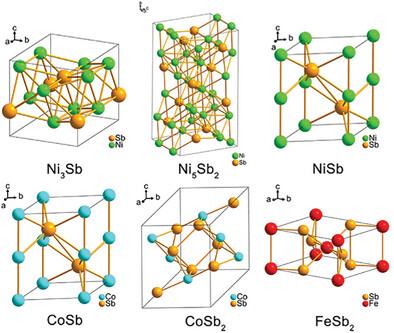
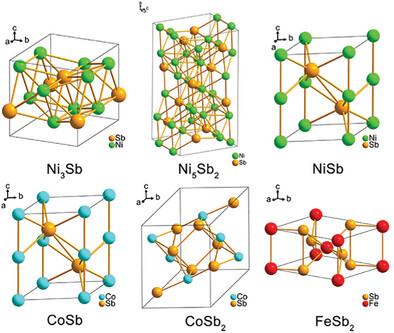
Six types of MxSby compounds (Fe, Co, and Ni antimonides) are synthesized in form of mono-dispersed nanocrystallites (NCs) via a hot-injection metathesis-reduction. Various contents of Sb atoms are found to drive crystallographic structure and re-coordination in the MxSby materials, leading to rhythmical changes of orthorhombic M3Sb→hexagonal MSb→monoclinic (or orthorhombic) MSb2. The crystallography is identified as crucial factor in electrocatalysis of water splitting at cathodic and anodic electrodes, respectively. Owning to the in-plane microstrain distributed along (001) plane, the synthesized Ni3Sb NCs are more suitable to catalyzing hydrogen evolution reaction (HER), sharing overpotential (η10) of 93 mV@10 mA cm−2 with Tafel slope of 45 mV dec−1, and extremely low hydrogen adsorption resistance (0.019 Ω) is obtained. The orthorhombic FeSb2 NCs featured with larger deprotonation capacity of 13.71 mC V−1 excelled in oxygen evolution reaction (OER) electrolysis, and is confirmed to facilitate minimal deformation of the OOH*. The integrated devices (FeSb2‖Ni3Sb) are tested as efficient catalyst for overall water splitting (1.58 V@10 mA cm−2) with long stability. Density functional theory (DFT) calculations elucidated the particular coordination of Sb with proper electronegativity (2.05) is able to adjust active sites, relax electronic attraction, and benefit electrochemical reactions.
采用热注入还原法合成了六种MxSby化合物(Fe、Co和Ni锑化物)。不同含量的Sb原子驱动MxSby材料的晶体结构和重配,导致正交M3Sb→六方MSb→单斜(或正交)MSb2的有节奏变化。晶体学是电催化水在阴极和阳极上分解的关键因素。由于面内微应变沿(001)面分布,合成的Ni3Sb纳米材料更适合催化析氢反应(HER),共共享过电位(η10)为93 mV@10 mA cm−2,Tafel斜率为45 mV dec−1,且具有极低的氢吸附阻力(0.019 Ω)。正交FeSb2 NCs具有13.71 mC V−1的脱质子容量,在析氧反应(OER)电解中表现优异,并且可以使OOH*的变形最小。该集成器件(FeSb2‖Ni3Sb)被测试为整体水分解的高效催化剂(1.58 V@10 mA cm−2),具有长稳定性。密度泛函理论(DFT)计算表明,适当电负性(2.05)的锑的特殊配位能够调节活性位点,放松电子吸引力,有利于电化学反应。
期刊介绍:
Established in 2011, Advanced Energy Materials is an international, interdisciplinary, English-language journal that focuses on materials used in energy harvesting, conversion, and storage. It is regarded as a top-quality journal alongside Advanced Materials, Advanced Functional Materials, and Small.
With a 2022 Impact Factor of 27.8, Advanced Energy Materials is considered a prime source for the best energy-related research. The journal covers a wide range of topics in energy-related research, including organic and inorganic photovoltaics, batteries and supercapacitors, fuel cells, hydrogen generation and storage, thermoelectrics, water splitting and photocatalysis, solar fuels and thermosolar power, magnetocalorics, and piezoelectronics.
The readership of Advanced Energy Materials includes materials scientists, chemists, physicists, and engineers in both academia and industry. The journal is indexed in various databases and collections, such as Advanced Technologies & Aerospace Database, FIZ Karlsruhe, INSPEC (IET), Science Citation Index Expanded, Technology Collection, and Web of Science, among others.





 京公网安备 11010802042870号
京ICP备2023020795号-1
京公网安备 11010802042870号
京ICP备2023020795号-1

 分享
分享
 求助内容:
求助内容: 应助结果提醒方式:
 扫码关注我们
