{"title":"Effects of high-calorie diet-induced obesity on molecular structures of lipids and proteins - A multi-organ study using FTIR spectroscopy","authors":"Kaja Piana , Agata Ziomber-Lisiak , Blazej Ruszczycki , Andrzej Bugajski , Magdalena Szczerbowska-Boruchowska","doi":"10.1016/j.abb.2025.110325","DOIUrl":null,"url":null,"abstract":"<div><div>In the presented study, we evaluated changes in the molecular structures of lipids and proteins in organs/tissues at the early stage of obesity induced by a high-calorie diet (HCD), using animal models. We examined several different molecular parameters and the organs most affected by obesity. Fourier transform infrared (FTIR) spectroscopy combined with Principal Component Analysis (PCA) and Receiver Operating Characteristic (ROC) analysis were used to evaluate molecular changes in tissues taken from HCD-induced obese Wistar rats and their lean counterparts. We observed that at the early stage of obesity, changes occurred mainly in lipid structures, primarily affecting white epididymal adipose tissue (WAT) and the liver (Lr). No changes in protein molecular structures were observed in any of the examined organs. PCA showed distinctly different organ/tissue compositions, in terms of molecular parameters, for both groups. In turn, ROC analysis indicated that fatty acid chain length (FACL), lipid unsaturation (L_Unsat), and carbonyl/lipid ratio (Carb/L) for WAT, and FACL and lipid/protein ratio (L/P) for Lr, were the molecular parameters, whose levels differentiated the most between both groups. We demonstrated that studies using FTIR spectroscopy combined with advanced data mining methods could deepen the current knowledge about obesity and the biochemical changes occurring in the organs affected by this disease. Thus, they can help in the future with better and faster diagnosis and prevention of obesity and its complications.</div></div>","PeriodicalId":8174,"journal":{"name":"Archives of biochemistry and biophysics","volume":"765 ","pages":"Article 110325"},"PeriodicalIF":3.0000,"publicationDate":"2025-01-31","publicationTypes":"Journal Article","fieldsOfStudy":null,"isOpenAccess":false,"openAccessPdf":"","citationCount":"0","resultStr":null,"platform":"Semanticscholar","paperid":null,"PeriodicalName":"Archives of biochemistry and biophysics","FirstCategoryId":"99","ListUrlMain":"https://www.sciencedirect.com/science/article/pii/S0003986125000384","RegionNum":3,"RegionCategory":"生物学","ArticlePicture":[],"TitleCN":null,"AbstractTextCN":null,"PMCID":null,"EPubDate":"","PubModel":"","JCR":"Q2","JCRName":"BIOCHEMISTRY & MOLECULAR BIOLOGY","Score":null,"Total":0}
引用次数: 0
Abstract
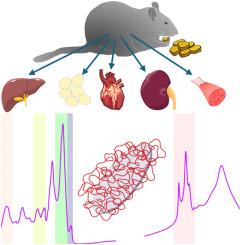
In the presented study, we evaluated changes in the molecular structures of lipids and proteins in organs/tissues at the early stage of obesity induced by a high-calorie diet (HCD), using animal models. We examined several different molecular parameters and the organs most affected by obesity. Fourier transform infrared (FTIR) spectroscopy combined with Principal Component Analysis (PCA) and Receiver Operating Characteristic (ROC) analysis were used to evaluate molecular changes in tissues taken from HCD-induced obese Wistar rats and their lean counterparts. We observed that at the early stage of obesity, changes occurred mainly in lipid structures, primarily affecting white epididymal adipose tissue (WAT) and the liver (Lr). No changes in protein molecular structures were observed in any of the examined organs. PCA showed distinctly different organ/tissue compositions, in terms of molecular parameters, for both groups. In turn, ROC analysis indicated that fatty acid chain length (FACL), lipid unsaturation (L_Unsat), and carbonyl/lipid ratio (Carb/L) for WAT, and FACL and lipid/protein ratio (L/P) for Lr, were the molecular parameters, whose levels differentiated the most between both groups. We demonstrated that studies using FTIR spectroscopy combined with advanced data mining methods could deepen the current knowledge about obesity and the biochemical changes occurring in the organs affected by this disease. Thus, they can help in the future with better and faster diagnosis and prevention of obesity and its complications.
期刊介绍:
Archives of Biochemistry and Biophysics publishes quality original articles and reviews in the developing areas of biochemistry and biophysics.
Research Areas Include:
• Enzyme and protein structure, function, regulation. Folding, turnover, and post-translational processing
• Biological oxidations, free radical reactions, redox signaling, oxygenases, P450 reactions
• Signal transduction, receptors, membrane transport, intracellular signals. Cellular and integrated metabolism.



 京公网安备 11010802042870号
京ICP备2023020795号-1
京公网安备 11010802042870号
京ICP备2023020795号-1

 分享
分享
 求助内容:
求助内容: 应助结果提醒方式:
 扫码关注我们
