Dan-dan Xi , Lu Gao , Li-ao Ge , Hong-fang Zhu , Li-ming Miao , Ding-yu Zhang , Chang-wei Zhang , Ying Li , Yan-xiao Dong , Xi-lin Hou , Yu-ying Zhu , Zhao-hui Zhang , Xiao-feng Li
{"title":"Combined transcriptome and metabolome analysis provides insight into the ERF073 – Malic acid network in pakchoi under submergence stress","authors":"Dan-dan Xi , Lu Gao , Li-ao Ge , Hong-fang Zhu , Li-ming Miao , Ding-yu Zhang , Chang-wei Zhang , Ying Li , Yan-xiao Dong , Xi-lin Hou , Yu-ying Zhu , Zhao-hui Zhang , Xiao-feng Li","doi":"10.1016/j.stress.2024.100708","DOIUrl":null,"url":null,"abstract":"<div><div>Pakchoi is sensitive to oxygen deficiency caused by submergence; however, the molecular mechanisms underlying its response to these conditions remains unclear. To determine these mechanisms, two pakchoi cultivars, Heiyoudong (HYD) and Suzhouqing (SZQ), were subjected to submergence for 1 h and 5 h, respectively. Following this treatment, the plants were transferred back to the control conditions for recovery. HYD exhibited higher survival rate than SZQ after recovery. Leaves from 1 h stress, 5 h stress, and subsequent 5-h recovery phases were harvested for metabolome and transcriptome analyses. Data analysis revealed that 206 differentially accumulated metabolites (DAMs) were identified between SZQ and HYD after 1 h stress (S1 vs H1) and 330 DAMs were identified between SZQ and HYD after 5 h stress (S5 vs H5) at stress stage. During recovery stage, 124 and 310 DAMs were found in S1 vs H1 and S5 vs H5, respectively. Additionally, 553 commonly differentially expressed genes (DEGs) were found both in S1 vs H1 and S5 vs H5 at the stress stage, while 458 DEGs were commonly found in the two comparison groups at the recovery stage. Among these DEGs, ERF073 was down-regulated, as further confirmed by qRT-PCR. KEGG pathway analysis revealed that DAMs and DEGs were mainly enriched in metabolic pathways. Taken together, these findings indicate that ERF073 may regulate malic acid accumulation in pakchoi, increasing its resistance to submergence.</div></div>","PeriodicalId":34736,"journal":{"name":"Plant Stress","volume":"15 ","pages":"Article 100708"},"PeriodicalIF":6.8000,"publicationDate":"2025-03-01","publicationTypes":"Journal Article","fieldsOfStudy":null,"isOpenAccess":false,"openAccessPdf":"","citationCount":"0","resultStr":null,"platform":"Semanticscholar","paperid":null,"PeriodicalName":"Plant Stress","FirstCategoryId":"1085","ListUrlMain":"https://www.sciencedirect.com/science/article/pii/S2667064X24003610","RegionNum":0,"RegionCategory":null,"ArticlePicture":[],"TitleCN":null,"AbstractTextCN":null,"PMCID":null,"EPubDate":"2024/12/12 0:00:00","PubModel":"Epub","JCR":"Q1","JCRName":"PLANT SCIENCES","Score":null,"Total":0}
引用次数: 0
Abstract
Pakchoi is sensitive to oxygen deficiency caused by submergence; however, the molecular mechanisms underlying its response to these conditions remains unclear. To determine these mechanisms, two pakchoi cultivars, Heiyoudong (HYD) and Suzhouqing (SZQ), were subjected to submergence for 1 h and 5 h, respectively. Following this treatment, the plants were transferred back to the control conditions for recovery. HYD exhibited higher survival rate than SZQ after recovery. Leaves from 1 h stress, 5 h stress, and subsequent 5-h recovery phases were harvested for metabolome and transcriptome analyses. Data analysis revealed that 206 differentially accumulated metabolites (DAMs) were identified between SZQ and HYD after 1 h stress (S1 vs H1) and 330 DAMs were identified between SZQ and HYD after 5 h stress (S5 vs H5) at stress stage. During recovery stage, 124 and 310 DAMs were found in S1 vs H1 and S5 vs H5, respectively. Additionally, 553 commonly differentially expressed genes (DEGs) were found both in S1 vs H1 and S5 vs H5 at the stress stage, while 458 DEGs were commonly found in the two comparison groups at the recovery stage. Among these DEGs, ERF073 was down-regulated, as further confirmed by qRT-PCR. KEGG pathway analysis revealed that DAMs and DEGs were mainly enriched in metabolic pathways. Taken together, these findings indicate that ERF073 may regulate malic acid accumulation in pakchoi, increasing its resistance to submergence.
小白菜对水下缺氧很敏感;然而,其对这些条件的反应的分子机制尚不清楚。以黑油东(HYD)和苏青(SZQ) 2个小白菜品种为研究对象,分别进行了1 h和5 h的淹水处理。在此处理之后,将植物转移回对照条件进行恢复。恢复后,HYD的存活率高于SZQ。收集胁迫1 h、5 h和随后5 h恢复阶段的叶片,进行代谢组学和转录组学分析。数据分析显示,胁迫1 h (S1 vs H1)后SZQ和HYD之间鉴定出206个差异积累代谢物(DAMs),胁迫5 h (S5 vs H5)后SZQ和HYD之间鉴定出330个差异积累代谢物(DAMs)。在恢复阶段,S1对H1和S5对H5分别发现124和310个dam。此外,在应激期S1对H1和S5对H5中均发现553个共同差异表达基因(deg),而在恢复期两个对照组中均发现458个共同差异表达基因(deg)。在这些DEGs中,ERF073下调,qRT-PCR进一步证实了这一点。KEGG通路分析显示,dam和deg主要富集于代谢途径。综上所述,这些发现表明ERF073可能调节小白菜中苹果酸的积累,增强其抗淹性。
期刊介绍:
The journal Plant Stress deals with plant (or other photoautotrophs, such as algae, cyanobacteria and lichens) responses to abiotic and biotic stress factors that can result in limited growth and productivity. Such responses can be analyzed and described at a physiological, biochemical and molecular level. Experimental approaches/technologies aiming to improve growth and productivity with a potential for downstream validation under stress conditions will also be considered. Both fundamental and applied research manuscripts are welcome, provided that clear mechanistic hypotheses are made and descriptive approaches are avoided. In addition, high-quality review articles will also be considered, provided they follow a critical approach and stimulate thought for future research avenues.
Plant Stress welcomes high-quality manuscripts related (but not limited) to interactions between plants and:
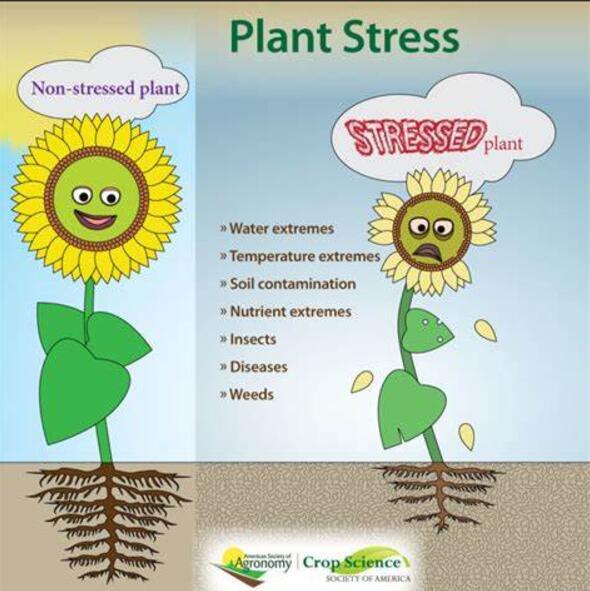
Lack of water (drought) and excess (flooding),
Salinity stress,
Elevated temperature and/or low temperature (chilling and freezing),
Hypoxia and/or anoxia,
Mineral nutrient excess and/or deficiency,
Heavy metals and/or metalloids,
Plant priming (chemical, biological, physiological, nanomaterial, biostimulant) approaches for improved stress protection,
Viral, phytoplasma, bacterial and fungal plant-pathogen interactions.
The journal welcomes basic and applied research articles, as well as review articles and short communications. All submitted manuscripts will be subject to a thorough peer-reviewing process.



 京公网安备 11010802042870号
京ICP备2023020795号-1
京公网安备 11010802042870号
京ICP备2023020795号-1

 分享
分享
 求助内容:
求助内容: 应助结果提醒方式:
 扫码关注我们
