Insights into Corncrake (Crex crex) movements in a fragmented agricultural landscape using bioacoustics with implications for nature conservation strategies
Andrea Parisi, James Moran, John Carey, Joanne O'Brien
{"title":"Insights into Corncrake (Crex crex) movements in a fragmented agricultural landscape using bioacoustics with implications for nature conservation strategies","authors":"Andrea Parisi, James Moran, John Carey, Joanne O'Brien","doi":"10.1111/csp2.13259","DOIUrl":null,"url":null,"abstract":"<p>Movement ecology data are often collected by catching animals and fitting GPS tags. This technique is expensive, biased and comes at an extra cost for the caught individuals. New conservation technologies allow noninvasive data collection, providing ecological knowledge to aid the conservation of endangered species. Using bioacoustics, we investigated intraseason and between-year movements of the red-listed corncrake (<i>Crex crex</i>) and their relationships with landscape structure. Our goals were to track corncrake movements with minimal disturbance to the species and determine how landscape features affect these movements. We recorded males over two consecutive breeding seasons in 2022 and 2023 in an extensively farmed agricultural landscape in the West of Ireland. Individual identity was obtained through vocal characteristics of the calling males which were grouped into clusters. The areas of seminatural grassland and margin features, presence of bird refuge strips, and habitat connectivity were extracted from buffers between locations of two matching recordings (same calling male). These landscape features were used as model predictors to determine the distance that the same male covered. We found that, in a season, males moved 415 m on average (min = 10 m; max = 1805 m) between calling locations, which was more than previously thought in the Western Europe. Males also reoccurred on average 375 m (min = 23 m; max = 1231 m) away from the previous year's location. Landscape connectivity (<i>p</i> = 0.01, <i>N</i> = 42) and seminatural grassland area (<i>p</i> = 0.02, <i>N</i> = 42) were positive predictors of intraseason movements, whereas the margin area (<i>p</i> = 0.01, <i>N</i> = 35) predicted further between-year movements. Considering our noninvasively sampled results in the Irish context, we suggest increasing the protection area around a calling male to 500 m. In this buffer, we also suggest improving the availability of seminatural grassland to 30% and presence of margin features to 3%. Further land management recommendations are provided.</p>","PeriodicalId":51337,"journal":{"name":"Conservation Science and Practice","volume":"7 1","pages":""},"PeriodicalIF":2.8000,"publicationDate":"2024-12-10","publicationTypes":"Journal Article","fieldsOfStudy":null,"isOpenAccess":false,"openAccessPdf":"https://onlinelibrary.wiley.com/doi/epdf/10.1111/csp2.13259","citationCount":"0","resultStr":null,"platform":"Semanticscholar","paperid":null,"PeriodicalName":"Conservation Science and Practice","FirstCategoryId":"93","ListUrlMain":"https://conbio.onlinelibrary.wiley.com/doi/10.1111/csp2.13259","RegionNum":2,"RegionCategory":"环境科学与生态学","ArticlePicture":[],"TitleCN":null,"AbstractTextCN":null,"PMCID":null,"EPubDate":"","PubModel":"","JCR":"Q1","JCRName":"BIODIVERSITY CONSERVATION","Score":null,"Total":0}
引用次数: 0
Abstract
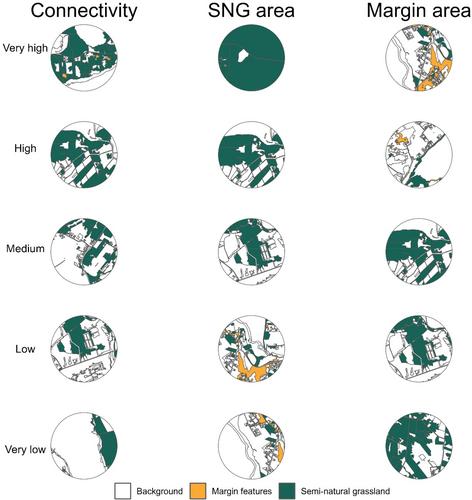
Movement ecology data are often collected by catching animals and fitting GPS tags. This technique is expensive, biased and comes at an extra cost for the caught individuals. New conservation technologies allow noninvasive data collection, providing ecological knowledge to aid the conservation of endangered species. Using bioacoustics, we investigated intraseason and between-year movements of the red-listed corncrake (Crex crex) and their relationships with landscape structure. Our goals were to track corncrake movements with minimal disturbance to the species and determine how landscape features affect these movements. We recorded males over two consecutive breeding seasons in 2022 and 2023 in an extensively farmed agricultural landscape in the West of Ireland. Individual identity was obtained through vocal characteristics of the calling males which were grouped into clusters. The areas of seminatural grassland and margin features, presence of bird refuge strips, and habitat connectivity were extracted from buffers between locations of two matching recordings (same calling male). These landscape features were used as model predictors to determine the distance that the same male covered. We found that, in a season, males moved 415 m on average (min = 10 m; max = 1805 m) between calling locations, which was more than previously thought in the Western Europe. Males also reoccurred on average 375 m (min = 23 m; max = 1231 m) away from the previous year's location. Landscape connectivity (p = 0.01, N = 42) and seminatural grassland area (p = 0.02, N = 42) were positive predictors of intraseason movements, whereas the margin area (p = 0.01, N = 35) predicted further between-year movements. Considering our noninvasively sampled results in the Irish context, we suggest increasing the protection area around a calling male to 500 m. In this buffer, we also suggest improving the availability of seminatural grassland to 30% and presence of margin features to 3%. Further land management recommendations are provided.







 京公网安备 11010802042870号
京ICP备2023020795号-1
京公网安备 11010802042870号
京ICP备2023020795号-1

 分享
分享
 求助内容:
求助内容: 应助结果提醒方式:
 扫码关注我们
