Vasiliki Paschou, Elissavet Emmanouilidou MSc, Anastasia Lazaridou MSc, Prof. Nikolaos C. Kokkinos, Prof. Sophia Mitkidou
{"title":"A Comparative Study of Biodiesel Production from Waste Cooking Olive Oil and Sunflower Oil","authors":"Vasiliki Paschou, Elissavet Emmanouilidou MSc, Anastasia Lazaridou MSc, Prof. Nikolaos C. Kokkinos, Prof. Sophia Mitkidou","doi":"10.1002/slct.202404497","DOIUrl":null,"url":null,"abstract":"<p>Waste cooking oils are commonly utilized as feedstock in biodiesel synthesis. However, there has been limited research on the perspective of using waste cooking olive oil for biodiesel production. This study explores the potential of household waste frying olive oil as a feedstock for biodiesel production andcomparing it with sunflower oil. The biodiesel samples were evaluated according to European standard specifications and test methods EN 14214. However, the water content and oxidation stability did not meet the required criteria. To address this, the Rancimat method was used to investigate the potential of essential oils and plant extracts as antioxidants. Oregano essential oil and rosemary plant extracts significantly improved the oxidation stability of both olive and sunflower oil biodiesel. The analysis of the fatty acid profile of the feedstock through gas chromatography–mass spectrometry proved to be a critical determinant of biodiesel properties. Moreover, the use of ultrasound-assisted biodiesel synthesis enhanced the yield of biodiesel. The research findings have indicated that olive oil is a sustainable option to produce high-yield biodiesel with a noteworthy antioxidant stability when natural antioxidants are incorporated into the mixture.</p>","PeriodicalId":146,"journal":{"name":"ChemistrySelect","volume":"10 4","pages":""},"PeriodicalIF":2.0000,"publicationDate":"2025-01-27","publicationTypes":"Journal Article","fieldsOfStudy":null,"isOpenAccess":false,"openAccessPdf":"https://onlinelibrary.wiley.com/doi/epdf/10.1002/slct.202404497","citationCount":"0","resultStr":null,"platform":"Semanticscholar","paperid":null,"PeriodicalName":"ChemistrySelect","FirstCategoryId":"92","ListUrlMain":"https://chemistry-europe.onlinelibrary.wiley.com/doi/10.1002/slct.202404497","RegionNum":4,"RegionCategory":"化学","ArticlePicture":[],"TitleCN":null,"AbstractTextCN":null,"PMCID":null,"EPubDate":"","PubModel":"","JCR":"Q3","JCRName":"CHEMISTRY, MULTIDISCIPLINARY","Score":null,"Total":0}
引用次数: 0
Abstract
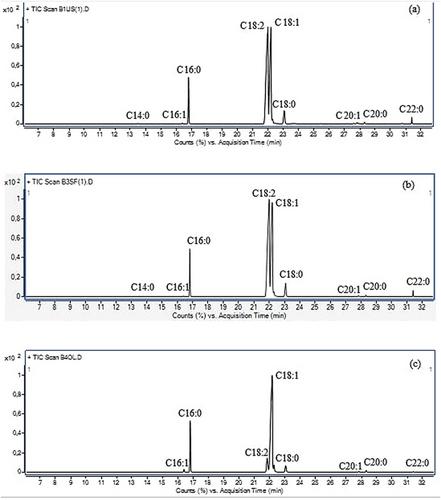
Waste cooking oils are commonly utilized as feedstock in biodiesel synthesis. However, there has been limited research on the perspective of using waste cooking olive oil for biodiesel production. This study explores the potential of household waste frying olive oil as a feedstock for biodiesel production andcomparing it with sunflower oil. The biodiesel samples were evaluated according to European standard specifications and test methods EN 14214. However, the water content and oxidation stability did not meet the required criteria. To address this, the Rancimat method was used to investigate the potential of essential oils and plant extracts as antioxidants. Oregano essential oil and rosemary plant extracts significantly improved the oxidation stability of both olive and sunflower oil biodiesel. The analysis of the fatty acid profile of the feedstock through gas chromatography–mass spectrometry proved to be a critical determinant of biodiesel properties. Moreover, the use of ultrasound-assisted biodiesel synthesis enhanced the yield of biodiesel. The research findings have indicated that olive oil is a sustainable option to produce high-yield biodiesel with a noteworthy antioxidant stability when natural antioxidants are incorporated into the mixture.
期刊介绍:
ChemistrySelect is the latest journal from ChemPubSoc Europe and Wiley-VCH. It offers researchers a quality society-owned journal in which to publish their work in all areas of chemistry. Manuscripts are evaluated by active researchers to ensure they add meaningfully to the scientific literature, and those accepted are processed quickly to ensure rapid online publication.





 京公网安备 11010802042870号
京ICP备2023020795号-1
京公网安备 11010802042870号
京ICP备2023020795号-1

 分享
分享
 求助内容:
求助内容: 应助结果提醒方式:
 扫码关注我们
