Jieun Lee , Sayan Deb Dutta , Tejal V. Patil , Seong-Jun Cho , Ki-Taek Lim
{"title":"Physical stimuli-responsive 3D printable hydrogels for scalable manufacturing of bioengineered meat analogs","authors":"Jieun Lee , Sayan Deb Dutta , Tejal V. Patil , Seong-Jun Cho , Ki-Taek Lim","doi":"10.1016/j.tifs.2025.104867","DOIUrl":null,"url":null,"abstract":"<div><h3>Background</h3><div>The shift towards sustainable and ethical food systems has accelerated advancements in cultured meat technology. Cultured meat, or lab-grown meat, offers a revolutionary approach to meat production by addressing environmental, ethical, and health issues associated with conventional livestock farming. Traditional meat production contributes to significant greenhouse gas emissio ns, extensive land use, high water consumption, and animal welfare concerns. Cultured meat aims to mitigate these impacts by cultivating muscle tissue <em>in vitro</em>, thus reducing the need for animal slaughter and lessening the ecological footprint.</div></div><div><h3>Scope and approach</h3><div>This review covers cultured meat production, focusing on cell culture fundamentals, including starter cell selection, growth media, and scaffolding. It also examines biophysical stimuli-based platforms for improving muscle cell differentiation and recent advances in 3D printing for customizing tissue structures.</div></div><div><h3>Key findings and conclusion</h3><div>Challenges remain, such as high production costs and the need for optimized systems and scalable processes. Regulatory and consumer acceptance are crucial for wider adoption. The review highlights progress and obstacles, aiming to support the transition to commercial production and emphasizing the potential of combining physical stimuli with advanced biofabrication to enhance sustainability and reduce costs.</div></div>","PeriodicalId":441,"journal":{"name":"Trends in Food Science & Technology","volume":"156 ","pages":"Article 104867"},"PeriodicalIF":15.4000,"publicationDate":"2025-02-01","publicationTypes":"Journal Article","fieldsOfStudy":null,"isOpenAccess":false,"openAccessPdf":"","citationCount":"0","resultStr":null,"platform":"Semanticscholar","paperid":null,"PeriodicalName":"Trends in Food Science & Technology","FirstCategoryId":"97","ListUrlMain":"https://www.sciencedirect.com/science/article/pii/S0924224425000032","RegionNum":1,"RegionCategory":"农林科学","ArticlePicture":[],"TitleCN":null,"AbstractTextCN":null,"PMCID":null,"EPubDate":"","PubModel":"","JCR":"Q1","JCRName":"FOOD SCIENCE & TECHNOLOGY","Score":null,"Total":0}
引用次数: 0
Abstract
Background
The shift towards sustainable and ethical food systems has accelerated advancements in cultured meat technology. Cultured meat, or lab-grown meat, offers a revolutionary approach to meat production by addressing environmental, ethical, and health issues associated with conventional livestock farming. Traditional meat production contributes to significant greenhouse gas emissio ns, extensive land use, high water consumption, and animal welfare concerns. Cultured meat aims to mitigate these impacts by cultivating muscle tissue in vitro, thus reducing the need for animal slaughter and lessening the ecological footprint.
Scope and approach
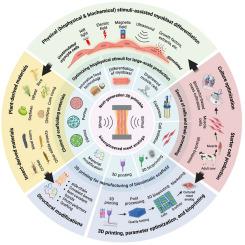
This review covers cultured meat production, focusing on cell culture fundamentals, including starter cell selection, growth media, and scaffolding. It also examines biophysical stimuli-based platforms for improving muscle cell differentiation and recent advances in 3D printing for customizing tissue structures.
Key findings and conclusion
Challenges remain, such as high production costs and the need for optimized systems and scalable processes. Regulatory and consumer acceptance are crucial for wider adoption. The review highlights progress and obstacles, aiming to support the transition to commercial production and emphasizing the potential of combining physical stimuli with advanced biofabrication to enhance sustainability and reduce costs.
期刊介绍:
Trends in Food Science & Technology is a prestigious international journal that specializes in peer-reviewed articles covering the latest advancements in technology, food science, and human nutrition. It serves as a bridge between specialized primary journals and general trade magazines, providing readable and scientifically rigorous reviews and commentaries on current research developments and their potential applications in the food industry.
Unlike traditional journals, Trends in Food Science & Technology does not publish original research papers. Instead, it focuses on critical and comprehensive reviews to offer valuable insights for professionals in the field. By bringing together cutting-edge research and industry applications, this journal plays a vital role in disseminating knowledge and facilitating advancements in the food science and technology sector.



 京公网安备 11010802042870号
京ICP备2023020795号-1
京公网安备 11010802042870号
京ICP备2023020795号-1

 分享
分享
 求助内容:
求助内容: 应助结果提醒方式:
 扫码关注我们
