Linping Li , Junhui Su , Yanping Qiu , Yangqin Gao , Ning Li , Lei Ge
{"title":"Design and fabrication of ternary Au/Co3O4/ZnCdS spherical composite photocatalyst for facilitating efficient photocatalytic hydrogen production","authors":"Linping Li , Junhui Su , Yanping Qiu , Yangqin Gao , Ning Li , Lei Ge","doi":"10.1016/j.cjsc.2024.100472","DOIUrl":null,"url":null,"abstract":"<div><div>Promoting efficient carrier separation and transfer can largely enhance photocatalytic performance and inhibit photo-corrosion. In this work, ZnCdS (ZCS) microspheres were obtained by a self-assembly strategy, and the Au/Co<sub>3</sub>O<sub>4</sub>/ZCS composites were synthesized by a modified photo-deposition method (loading Co<sub>3</sub>O<sub>4</sub> and Au onto the surface of ZnCdS). The synergistic effect between the S-scheme heterojunction (Co<sub>3</sub>O<sub>4</sub>/ZCS) and Schottky junction (Au/ZCS) can effectively promote the generation and separation of photoelectrons and holes, thus enhancing the photocatalytic activity. Under visible light, the efficient photocatalysts showed hydrogen production activities up to 2525 μmol g<sup>−1</sup> h<sup>−1</sup>, which is 2.24 times higher than that of Co<sub>3</sub>O<sub>4</sub>/ZCS and 6.92 times higher than that of pure ZnCdS. DFT calculations indicate that the built-in electric field between Co<sub>3</sub>O<sub>4</sub>/ZCS provides the driving force for efficient electron-hole separation, and the Au nanoparticles (NPs) act as electron collectors at the interface of ZnCdS to capture the electrons, which effectively prolongs the lifetime of photoelectrons and further enhances the photocatalytic hydrogen production activity.</div></div>","PeriodicalId":10151,"journal":{"name":"结构化学","volume":"43 12","pages":"Article 100472"},"PeriodicalIF":10.3000,"publicationDate":"2024-12-01","publicationTypes":"Journal Article","fieldsOfStudy":null,"isOpenAccess":false,"openAccessPdf":"","citationCount":"0","resultStr":null,"platform":"Semanticscholar","paperid":null,"PeriodicalName":"结构化学","FirstCategoryId":"92","ListUrlMain":"https://www.sciencedirect.com/science/article/pii/S0254586124003544","RegionNum":4,"RegionCategory":"化学","ArticlePicture":[],"TitleCN":null,"AbstractTextCN":null,"PMCID":null,"EPubDate":"2024/11/17 0:00:00","PubModel":"Epub","JCR":"Q1","JCRName":"CHEMISTRY, INORGANIC & NUCLEAR","Score":null,"Total":0}
引用次数: 0
Abstract
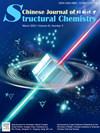
Promoting efficient carrier separation and transfer can largely enhance photocatalytic performance and inhibit photo-corrosion. In this work, ZnCdS (ZCS) microspheres were obtained by a self-assembly strategy, and the Au/Co3O4/ZCS composites were synthesized by a modified photo-deposition method (loading Co3O4 and Au onto the surface of ZnCdS). The synergistic effect between the S-scheme heterojunction (Co3O4/ZCS) and Schottky junction (Au/ZCS) can effectively promote the generation and separation of photoelectrons and holes, thus enhancing the photocatalytic activity. Under visible light, the efficient photocatalysts showed hydrogen production activities up to 2525 μmol g−1 h−1, which is 2.24 times higher than that of Co3O4/ZCS and 6.92 times higher than that of pure ZnCdS. DFT calculations indicate that the built-in electric field between Co3O4/ZCS provides the driving force for efficient electron-hole separation, and the Au nanoparticles (NPs) act as electron collectors at the interface of ZnCdS to capture the electrons, which effectively prolongs the lifetime of photoelectrons and further enhances the photocatalytic hydrogen production activity.
期刊介绍:
Chinese Journal of Structural Chemistry “JIEGOU HUAXUE ”, an academic journal consisting of reviews, articles, communications and notes, provides a forum for the reporting and discussion of current novel research achievements in the fields of structural chemistry, crystallography, spectroscopy, quantum chemistry, pharmaceutical chemistry, biochemistry, material science, etc. Structural Chemistry has been indexed by SCI, CA, and some other prestigious publications.





 京公网安备 11010802042870号
京ICP备2023020795号-1
京公网安备 11010802042870号
京ICP备2023020795号-1

 分享
分享
 求助内容:
求助内容: 应助结果提醒方式:
 扫码关注我们
