Shobhita Saxena, Shweta Roy, Mir Nasir Ahmad, Ashis Kumar Nandi
{"title":"LDL2 and PAO5 genes are essential for systemic acquired resistance in Arabidopsis thaliana.","authors":"Shobhita Saxena, Shweta Roy, Mir Nasir Ahmad, Ashis Kumar Nandi","doi":"10.1111/ppl.70102","DOIUrl":null,"url":null,"abstract":"<p><p>A partly infected plant becomes more resistant to subsequent infections by developing systemic acquired resistance (SAR). Primary infected tissues produce signals that travel to systemic tissues for SAR-associated priming of defense-related genes. The mechanism through which mobile signals contribute to long-lasting infection memory is mostly unknown. RSI1/FLD, a putative histone demethylase, is required for developing SAR. Here, we report that two other FLD homologs, LSD1-LIKE2 (LDL2) and POLYAMINE OXIDASE 5 (PAO5), are required for SAR development. The mutants of LDL2 and PAO5 are not defective in local resistance but are specifically impaired for SAR. The mutants are defective in salicylic acid accumulation and priming of defence-related genes such as PR1, FMO1, and SnRK2.8. LDL2 and PAO5 are expressed in systemic tissues upon SAR induction by pathogens or SAR mobile signal azelaic acid. The ldl2 and pao5 mutants generate SAR mobile signals like wild-type (WT) plants but fail to respond to the signal at the systemic leaves. Both LDL2 and PAO5 proteins contain polyamine oxidase (PAO) domains, suggesting their involvement in polyamine metabolism. Exogenous applications of polyamines such as spermine and spermidine activate SAR in WT and rescue SAR defects of ldl2 and pao5 plants. Inhibition of polyamine biosynthetic gene arginine decarboxylase blocks SAR development. Results altogether demonstrate specific non-redundant roles of LDL2 and PAO5 in SAR development with their possible involvement in polyamine metabolism.</p>","PeriodicalId":20164,"journal":{"name":"Physiologia plantarum","volume":"177 1","pages":"e70102"},"PeriodicalIF":3.6000,"publicationDate":"2025-01-01","publicationTypes":"Journal Article","fieldsOfStudy":null,"isOpenAccess":false,"openAccessPdf":"","citationCount":"0","resultStr":null,"platform":"Semanticscholar","paperid":null,"PeriodicalName":"Physiologia plantarum","FirstCategoryId":"99","ListUrlMain":"https://doi.org/10.1111/ppl.70102","RegionNum":2,"RegionCategory":"生物学","ArticlePicture":[],"TitleCN":null,"AbstractTextCN":null,"PMCID":null,"EPubDate":"","PubModel":"","JCR":"Q1","JCRName":"PLANT SCIENCES","Score":null,"Total":0}
引用次数: 0
Abstract
A partly infected plant becomes more resistant to subsequent infections by developing systemic acquired resistance (SAR). Primary infected tissues produce signals that travel to systemic tissues for SAR-associated priming of defense-related genes. The mechanism through which mobile signals contribute to long-lasting infection memory is mostly unknown. RSI1/FLD, a putative histone demethylase, is required for developing SAR. Here, we report that two other FLD homologs, LSD1-LIKE2 (LDL2) and POLYAMINE OXIDASE 5 (PAO5), are required for SAR development. The mutants of LDL2 and PAO5 are not defective in local resistance but are specifically impaired for SAR. The mutants are defective in salicylic acid accumulation and priming of defence-related genes such as PR1, FMO1, and SnRK2.8. LDL2 and PAO5 are expressed in systemic tissues upon SAR induction by pathogens or SAR mobile signal azelaic acid. The ldl2 and pao5 mutants generate SAR mobile signals like wild-type (WT) plants but fail to respond to the signal at the systemic leaves. Both LDL2 and PAO5 proteins contain polyamine oxidase (PAO) domains, suggesting their involvement in polyamine metabolism. Exogenous applications of polyamines such as spermine and spermidine activate SAR in WT and rescue SAR defects of ldl2 and pao5 plants. Inhibition of polyamine biosynthetic gene arginine decarboxylase blocks SAR development. Results altogether demonstrate specific non-redundant roles of LDL2 and PAO5 in SAR development with their possible involvement in polyamine metabolism.
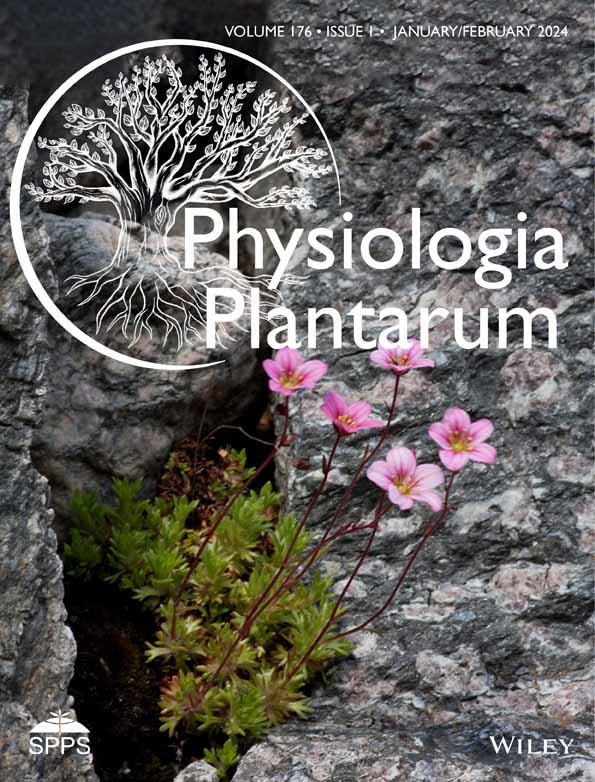
期刊介绍:
Physiologia Plantarum is an international journal committed to publishing the best full-length original research papers that advance our understanding of primary mechanisms of plant development, growth and productivity as well as plant interactions with the biotic and abiotic environment. All organisational levels of experimental plant biology – from molecular and cell biology, biochemistry and biophysics to ecophysiology and global change biology – fall within the scope of the journal. The content is distributed between 5 main subject areas supervised by Subject Editors specialised in the respective domain: (1) biochemistry and metabolism, (2) ecophysiology, stress and adaptation, (3) uptake, transport and assimilation, (4) development, growth and differentiation, (5) photobiology and photosynthesis.



 京公网安备 11010802042870号
京ICP备2023020795号-1
京公网安备 11010802042870号
京ICP备2023020795号-1

 分享
分享
 求助内容:
求助内容: 应助结果提醒方式:
 扫码关注我们
