Nathan A Gillespie, Baptiste Couvy-Duchesne, Michael C Neale, Ian B Hickie, Nicholas G Martin
{"title":"The impact of genes and environment assessed longitudinally on psychological and somatic distress in twins from ages 15 to 35 years.","authors":"Nathan A Gillespie, Baptiste Couvy-Duchesne, Michael C Neale, Ian B Hickie, Nicholas G Martin","doi":"10.1017/S0033291724003222","DOIUrl":null,"url":null,"abstract":"<p><strong>Background: </strong>Genetically informative twin studies have consistently found that individual differences in anxiety and depression symptoms are stable and primarily attributable to time-invariant genetic influences, with non-shared environmental influences accounting for transient effects.</p><p><strong>Methods: </strong>We explored the etiology of psychological and somatic distress in 2279 Australian twins assessed up to six times between ages 12-35. We evaluated autoregressive, latent growth, dual-change, common, and independent pathway models to identify which, if any, best describes the observed longitudinal covariance and accounts for genetic and environmental influences over time.</p><p><strong>Results: </strong>An autoregression model best explained both psychological and somatic distress. Familial aggregation was entirely explained by additive genetic influences, which were largely stable from ages 12 to 35. However, small but significant age-dependent genetic influences were observed at ages 20-27 and 32-35 for psychological distress and at ages 16-19 and 24-27 for somatic distress. In contrast, environmental influences were predominantly transient and age-specific.</p><p><strong>Conclusions: </strong>The longitudinal trajectory of psychological distress from ages 12 to 35 can thus be largely explained by forward transmission of a stable additive genetic influence, alongside smaller age-specific genetic innovations. This study addresses the limitation of previous research by exhaustively exploring alternative theoretical explanations for the observed patterns in distress symptoms over time, providing a more comprehensive understanding of the genetic and environmental factors influencing psychological and somatic distress across this age range.</p>","PeriodicalId":20891,"journal":{"name":"Psychological Medicine","volume":"55 ","pages":"e17"},"PeriodicalIF":5.5000,"publicationDate":"2025-02-06","publicationTypes":"Journal Article","fieldsOfStudy":null,"isOpenAccess":false,"openAccessPdf":"https://www.ncbi.nlm.nih.gov/pmc/articles/PMC11968121/pdf/","citationCount":"0","resultStr":null,"platform":"Semanticscholar","paperid":null,"PeriodicalName":"Psychological Medicine","FirstCategoryId":"3","ListUrlMain":"https://doi.org/10.1017/S0033291724003222","RegionNum":2,"RegionCategory":"医学","ArticlePicture":[],"TitleCN":null,"AbstractTextCN":null,"PMCID":null,"EPubDate":"","PubModel":"","JCR":"Q1","JCRName":"PSYCHIATRY","Score":null,"Total":0}
引用次数: 0
Abstract
Background: Genetically informative twin studies have consistently found that individual differences in anxiety and depression symptoms are stable and primarily attributable to time-invariant genetic influences, with non-shared environmental influences accounting for transient effects.
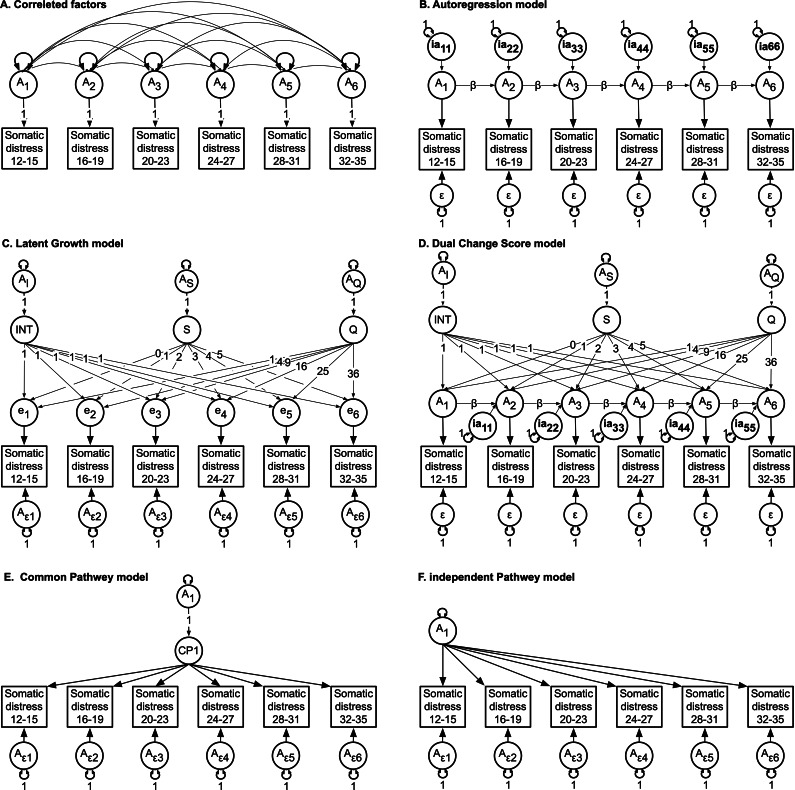
Methods: We explored the etiology of psychological and somatic distress in 2279 Australian twins assessed up to six times between ages 12-35. We evaluated autoregressive, latent growth, dual-change, common, and independent pathway models to identify which, if any, best describes the observed longitudinal covariance and accounts for genetic and environmental influences over time.
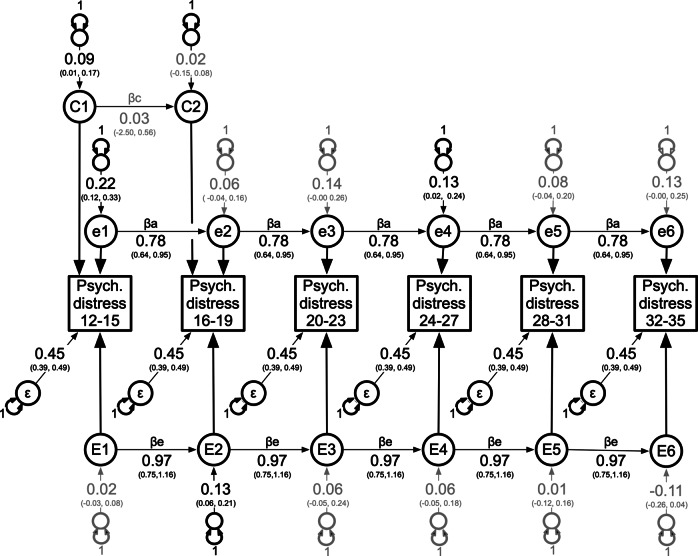
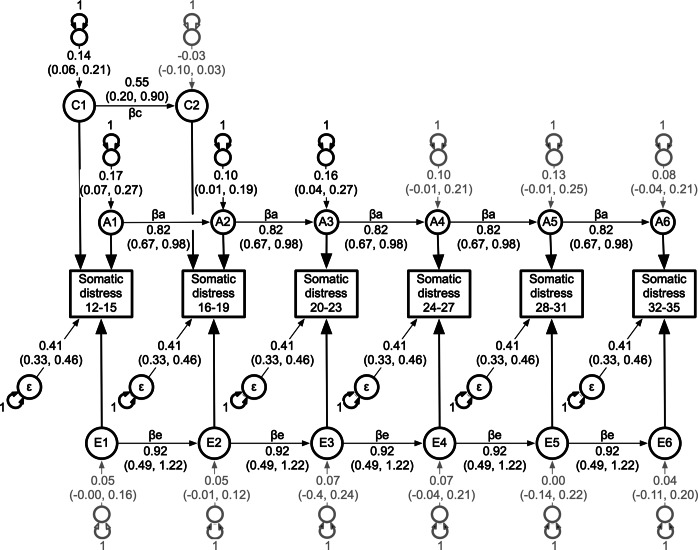
Results: An autoregression model best explained both psychological and somatic distress. Familial aggregation was entirely explained by additive genetic influences, which were largely stable from ages 12 to 35. However, small but significant age-dependent genetic influences were observed at ages 20-27 and 32-35 for psychological distress and at ages 16-19 and 24-27 for somatic distress. In contrast, environmental influences were predominantly transient and age-specific.
Conclusions: The longitudinal trajectory of psychological distress from ages 12 to 35 can thus be largely explained by forward transmission of a stable additive genetic influence, alongside smaller age-specific genetic innovations. This study addresses the limitation of previous research by exhaustively exploring alternative theoretical explanations for the observed patterns in distress symptoms over time, providing a more comprehensive understanding of the genetic and environmental factors influencing psychological and somatic distress across this age range.
期刊介绍:
Now in its fifth decade of publication, Psychological Medicine is a leading international journal in the fields of psychiatry, related aspects of psychology and basic sciences. From 2014, there are 16 issues a year, each featuring original articles reporting key research being undertaken worldwide, together with shorter editorials by distinguished scholars and an important book review section. The journal''s success is clearly demonstrated by a consistently high impact factor.



 京公网安备 11010802042870号
京ICP备2023020795号-1
京公网安备 11010802042870号
京ICP备2023020795号-1

 分享
分享
 求助内容:
求助内容: 应助结果提醒方式:
 扫码关注我们
